

Good Morning Digital Neighbors! Happy Friday my fellow Curmudgeons, Curmudgeonessas and CurmudGenXers!
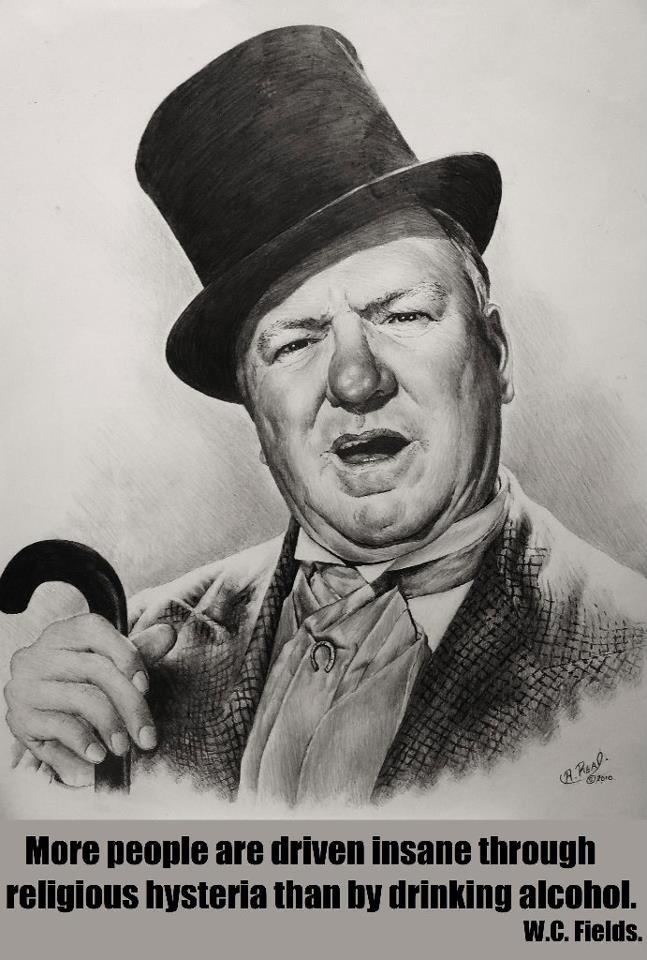
Curmudgeon Spotlight for Friday. W. C. Fields - From the Portable Curmudgeon.
WILLIAM CLAUDE DUKENFIELD was born in Philadelphia in 1880 and was raised above the saloon where his father tended bar. His mother was a strong woman, bitter about her lot in life, and he probably inherited his wisecracking, side-of-the-mouth style from her: She would sit on the porch with her young son and entertain him with a snide, running commentary about passing neighbors.
Contrary to legend, he didn’t run away from home after a fight with his father but left under amicable circumstances at the age of eleven to earn his fortune in show business. He was inspired by vaudeville performers of the day and he discovered early on what he described as his “fatal facility” for juggling. He taught himself juggling routines and developed brilliant sight gags involving hats, golf clubs, and pool cues through long hours of practice and eventually earned a reputation as a disciplined professional.
He lost his illusions early; after being cheated by unscrupulous booking agents and crooked theater managers, he never again felt financially secure. At the height of his movie career, when he was earning $100,000 a picture, he regularly deposited money in banks all over the country under fictitious names. Since he never revealed the account numbers to anyone, and since no bank records were found among his possessions, the money was never recovered by his heirs.
He married a showgirl named Harriet Hughes in 1900. They lived together for seven years and produced a son, then separated, never to reconcile. He subordinated his family, his social life, and ultimately his happiness to the demands of his career and turned his personal tragedies into comedy: The characters in his pictures usually include a bratty son, a shrewish wife, a domineering mother-in-law, and a loving daughter (the daughter he never had).
He was naturally undemonstrative and easily hurt, so he affected a phony manorial demeanor to conceal his vulnerability. He once told an interviewer that he decided at an early age to become “a definite personality.” He strove to be a part of the world but was an outcast. According to Louise Brooks, the former ingénue who wrote perceptively about the Hollywood of the twenties and thirties, Fields “stretched out his hand to Beauty and Love and they thrust it away.”
Even his legendary drinking was an outgrowth of his loneliness: He secured the companionship of his fellow vaudeville performers with free whiskey, even though he was himself a teetotaler (as a juggler he didn’t want to hurt his timing). But once he learned how to drink, he would consume at least a quart of gin a day for the rest of his life. He played himself in most of his pictures (with the exception of Micawber in David Copperfield).
He played lovable rogues, bumbling dipsomaniacs, harassed family men plagued by domineering wives and mothers-in-law. He wrote all his pictures under assumed names—Mahatma Kane Jeeves, Charles Bogle, Otis Criblecoblis—but seemed incapable of delivering the lines as written.
Fields died on Christmas Day in 1946. Contrary to legend, he isn’t buried in Philadelphia; his ashes are in an unmarked urn at Forest Lawn in Hollywood. During his last illness he was confined to a hospital bed, and a visitor was shocked to catch him reading the Bible. “Just looking for loopholes,” he explained.
A few fun quotes from this Iconic Curmudgeon!
A woman drove me to drink, and I never had the courtesy to thank her.
The cost of living has gone up another dollar a quart.
I like children. If they are properly cooked.
Never try to impress a woman, because if you do she’ll expect you to keep up to the standard for the rest of your life.
I am free of all prejudices. I hate everyone equally.
The final quote on the photo for the day. Happy Friday ADD Irregulars and and Wanderers of the WSN!


Today marks the three hundred and thirtieth birthday of the Frenchman François-Marie Arouet, better known by his nom de plume, Voltaire (1694-1778).
Born into a bourgeois family during the reign of Louis XIV, the “Sun King” (r. 1643-1715), Voltaire suffered tragedy at a young age when his mother died. Never close with his father or brother, Voltaire exhibited a rebellious attitude toward authority from his youth. His brilliant mind was fostered in the care of the Society of Jesus, who introduced him to the joys of literature and theater. Despite his later criticisms against the Church, Voltaire, throughout his life, fondly recalled his dedicated Jesuit teachers.
Although he spent time as a civil servant in the French embassy to the Hague, Voltaire’s main love was writing—an endeavor where he excelled in various genres, including poetry, which led to his appointment as the royal court poet for King Louis XV. Widely recognized as one of the greatest French writers, and even hyperbolically referred to by ...
Padre - Tom Miller invites you to a Coffee Talk, Speakeasies, Schmoozes, Tea Times, Afterhours and other gatherings.
https://teams.live.com/meet/93792382189049?p=DiBHsYfuECPgDrG7vO
2026 Coffee Talk with the ADD Irregulars
Thursday, January 1, 2026
6:00 AM - 8:00 AM (CST)
Occurs every day starting 1/1 until 12/31/2027
Coffee Talk - Daily beginning at 6:00 AM Central Time Zone - USA
Afternoon Chats - Most Tuesday, Friday & Sundays 2:00 PM Central
Always invited, never expected.
Other chats as posted in the community.





XIII
The Proud Minister
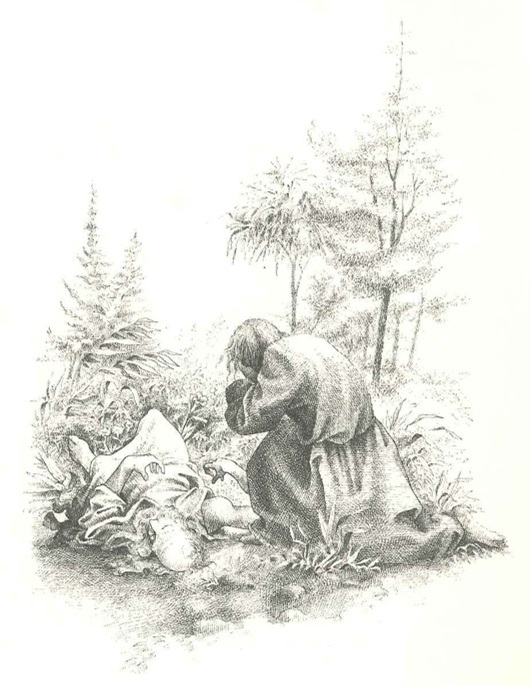
One day there came into the Garden a man in torn clothes badly bruised and cut, who said to the Lover, “In the name of the Beloved I demand your help.”
So the Lover and the Disciple let him in and dressed his wounds and prepared the best of the vegetables from the Garden for him to eat. When his wounds had been dressed and he had eaten and rested the Lover asked him how he had fallen into this plight, to which the man replied, “I was Minister of the Beloved in a city near this place, where I preached His gospel and expounded His doctrine to the people. I pointed out to them how their sins had made them wholly hateful to the Beloved and how therefore they were utterly beyond the range of His love and He would condemn them to eternal torments, whereon some fell into despair and wept bitterly but many were angry. One day the magistrates called me before them and begged me to leave the city and preach elsewhere for they said I had made many people so angry and desperate that they feared there might be a riot and they might not be able to protect me but that I might suffer some injury. I, however, very zealous for the Beloved and believing that the magistrates only feared that their own sins might be proclaimed, preached the more vehemently, denounced the magistrates and made it abundantly clear that the whole wicked city was foredoomed to eternal punishment by the just provision of the Beloved. Whereon a mob, stirred up no doubt by the corrupt and venal magistrates, fell upon me with sticks and stones, nearly killing me and driving me out of the city in the state in which I came to you.”
“My friend,” said the Lover, “this was not a good deed of yours, for besides denying the unfathomable compassion of the Beloved, you have by your obstinacy caused these people to commit a grievous sin, and this cannot be pleasing to the Beloved, that through you who profess to be His minister the people should become worse. Surely you remember that He Himself said, ‘If they persecute you in one city flee to another.’”
Therefore the man was very angry, and cursing the Lover, said, “I see that I have had a very false report of you and I do not believe that you are a servant of the Beloved at all. When I came to you so injured for the Beloved’s sake you set before me only herbs and fruits although the garden is full of birds which you could have killed to make me a worthy meal. I shall proclaim everywhere that you are no true servant of the Beloved but a mere falterer who dares not suffer in the cause of the Beloved. Be sure that you are foreordained to eternal torments who suffer nothing here.”
For the man was so blinded by his own pride that he could not perceive the scars on the hands and feet and the brows of the Lover nor how the cloth beneath the armpits of his tunic was dyed with a red dye. So he went out of the Garden cursing and shouting.
But the Lover looked sad and said, “A man like this does much harm to the cause of the Beloved, for by thus speaking falsely about the Beloved he may bring men to fear Him but none to love Him, and by love alone can any man approach the Beloved.”