

Good Morning Digital Neighbors, ADD Irregulars and Visitors of the WSN!
It was a good night rest with just the normal amount of disturbances from my body and my new found friends, the braces. Among my many companions in this new adventure in being Tom, David Whyte has become a source of deep reflection and perspective. Prayer, laughter and reflection about the unfolding of my days keep me rooted in the here and now and not emotionally projected too much into the future. While it is a good thing to anticipate and prepare for the day unfolding before you, it is often a wishful thing to forecast beyond that day the joys or dooms that may never be realized. Anyway without too much further babbling from myself, let's see what David wants to share with us about rest.
REST
Rest is the conversation between what we love to do and how we love to be. Rest is the essence of giving and receiving; an act of remembering, imaginatively and intellectually, but also psychologically and physically. To rest is to give up on the already exhausted will as the prime motivator of endeavour, with its endless outward need to reward itself through established goals. To rest is to give up on worrying and fretting, and the sense that there is something wrong with the world unless we are there to put it right; to rest is to fall back, literally or figuratively, from outer targets and shift the goal not to an inner, static bull’s eye, an imagined state of perfect stillness, but to an inner state of natural exchange.
The template of rest is the natural exchange of the body breathing, the autonomic giving and receiving that forms the basis and the measure of life itself. We are rested when we are a living exchange between what lies inside and what lies outside, when we are an intriguing conversation between the potential that lies in our imagination and the possibilities for making that internal image real in the world; we are rested when we let things alone and let ourselves alone, to do what we do best, breathe as the body intended us to breathe, to walk as we were meant to walk, to live with the rhythm of a house and a home, giving and taking through cooking and cleaning. When we give and take in an easy, foundational way, we are closest to the authentic self, and closest to that authentic self when we are most rested. To rest is not self-indulgent; to rest is to prepare to give the best of ourselves, and to perhaps, most importantly, arrive at a place where we are able to understand what we have already been given.
In the first state of rest is the sense of stopping, of giving up on what we have been doing or how we have been being. In the second is the sense of slowly coming home, the physical journey into the body’s uncoerced and unbullied self, as if trying to remember the way or even the destination itself. In the third state is a sense of healing and self-forgiveness and of arrival. In the fourth state, deep in the primal exchange of the breath, is the give and the take, the blessing and the being blessed, and the ability to delight in both. The fifth stage is a sense of absolute readiness and presence, a delight in and an anticipation of the world and all its forms; a sense of being the meeting itself between inner and outer, and that receiving and responding occur in one spontaneous movement.
A deep experience of rest is the template of perfection in the human imagination, a perspective from which we are able to perceive the outer specific forms of our work and our relationships whilst being nourished by the shared foundational gift of the breath itself. From this perspective we can be rested while putting together an elaborate meal for an arriving crowd, whilst climbing the highest mountain or sitting at home surrounded by the chaos of a loving family.
Rested, we are ready for the world but not held hostage by it; rested, we care again for the right things and the right people in the right way. In rest we re-establish the goals that make us more generous, more courageous, more of an invitation, someone we want to remember, and someone others would want to remember too.
A few highlights that make rest such an enriching experience in an integrated and thoughtful life.
Rest is the conversation between what we love to do and how we love to be.
The conversation between doing, which fills our days, and being, knowing who we are. Rest allows us to keep both in fruitful balance and engaged living. So much of a life is a conversation, which ultimate involves good listening rather than endless talking. Conversation, which means I am attentive to what you have to say in the hopes that you also care about what I have to say. Conversation is about connection, understanding, questioning and appreciating and less about convincing, judging or condemning. Our broken wills are attracted to those last two like bees to honey. There are times to judge and condemn, especially attitudes and behaviors, but we invite their bearers to repentance and conversion.
When we give and take in an easy, foundational way, we are closest to the authentic self, and closest to that authentic self when we are most rested. To rest is not self-indulgent; to rest is to prepare to give the best of ourselves, and to perhaps, most importantly, arrive at a place where we are able to understand what we have already been given.
Rest prepares us to give the best of ourselves; to God, to neighbor, perhaps even to the stranger. Too often we are tempted to think of rest as self-indulgent, as being lazy, which is often seen as a great failing. When you are lazy you are not contributing your portion, carrying your weight or carrying out your responsibilities. But there is a discernible difference between being lazy and neglectful or being rested and accepting of limitations.
Rested, we are ready for the world but not held hostage by it; rested, we care again for the right things and the right people in the right way. In rest we re-establish the goals that make us more generous, more courageous, more of an invitation, someone we want to remember, and someone others would want to remember too.
This is gold - I hope you have experienced this truth. I have. Ready for the world but not held hostage by it. Ready, now rested, we are to give ourselves more completely to the day ahead of us and the path beyond us.
A winding path - Mount Rainier



Today marks the three hundred and thirtieth birthday of the Frenchman François-Marie Arouet, better known by his nom de plume, Voltaire (1694-1778).
Born into a bourgeois family during the reign of Louis XIV, the “Sun King” (r. 1643-1715), Voltaire suffered tragedy at a young age when his mother died. Never close with his father or brother, Voltaire exhibited a rebellious attitude toward authority from his youth. His brilliant mind was fostered in the care of the Society of Jesus, who introduced him to the joys of literature and theater. Despite his later criticisms against the Church, Voltaire, throughout his life, fondly recalled his dedicated Jesuit teachers.
Although he spent time as a civil servant in the French embassy to the Hague, Voltaire’s main love was writing—an endeavor where he excelled in various genres, including poetry, which led to his appointment as the royal court poet for King Louis XV. Widely recognized as one of the greatest French writers, and even hyperbolically referred to by ...
Padre - Tom Miller invites you to a Coffee Talk, Speakeasies, Schmoozes, Tea Times, Afterhours and other gatherings.
https://teams.live.com/meet/93792382189049?p=DiBHsYfuECPgDrG7vO
2026 Coffee Talk with the ADD Irregulars
Thursday, January 1, 2026
6:00 AM - 8:00 AM (CST)
Occurs every day starting 1/1 until 12/31/2027
Coffee Talk - Daily beginning at 6:00 AM Central Time Zone - USA
White Pilled Wednesday - A break from the heaviness of news and current events to focus upon things more personal & positive for the first hour of Coffee Talk.
Afternoon Chats - Most Tuesday, Friday & Sundays 2:00 PM Central
Other chats as posted in the community.






XIII
The Proud Minister
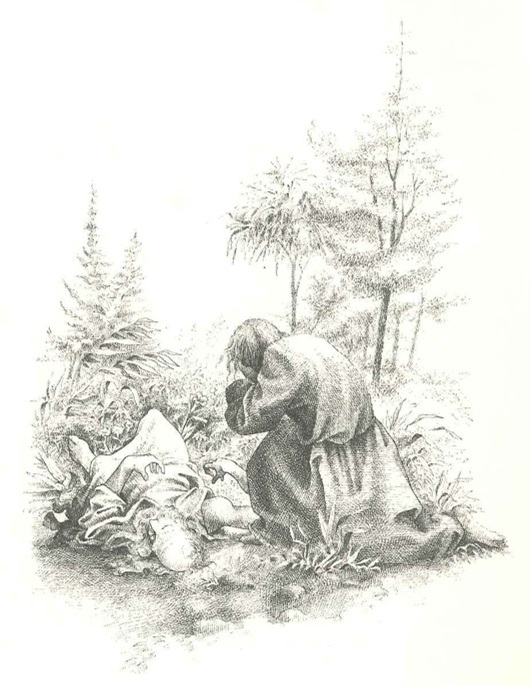
One day there came into the Garden a man in torn clothes badly bruised and cut, who said to the Lover, “In the name of the Beloved I demand your help.”
So the Lover and the Disciple let him in and dressed his wounds and prepared the best of the vegetables from the Garden for him to eat. When his wounds had been dressed and he had eaten and rested the Lover asked him how he had fallen into this plight, to which the man replied, “I was Minister of the Beloved in a city near this place, where I preached His gospel and expounded His doctrine to the people. I pointed out to them how their sins had made them wholly hateful to the Beloved and how therefore they were utterly beyond the range of His love and He would condemn them to eternal torments, whereon some fell into despair and wept bitterly but many were angry. One day the magistrates called me before them and begged me to leave the city and preach elsewhere for they said I had made many people so angry and desperate that they feared there might be a riot and they might not be able to protect me but that I might suffer some injury. I, however, very zealous for the Beloved and believing that the magistrates only feared that their own sins might be proclaimed, preached the more vehemently, denounced the magistrates and made it abundantly clear that the whole wicked city was foredoomed to eternal punishment by the just provision of the Beloved. Whereon a mob, stirred up no doubt by the corrupt and venal magistrates, fell upon me with sticks and stones, nearly killing me and driving me out of the city in the state in which I came to you.”
“My friend,” said the Lover, “this was not a good deed of yours, for besides denying the unfathomable compassion of the Beloved, you have by your obstinacy caused these people to commit a grievous sin, and this cannot be pleasing to the Beloved, that through you who profess to be His minister the people should become worse. Surely you remember that He Himself said, ‘If they persecute you in one city flee to another.’”
Therefore the man was very angry, and cursing the Lover, said, “I see that I have had a very false report of you and I do not believe that you are a servant of the Beloved at all. When I came to you so injured for the Beloved’s sake you set before me only herbs and fruits although the garden is full of birds which you could have killed to make me a worthy meal. I shall proclaim everywhere that you are no true servant of the Beloved but a mere falterer who dares not suffer in the cause of the Beloved. Be sure that you are foreordained to eternal torments who suffer nothing here.”
For the man was so blinded by his own pride that he could not perceive the scars on the hands and feet and the brows of the Lover nor how the cloth beneath the armpits of his tunic was dyed with a red dye. So he went out of the Garden cursing and shouting.
But the Lover looked sad and said, “A man like this does much harm to the cause of the Beloved, for by thus speaking falsely about the Beloved he may bring men to fear Him but none to love Him, and by love alone can any man approach the Beloved.”