


Good Morning Digitial Neighbors! Happy Tuesday ADD Irregulars, WSN Purveyors, PHAM & Misfits, Friends & Refugees.
In the tumbler that is my formative mind are many things that shape my attitude and person. My family history, the Gospel, the life of the Church in all of its manifold ways, cultural elements of the 70's, 80's and 90's that have anchored on to my imagination and memory like so many barnacles. All of this gets tumbled around in prayer and mediation on a frequent basis. The Voice of Master takes center stage, but His subtle and humble voice is filtered through many mediums and means. One has to cultivate a patience and stillness to catch His unseen movements and often unheard whispers. They are plenty, but often missed or only seen in hindsight. Better that than not at all, but an occasional thwap upside the head helps me get my crap together.
Added to that mix is various ancient authors via quotes and various other writings. If you have not looked in to the Stoics, the Daily Stoic is a good way to begin. I do not identify as a Stoic, but I appreciate much of their wisdom and insight into living. Good humanism is complimentary to a life of faith and enriches it. Good, virtuous humanism is really good if you have no High Power inviting you to strive for personal growth and transformation.
I am on the conversion train with the Master, but I am not the best of passengers or disciples. I am who I am and I am thank for His patience and clemency. That word: Clemency was the topic of the Daily Stoic, and here it is present to you along with the link should you be inclined to explore. Enjoy!
CLEMENCY
Seneca tried to teach it to Nero but Nero couldn’t grasp it. To be fair, most leaders, most powerful people, most governments and civilizations struggle with it. In fact, up until Seneca sat down to write De Clementia there wasn’t even a word for what we have, ever since, called clemency.
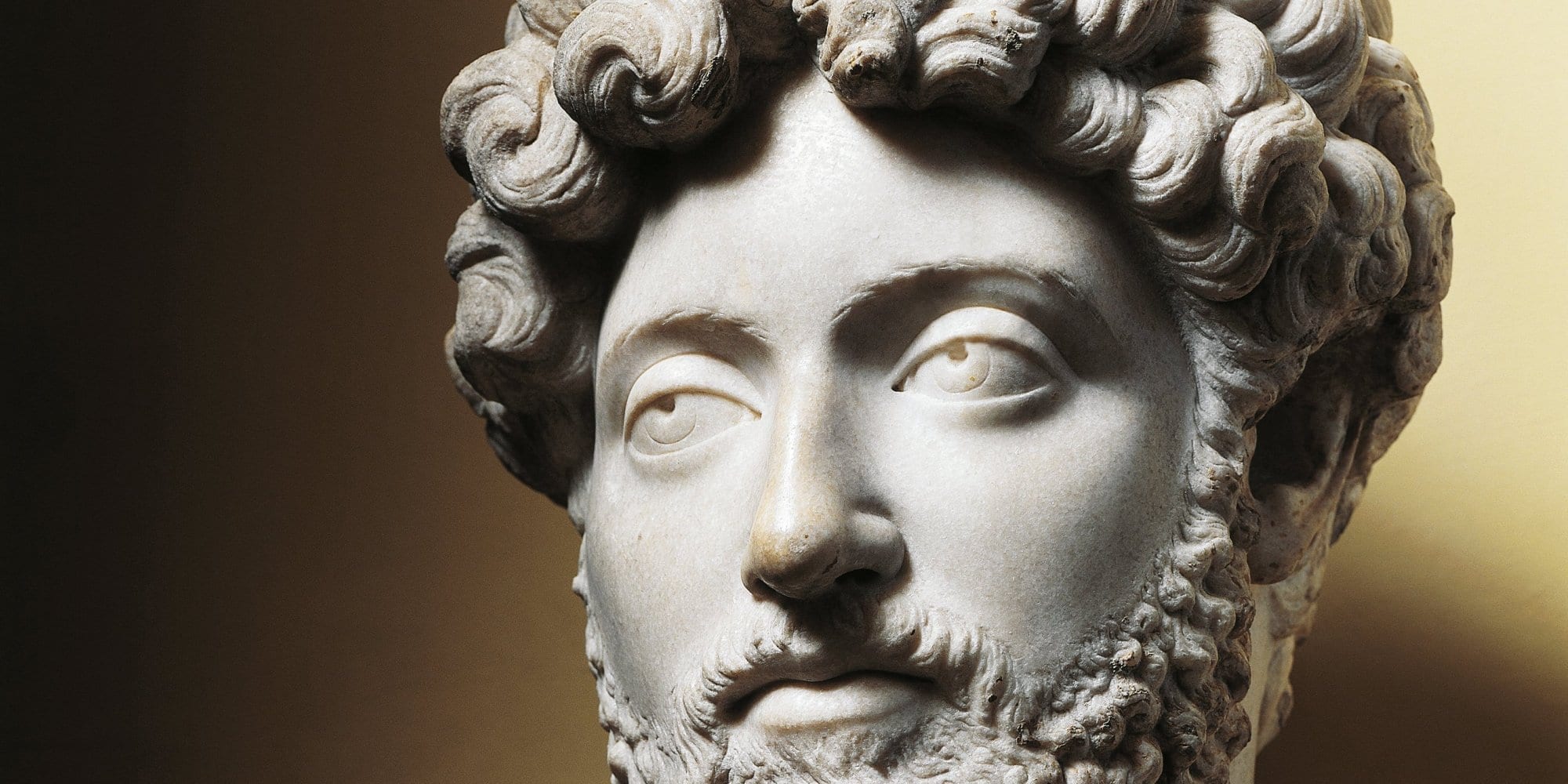
Clemency, as Seneca explains it, is basically how a powerful person treats a person they have power over–particularly when the less powerful person has done wrong. Clemency was what Marcus Aurelius tried to offer Avidius Cassius when the general attempted a palace coup. Clemency was what Marcus insisted the Senate maintain. His reign would not be stained with a single drop of blood, he said. Clemency was what Ulysses S. Grant offered at Appomattox. Clemency and something more was what the U.S. offered Japan and Germany after the Second World War, by not only not destroying them, but rebuilding both countries after.
It’s worth pointing out just how remarkable the concept of clemency was when Seneca first articulated it. Rome was a country that slaughtered its enemies–and sold the rest into slavery. Seneca himself was cruelly exiled for some made up crime, sent away from his family and friends because he had offended the emperor Claudius (a tale you can read about in Lives of the Stoics).
Today, society is less violent and has more robust legal protections of human rights. But clemency is still too rare–not just for the conquered but also between colleagues, between spouses, between rival political parties (to say nothing of our legal system here in the U.S.).
When someone has wronged you, deceived you, betrayed you, stolen from you, do you get your pound of flesh? Or can you be merciful and restrained? Can you be generous? The ability to forgive, to let go, to not extract a full measure of punishment from someone–this requires self-control, it requires decency, it requires wisdom.



Today marks the three hundred and thirtieth birthday of the Frenchman François-Marie Arouet, better known by his nom de plume, Voltaire (1694-1778).
Born into a bourgeois family during the reign of Louis XIV, the “Sun King” (r. 1643-1715), Voltaire suffered tragedy at a young age when his mother died. Never close with his father or brother, Voltaire exhibited a rebellious attitude toward authority from his youth. His brilliant mind was fostered in the care of the Society of Jesus, who introduced him to the joys of literature and theater. Despite his later criticisms against the Church, Voltaire, throughout his life, fondly recalled his dedicated Jesuit teachers.
Although he spent time as a civil servant in the French embassy to the Hague, Voltaire’s main love was writing—an endeavor where he excelled in various genres, including poetry, which led to his appointment as the royal court poet for King Louis XV. Widely recognized as one of the greatest French writers, and even hyperbolically referred to by ...
Padre - Tom Miller invites you to a Coffee Talk, Speakeasies, Schmoozes, Tea Times, Afterhours and other gatherings.
https://teams.live.com/meet/93792382189049?p=DiBHsYfuECPgDrG7vO
2026 Coffee Talk with the ADD Irregulars
Thursday, January 1, 2026
6:00 AM - 8:00 AM (CST)
Occurs every day starting 1/1 until 12/31/2027
Coffee Talk - Daily beginning at 6:00 AM Central Time Zone - USA
Afternoon Chats - Most Tuesday, Friday & Sundays 2:00 PM Central
Always invited, never expected.
Other chats as posted in the community.

Good morning, Digital Neighbors! Blessed Sunday to all you patrons and lurkers on Rubin Report, Phetasy, Outspoken, and Padre's. A few quotes on gratitude and a prayer to get Sunday rolling. I pray you have a blessed day ahead of you.
If a fellow isn't thankful for what he's got, he isn't likely to be thankful for what he's going to get. – Frank A. Clark
Gratitude is the memory of the heart. – French proverb
Gratitude as a discipline involves a conscious choice. I can choose to be grateful even when my emotions and feelings are still steeped in hurt and resentment. It is amazing how many occasions present themselves in which I can choose gratitude instead of a complaint. – Henri Nouwen, The Return of the Prodigal Son
The choice for gratitude rarely comes without some real effort. But each time I make it, the next choice is a little easier, a little freer, a little less self-conscious. – Henri Nouwen, "The Choice of Gratitude"
Everything can be taken from a man but one thing: the last of ...






XIII
The Proud Minister
One day there came into the Garden a man in torn clothes badly bruised and cut, who said to the Lover, “In the name of the Beloved I demand your help.”
So the Lover and the Disciple let him in and dressed his wounds and prepared the best of the vegetables from the Garden for him to eat. When his wounds had been dressed and he had eaten and rested the Lover asked him how he had fallen into this plight, to which the man replied, “I was Minister of the Beloved in a city near this place, where I preached His gospel and expounded His doctrine to the people. I pointed out to them how their sins had made them wholly hateful to the Beloved and how therefore they were utterly beyond the range of His love and He would condemn them to eternal torments, whereon some fell into despair and wept bitterly but many were angry. One day the magistrates called me before them and begged me to leave the city and preach elsewhere for they said I had made many people so angry and desperate that they feared there might be a riot and they might not be able to protect me but that I might suffer some injury. I, however, very zealous for the Beloved and believing that the magistrates only feared that their own sins might be proclaimed, preached the more vehemently, denounced the magistrates and made it abundantly clear that the whole wicked city was foredoomed to eternal punishment by the just provision of the Beloved. Whereon a mob, stirred up no doubt by the corrupt and venal magistrates, fell upon me with sticks and stones, nearly killing me and driving me out of the city in the state in which I came to you.”
“My friend,” said the Lover, “this was not a good deed of yours, for besides denying the unfathomable compassion of the Beloved, you have by your obstinacy caused these people to commit a grievous sin, and this cannot be pleasing to the Beloved, that through you who profess to be His minister the people should become worse. Surely you remember that He Himself said, ‘If they persecute you in one city flee to another.’”
Therefore the man was very angry, and cursing the Lover, said, “I see that I have had a very false report of you and I do not believe that you are a servant of the Beloved at all. When I came to you so injured for the Beloved’s sake you set before me only herbs and fruits although the garden is full of birds which you could have killed to make me a worthy meal. I shall proclaim everywhere that you are no true servant of the Beloved but a mere falterer who dares not suffer in the cause of the Beloved. Be sure that you are foreordained to eternal torments who suffer nothing here.”
For the man was so blinded by his own pride that he could not perceive the scars on the hands and feet and the brows of the Lover nor how the cloth beneath the armpits of his tunic was dyed with a red dye. So he went out of the Garden cursing and shouting.
But the Lover looked sad and said, “A man like this does much harm to the cause of the Beloved, for by thus speaking falsely about the Beloved he may bring men to fear Him but none to love Him, and by love alone can any man approach the Beloved.”