


Joshua Claybourn @JoshuaClaybourn
British Prime Minister Margret Thatcher famously once said, “Europe was created by history. America was created by philosophy.” Nearly all European nations trace their beginning to a common ethnic kinship or a cultural characteristic, but America was created by exiles united in voluntary assent to shared political beliefs. That’s why British writer G. K. Chesterton visited the United States for the first time and remarked that America was “a nation with the soul of a church,” not because of its religiosity, but because of a common creed enshrined in “sacred texts” of the Declaration of Independence and Constitution.
In 1776, a near-miraculous stew of ideas and leaders came together to form a Declaration of Independence, and 11 years later an equally miraculous gathering formed the Constitution, both centered on a belief in universal human dignity.
Government does not grant you the right to free speech, assembly, religion, press, protest, or redress of grievances. We believe that these rights are inalienable and government’s role is simply to protect those rights and ensure human dignity. Government is just a tool, not a source. That’s really a remarkably profound idea we take for granted and fail to celebrate enough.
Of course, the sad irony is that the very Founders who argued these ideas so frequently fell short of those same principles. Some owned slaves, and nearly all opposed equal rights for women. So it naturally caused upheaval when nineteenth century Americans increasingly adopted a view held that “All men are created equal,” including black Americans, and a few generations later it came to encompass women as well.
Abraham Lincoln believed that the Declaration of Independence did not necessarily proclaim people equal in all respects. Instead, it meant that all people were created with certain equal, inalienable rights—they are ours by right of simply being human—among which are “life, liberty, and the pursuit of happiness.” A free society should always strive to achieve these equal rights, even if, as in the case of the Founders, it fell short of that goal in the past. The Declaration’s concept of equality is an aspiration, Lincoln said, “constantly looked to, constantly labored for, and even, though never perfectly attained, constantly approximated, and thereby constantly spreading and deepening its influence and augmenting the happiness and value of life to all people, of all colors, everywhere.”
That is the genius of Lincoln’s argument: that the Constitution is concrete (at least until amended), but the Declaration of Independence is aspirational, and the American project is a move toward the aspiration.
Despite its roots in American independence, the 4th of July is incomplete without understanding and celebrating Lincoln too. His unique view of the Declaration as an aspirational goal helped properly frame American independence for what it was and what it was bound to be.


Today marks the three hundred and thirtieth birthday of the Frenchman François-Marie Arouet, better known by his nom de plume, Voltaire (1694-1778).
Born into a bourgeois family during the reign of Louis XIV, the “Sun King” (r. 1643-1715), Voltaire suffered tragedy at a young age when his mother died. Never close with his father or brother, Voltaire exhibited a rebellious attitude toward authority from his youth. His brilliant mind was fostered in the care of the Society of Jesus, who introduced him to the joys of literature and theater. Despite his later criticisms against the Church, Voltaire, throughout his life, fondly recalled his dedicated Jesuit teachers.
Although he spent time as a civil servant in the French embassy to the Hague, Voltaire’s main love was writing—an endeavor where he excelled in various genres, including poetry, which led to his appointment as the royal court poet for King Louis XV. Widely recognized as one of the greatest French writers, and even hyperbolically referred to by ...
Padre - Tom Miller invites you to a Coffee Talk, Speakeasies, Schmoozes, Tea Times, Afterhours and other gatherings.
https://teams.live.com/meet/93792382189049?p=DiBHsYfuECPgDrG7vO
2026 Coffee Talk with the ADD Irregulars
Thursday, January 1, 2026
6:00 AM - 8:00 AM (CST)
Occurs every day starting 1/1 until 12/31/2027
Coffee Talk - Daily beginning at 6:00 AM Central Time Zone - USA
White Pilled Wednesday - A break from the heaviness of news and current events to focus upon things more personal & positive for the first hour of Coffee Talk.
Afternoon Chats - Most Tuesday, Friday & Sundays 2:00 PM Central
Other chats as posted in the community.






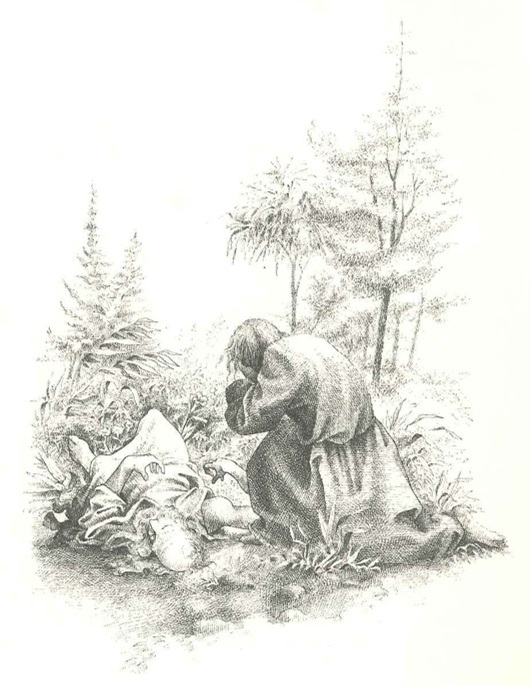

XIII
The Proud Minister
One day there came into the Garden a man in torn clothes badly bruised and cut, who said to the Lover, “In the name of the Beloved I demand your help.”
So the Lover and the Disciple let him in and dressed his wounds and prepared the best of the vegetables from the Garden for him to eat. When his wounds had been dressed and he had eaten and rested the Lover asked him how he had fallen into this plight, to which the man replied, “I was Minister of the Beloved in a city near this place, where I preached His gospel and expounded His doctrine to the people. I pointed out to them how their sins had made them wholly hateful to the Beloved and how therefore they were utterly beyond the range of His love and He would condemn them to eternal torments, whereon some fell into despair and wept bitterly but many were angry. One day the magistrates called me before them and begged me to leave the city and preach elsewhere for they said I had made many people so angry and desperate that they feared there might be a riot and they might not be able to protect me but that I might suffer some injury. I, however, very zealous for the Beloved and believing that the magistrates only feared that their own sins might be proclaimed, preached the more vehemently, denounced the magistrates and made it abundantly clear that the whole wicked city was foredoomed to eternal punishment by the just provision of the Beloved. Whereon a mob, stirred up no doubt by the corrupt and venal magistrates, fell upon me with sticks and stones, nearly killing me and driving me out of the city in the state in which I came to you.”
“My friend,” said the Lover, “this was not a good deed of yours, for besides denying the unfathomable compassion of the Beloved, you have by your obstinacy caused these people to commit a grievous sin, and this cannot be pleasing to the Beloved, that through you who profess to be His minister the people should become worse. Surely you remember that He Himself said, ‘If they persecute you in one city flee to another.’”
Therefore the man was very angry, and cursing the Lover, said, “I see that I have had a very false report of you and I do not believe that you are a servant of the Beloved at all. When I came to you so injured for the Beloved’s sake you set before me only herbs and fruits although the garden is full of birds which you could have killed to make me a worthy meal. I shall proclaim everywhere that you are no true servant of the Beloved but a mere falterer who dares not suffer in the cause of the Beloved. Be sure that you are foreordained to eternal torments who suffer nothing here.”
For the man was so blinded by his own pride that he could not perceive the scars on the hands and feet and the brows of the Lover nor how the cloth beneath the armpits of his tunic was dyed with a red dye. So he went out of the Garden cursing and shouting.
But the Lover looked sad and said, “A man like this does much harm to the cause of the Beloved, for by thus speaking falsely about the Beloved he may bring men to fear Him but none to love Him, and by love alone can any man approach the Beloved.”