

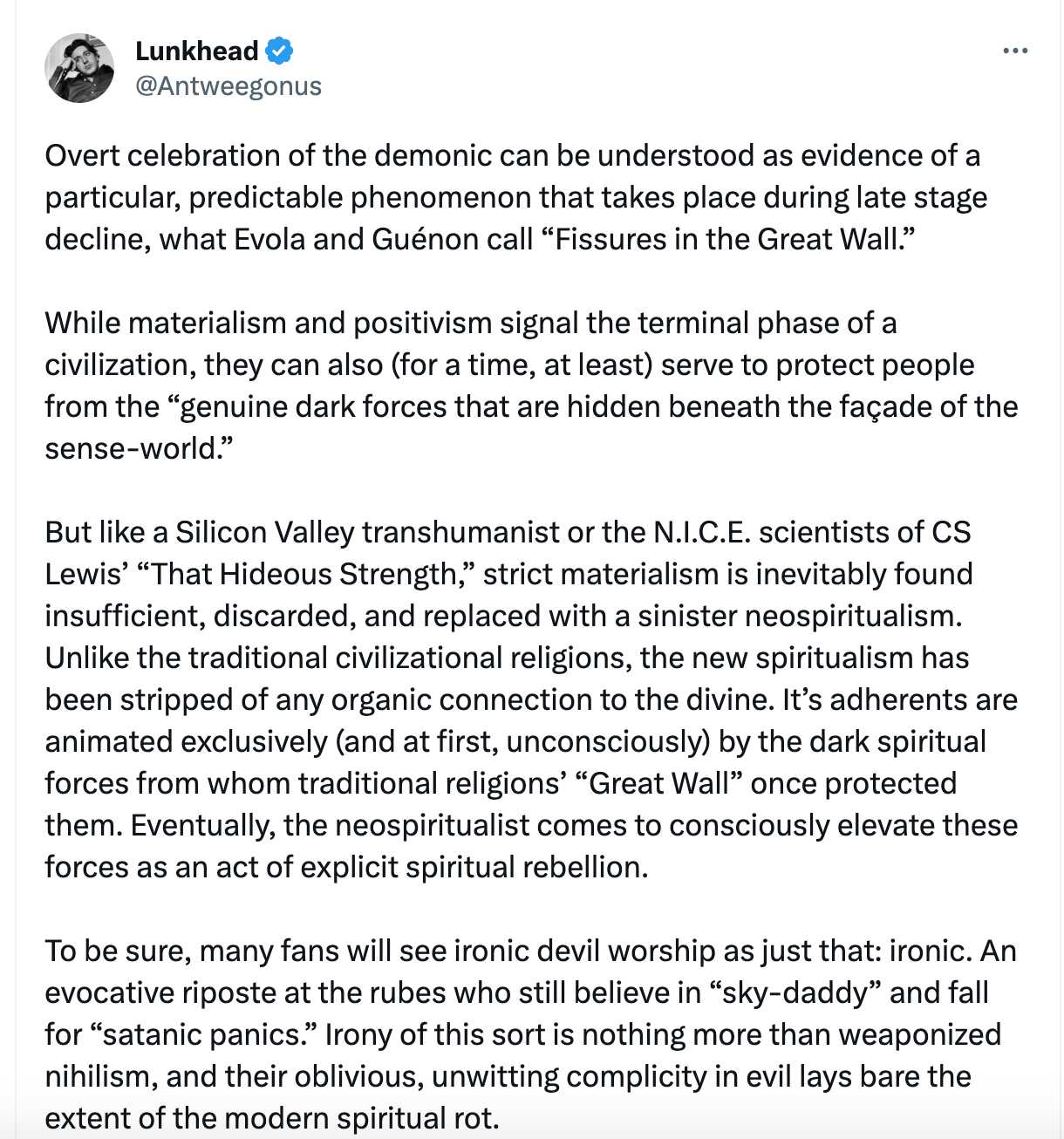
Here’s the screenshot of a very interesting tweet. If you click on the link, you can see the original tweet, which has at the bottom the video “Demons” by the very popular rapper Doja Cat. It’s incredibly disturbing, and I don’t recommend it. It’s forthrightly demonic.
The strong presence of the occult in pre-Nazi Germany is well known, but much less so is the same in pre-revolutionary Russia. From a 1993 Fordham academic’s study of occultism in late imperial Russia:
Occultism comes to the fore in times of social stress, cultural confusion, and religious uncertainty. The occult revival of late 19th and early 20th century Russia was a response to the fading credibility of the Russian Orthodox Church, the spiritual/psychological inadequacy of intelligentsia ideologies, the destabilizing effects of rapid industrialization, and continued political upheaval. Interest in the occult cut across political divisions and class lines, but had a special appeal to women. Sophisticated doctrines coexisted, often in the same persons , with ideas or practices taken from Kabbala, Buddhism, Yoga, Siberian shamanism, and practices of the mystical sectarians, and folk beliefs, often taken from the pagan Slavs, in magic and "spoiling."
… Occultism reached the highest circles of the Imperial Court; Rasputin was but the tip of an iceberg.
Occultism was an element in Soviet culture as well. The line between magic and science disappeared in the utopianism of the early Soviet period . Hopes formerly invested in religion and magic were transferred to technology and science. Stalinist political culture utilized ideas taken from the occult elements in its attempt to influence the masses. Stalin' s name assumed incantational significance .
More:
By the 1890s, the impersonality of the burgeoning cities, the perceived threat of mass democracy to culture and higher values, increasing class conflict and ethnic strife, combine d to foster rejection of liberalism, rationalism, materialism, and positivism by an ever growing number of artists and intellectuals . Occult ideas combined with radical political doctrines o f both left and right, with apocalypticism both Christian and secular, and with the anti-rationalist philosophies of Nietzsche, and to a lesser extent, of Bergson, fostered contempt for the "bourgeois values" of peace and prosperity.
These trends sprang forth with even greater vehemence after the Great War, and continued through the 1920s. Indeed, in the eyes of many people, including occultists, the Great War confirmed the bankruptcy of rational civilization. Occultists had a natural affinity for extreme political doctrines. That Naziism had occult roots is generally known, but occult doctrines and beliefs entered into Bolshevism and Stalinism as well, as we shall see. The Nazi mystique of blood and soil was bound up with Blavatsky's idea that certain "root races," in which she included Jews and Gypsies, were obsolete. She did not say that they should be exterminated, but some German occultists did. Some French occultists had demonized Jews as well . Just as the French Revolution was labelled a masonic conspiracy, the Bolshevik Revolution was attributed to a "Judeo-Masonic conspiracy."
Note this:
For most of the 19th century, interest in the occult by the Russian elite was confined to a few circles, but in the 1880s the cultural climate began to change. The fading appeal of the official Orthodox Church, the spiritually unsatisfying atheism and positivism of the intelligentsia, the destabilizing impact of the rapid industrialization of the 1890s, political upheaval, cultural disintegration, and the association of rationalism and materialism with the West, combined to create a climate of personal confusion and religious quest which was receptive to the occult.
Can’t you see the parallels to today? Readers who have been with me here for a while will recall the Anglican ordinand Daniel Kim telling me that “the New Atheism is dead” in his generation (he’s a Zoomer), and that nearly all of his colleagues at his pre-seminary job were involved to some degree with the occult. It’s just a fact of their spiritual lives — and it’s perfectly “rational” in the sense that we have seen this reaction before. This is what the Fordham scholar, Bernice Glatzer Rosenthal, is talking about in late Imperial Russia. It was the same in pre-Nazi Germany.
One more excerpt:
Politically, the occult is dangerous. In prerevolutionary Russia, the idea that all are one, that the individual is but a microcosm of the macrocosm, fostered an indifference to legal rights and guarantees that protect the individual from other people and from the government. The same tenets could support a view that each individual has a unique, irreplaceable role in the cosmic order, but in Russia it did not work out that way. Contempt for material reality induced aesthetic escapism and militated against the very rational, pragmatic mindset necessary to solve the all-enveloping crisis. Attributing control of human destinies to occult forces facilitated demonization of Jews in late Imperial Russia and of Old Bolsheviks, saboteurs and wreckers, in Stalin's time. All sorts of conspiracy theories were invented and could not be refuted, because empirical reality was merely an illusion.
For us, here and now, this is the danger of wokeness in general, and transgenderism in particular. In the social justice scheme undergirding wokeness, there is no such thing as objective truth; there is only power. Words are important because words establish realities. The ruling class today swears by an essentially occult belief that we can magically transform a man into a woman by deploying technology (surgery, chemistry) and by mandating in law and custom the revaluation of language.
If you read the paper — it’s not long — you will see that the essential orientation of the syncretic folk religion (Christianity + paganism) in Old Russia “was not between good and evil, but between clean and unclean.” Rosenthal talks about how the Bolsheviks imported this obsession with purity into their own rhetoric and policies; yesterday in this space, I talked about the use the Nazis made of it. Today, in the West, the Left’s characterization of non-progressive thoughts and practices as impure are a precursor for something very dark. Why “impure,” though they don’t (yet) use the explicit language of impurity? Because the Left treats ideas it disagrees with as entirely irrational, and potential contaminants. I have thought for some time that most on the Right view Leftists as mistaken or deluded, while most on the Left view Rightists as evil. Maybe a better way to think of it — a less loaded term that makes it easier to understand the phenomenon — is that they think of us as unclean, as a threat to their purity. Most of us have seen videos of progressives reacting to someone wearing a MAGA hat, as if someone brought a ham sandwich into Mecca. It can be funny, but deep down, it’s not. The irrationality of that reaction — irrational, because it defies the ability to discuss and debate — betrays a fundamentally occult view of politics, in the sense that Rosenthal means in her paper. The Bolsheviks, as she writes, weren’t necessarily believers in folk demons and the like, but they made use, consciously or not, in the modes of thinking and discourse drawn from that occultism.
To return to the start of this item: the tweet about the explicitly demonic in popular culture. This kind of thing was all over pre-revolutionary Russia, and it gave evidence to the deep rot of the system, which, as we know, spectacularly collapsed, and was replaced by something far worse. It is also the case that this occult revival in Russia was accompanied by a fervent eroticism that historian James Billington observed was without precedent in Russian history. We are living through the same thing right here, right now.
I’m going back to rewrite the introduction and the conclusion to my re-enchantment book manuscript. The post-Christian world, this world that is collapsing, these “times of social stress, cultural confusion, and religious uncertainty” — they are being re-enchanted, whether we recognize it or not. Only an explicitly Christian re-enchantment — that is, a robust recovery of orthodox Christian spiritual awareness and confidence in the reality of the metaphysical aspects of the Christian cosmos — can hope to resist.
I’m reading right now the philosopher Anton Barba-Kay’s book A Web Of Our Own Making, about the way digital culture forms us, and it is a blackpill book, in the sense that it is opening my eyes to the essentially occult nature of the digital. Don’t misunderstand me: Barba-Kay is not writing about the spiritual at all, but rather about the phenomenology, psychology, and sociology of the digital. But believe me, this all ties in directly to re-enchantment. I will be writing about that when I finish his book.


Today marks the three hundred and thirtieth birthday of the Frenchman François-Marie Arouet, better known by his nom de plume, Voltaire (1694-1778).
Born into a bourgeois family during the reign of Louis XIV, the “Sun King” (r. 1643-1715), Voltaire suffered tragedy at a young age when his mother died. Never close with his father or brother, Voltaire exhibited a rebellious attitude toward authority from his youth. His brilliant mind was fostered in the care of the Society of Jesus, who introduced him to the joys of literature and theater. Despite his later criticisms against the Church, Voltaire, throughout his life, fondly recalled his dedicated Jesuit teachers.
Although he spent time as a civil servant in the French embassy to the Hague, Voltaire’s main love was writing—an endeavor where he excelled in various genres, including poetry, which led to his appointment as the royal court poet for King Louis XV. Widely recognized as one of the greatest French writers, and even hyperbolically referred to by ...
Padre - Tom Miller invites you to a Coffee Talk, Speakeasies, Schmoozes, Tea Times, Afterhours and other gatherings.
https://teams.live.com/meet/93792382189049?p=DiBHsYfuECPgDrG7vO
2026 Coffee Talk with the ADD Irregulars
Thursday, January 1, 2026
6:00 AM - 8:00 AM (CST)
Occurs every day starting 1/1 until 12/31/2027
Coffee Talk - Daily beginning at 6:00 AM Central Time Zone - USA
Afternoon Chats - Most Tuesday, Friday & Sundays 2:00 PM Central
Always invited, never expected.
Other chats as posted in the community.





XIII
The Proud Minister
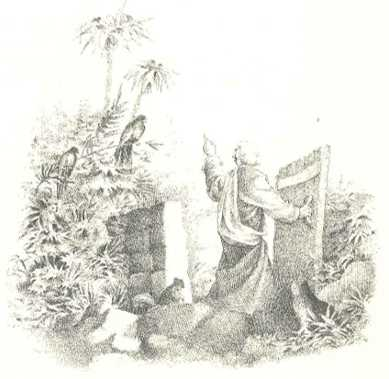
One day there came into the Garden a man in torn clothes badly bruised and cut, who said to the Lover, “In the name of the Beloved I demand your help.”
So the Lover and the Disciple let him in and dressed his wounds and prepared the best of the vegetables from the Garden for him to eat. When his wounds had been dressed and he had eaten and rested the Lover asked him how he had fallen into this plight, to which the man replied, “I was Minister of the Beloved in a city near this place, where I preached His gospel and expounded His doctrine to the people. I pointed out to them how their sins had made them wholly hateful to the Beloved and how therefore they were utterly beyond the range of His love and He would condemn them to eternal torments, whereon some fell into despair and wept bitterly but many were angry. One day the magistrates called me before them and begged me to leave the city and preach elsewhere for they said I had made many people so angry and desperate that they feared there might be a riot and they might not be able to protect me but that I might suffer some injury. I, however, very zealous for the Beloved and believing that the magistrates only feared that their own sins might be proclaimed, preached the more vehemently, denounced the magistrates and made it abundantly clear that the whole wicked city was foredoomed to eternal punishment by the just provision of the Beloved. Whereon a mob, stirred up no doubt by the corrupt and venal magistrates, fell upon me with sticks and stones, nearly killing me and driving me out of the city in the state in which I came to you.”
“My friend,” said the Lover, “this was not a good deed of yours, for besides denying the unfathomable compassion of the Beloved, you have by your obstinacy caused these people to commit a grievous sin, and this cannot be pleasing to the Beloved, that through you who profess to be His minister the people should become worse. Surely you remember that He Himself said, ‘If they persecute you in one city flee to another.’”
Therefore the man was very angry, and cursing the Lover, said, “I see that I have had a very false report of you and I do not believe that you are a servant of the Beloved at all. When I came to you so injured for the Beloved’s sake you set before me only herbs and fruits although the garden is full of birds which you could have killed to make me a worthy meal. I shall proclaim everywhere that you are no true servant of the Beloved but a mere falterer who dares not suffer in the cause of the Beloved. Be sure that you are foreordained to eternal torments who suffer nothing here.”
For the man was so blinded by his own pride that he could not perceive the scars on the hands and feet and the brows of the Lover nor how the cloth beneath the armpits of his tunic was dyed with a red dye. So he went out of the Garden cursing and shouting.
But the Lover looked sad and said, “A man like this does much harm to the cause of the Beloved, for by thus speaking falsely about the Beloved he may bring men to fear Him but none to love Him, and by love alone can any man approach the Beloved.”