


File this under TLDR - you've been warned.
Good morning, digital neighbors! Happy Friday, friends & refugees, early birds & later-dayers, conversants & lurkers, PHAM & misfits, ADD irregulars & WSN curators, black sheep & curmudgeons! Over at Padre’s, one of our members posted about Scott Adams’s declining health and impending death, based on a thread on X. As a priest, I deal with death far more frequently than the average person. I think about it constantly—not in a morbid way, but with an acceptance of its inescapable reality. I can fear it, avoid it, or ignore it, but none of those choices have the power to stop it. Nothing does. One can live wisely, try to prepare for it, and possibly delay it, or one can live foolishly and be terrified and surprised when it touches your life or the life of someone you love. Faith tells me there is something on the other side of death—and how I might prepare for it. That’s another post.
I hadn’t planned on writing about life and death, but Scott’s approaching end has given me pause to reflect with gratitude on having known of him and benefited from his wisdom and his life. Unlike 98.7% of the garbage on the internet, Scott’s gift is his wisdom and critical thinking about life and the current chapter of global and national issues. He did that with a touch of humor, an occasional dash of self-congratulatory pride, and a constant supply of what we trendily call “receipts.” Scott wasn’t just another influencer chumming for likes, farming influence, and hoping for viral streams to sustain his income. He had something to say—well, really, he had questions to ask. I don’t ever recall him telling his audience how to think so much as how not to think.
All data is suspect, and we must not rely on it for overconfident assumptions—something humans take great pleasure in doing. There are so many variables that can impair accurate judgment: incomplete information (often the case), unquestioned blind spots (and many people have them), or being so wedded to our paradigm that we don’t even realize what we do or don’t know. We often don’t know what to ask or what we ought to be seeking in any given scenario. I don’t care how one begins to grow in humility, but recognizing our ignorance and the smallness of our understanding is a good start. Doubts and questions lead me down the path of healthy, seeking skepticism rather than resignation to cynicism. As I’ve mentioned in past posts: ever the skeptic, never the cynic. Skeptics ask questions and are often left with inconclusive understanding; cynics just say we’re all screwed in the end, so why does it matter?
I really appreciated Scott’s use of “directionally correct,” which, if I understand it, means something might not be 100% certain or accurate (and if you only accept 100% verified reality, you won’t accept much), but it is trending in the right direction given the information you currently possess. Life rarely affords us 100% certainty or accuracy; we often have to make the best decision with the data we have, subject to change if new data arrives. Clinging to old or outdated data is one of the worst forms of loserthink, and every profession can become contaminated by it.
Like little Toto in The Wizard of Oz, Scott is one of those questioning souls who frequently pulled back the curtain of “certainty” to expose the doubts and question the assumptions of experts who were more content to guard the current orthodoxy than to be humble seekers trying to make sense of things. I know Scott isn’t perfect and sometimes says some weird-ass stuff, but overall I thought his contribution to meaningful dialogue far outweighed the crazy shit he said. Most people are the exact opposite: they mostly have crazy shit to say with only the occasional gold nugget. Scott was more like a gold mine of reasonable questioning and insightful observation. Anyone who can help on the road to self-possession and emotional integration is worth my time, and Scott often provided that through his questions, commentary, and wit. I never read Dilbert, I was more of a Far Side, Calvin & Hobbes & Bloom County comic consumer, but I always saw Dilbert there in the comic section. It was in 2015 that Scott was really introduced into my life with the election speculation and I am so very thankful for that. In 2016 or 2017 I found CWSA and I was entertained by the Simultaneous Sip and Scott’s commentary. I supported his Local’s community for a couple of years, but was never active in it. More of a lurker there than a participant. I was more drawn to Rubin Report, Phetasy and Triggernometry. I pray for his final days and his journey toward ultimate reality after death. May he know God’s peace. I am so very thankful that I have the benefit of listening to and learning from him.
“When it’s time to die, let us not discover that we have never lived.” — Henry David Thoreau


Today marks the three hundred and thirtieth birthday of the Frenchman François-Marie Arouet, better known by his nom de plume, Voltaire (1694-1778).
Born into a bourgeois family during the reign of Louis XIV, the “Sun King” (r. 1643-1715), Voltaire suffered tragedy at a young age when his mother died. Never close with his father or brother, Voltaire exhibited a rebellious attitude toward authority from his youth. His brilliant mind was fostered in the care of the Society of Jesus, who introduced him to the joys of literature and theater. Despite his later criticisms against the Church, Voltaire, throughout his life, fondly recalled his dedicated Jesuit teachers.
Although he spent time as a civil servant in the French embassy to the Hague, Voltaire’s main love was writing—an endeavor where he excelled in various genres, including poetry, which led to his appointment as the royal court poet for King Louis XV. Widely recognized as one of the greatest French writers, and even hyperbolically referred to by ...
Padre - Tom Miller invites you to a Coffee Talk, Speakeasies, Schmoozes, Tea Times, Afterhours and other gatherings.
https://teams.live.com/meet/93792382189049?p=DiBHsYfuECPgDrG7vO
2026 Coffee Talk with the ADD Irregulars
Thursday, January 1, 2026
6:00 AM - 8:00 AM (CST)
Occurs every day starting 1/1 until 12/31/2027
Coffee Talk - Daily beginning at 6:00 AM Central Time Zone - USA
White Pilled Wednesday - A break from the heaviness of news and current events to focus upon things more personal & positive for the first hour of Coffee Talk.
Afternoon Chats - Most Tuesday, Friday & Sundays 2:00 PM Central
Other chats as posted in the community.




XIII
The Proud Minister
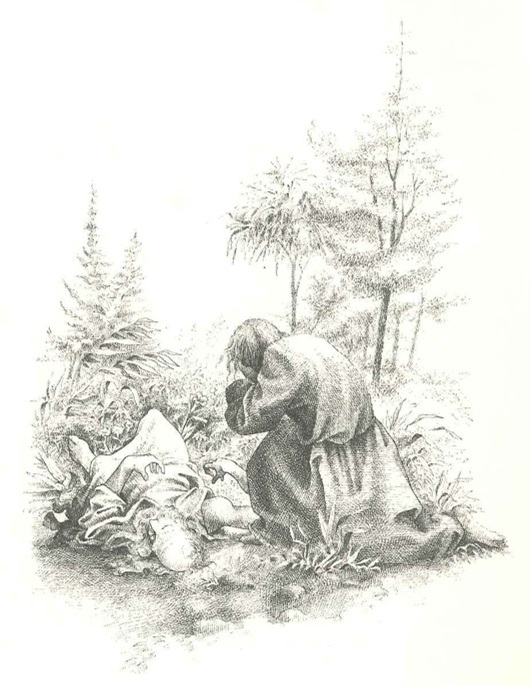
One day there came into the Garden a man in torn clothes badly bruised and cut, who said to the Lover, “In the name of the Beloved I demand your help.”
So the Lover and the Disciple let him in and dressed his wounds and prepared the best of the vegetables from the Garden for him to eat. When his wounds had been dressed and he had eaten and rested the Lover asked him how he had fallen into this plight, to which the man replied, “I was Minister of the Beloved in a city near this place, where I preached His gospel and expounded His doctrine to the people. I pointed out to them how their sins had made them wholly hateful to the Beloved and how therefore they were utterly beyond the range of His love and He would condemn them to eternal torments, whereon some fell into despair and wept bitterly but many were angry. One day the magistrates called me before them and begged me to leave the city and preach elsewhere for they said I had made many people so angry and desperate that they feared there might be a riot and they might not be able to protect me but that I might suffer some injury. I, however, very zealous for the Beloved and believing that the magistrates only feared that their own sins might be proclaimed, preached the more vehemently, denounced the magistrates and made it abundantly clear that the whole wicked city was foredoomed to eternal punishment by the just provision of the Beloved. Whereon a mob, stirred up no doubt by the corrupt and venal magistrates, fell upon me with sticks and stones, nearly killing me and driving me out of the city in the state in which I came to you.”
“My friend,” said the Lover, “this was not a good deed of yours, for besides denying the unfathomable compassion of the Beloved, you have by your obstinacy caused these people to commit a grievous sin, and this cannot be pleasing to the Beloved, that through you who profess to be His minister the people should become worse. Surely you remember that He Himself said, ‘If they persecute you in one city flee to another.’”
Therefore the man was very angry, and cursing the Lover, said, “I see that I have had a very false report of you and I do not believe that you are a servant of the Beloved at all. When I came to you so injured for the Beloved’s sake you set before me only herbs and fruits although the garden is full of birds which you could have killed to make me a worthy meal. I shall proclaim everywhere that you are no true servant of the Beloved but a mere falterer who dares not suffer in the cause of the Beloved. Be sure that you are foreordained to eternal torments who suffer nothing here.”
For the man was so blinded by his own pride that he could not perceive the scars on the hands and feet and the brows of the Lover nor how the cloth beneath the armpits of his tunic was dyed with a red dye. So he went out of the Garden cursing and shouting.
But the Lover looked sad and said, “A man like this does much harm to the cause of the Beloved, for by thus speaking falsely about the Beloved he may bring men to fear Him but none to love Him, and by love alone can any man approach the Beloved.”