

Good Morning, Digital Neighbors! Merry Christmas and Happy New Year, dear Friends & Refugees, Early Birds & Later Dayers, Conversants and Lurkers, Phamily & Misfits, ADD Irregulars, WSN Curators, Curmudgeons and Curmudgeonessas! I am preparing part of a presentation for our married couples in the parish, and in doing so I’m reviewing some older books I’ve read and reading some newer ones to refresh my thinking and help articulate good practices and habits for a more meaningful and happier marriage. The following are a few good book and practice recommendations from the more pastoral side of my life.
The first few are just solid books for deepening your life game and reality engagement.
Feeling Good: The New Mood Therapy by David D. Burns, M.D.
I read this years ago in the early 1990s and it is still one of my favorite books and recommendations for solid cognitive therapy. If you struggle with depression, anxiety, and negative interior dialogue, I think it is one of the best books and toolkits for emotional self-possession and integrated living—aligning your thoughts, feelings, and actions to arrive at the shores of better living.
Crucial Conversations: Tools for Talking When Stakes Are High (by Kerry Patterson, Joseph Grenny, Ron McMillan, and Al Switzler)
I was introduced to this book in the early 2010s during a three-year training seminar in spiritual direction. This book isn’t specifically for spiritual direction, but for its power to improve the quality of communication and the ability to work through difficult issues. Another solid read with very practical tools. It is not a magic wand—if you are dealing with an irreconcilable twat who doesn’t want some mutual shared good and goal, but only his or her way, this book will not help you. There is no book that can help you deal with that level of immaturity, selfishness, and ego. Individuals either need to grow beyond those terrible traits or suffer from them throughout their lives and relationships.
What is sad is that many family dynamics empower these emotional and relational black holes for decades, much to the ruin of their members. “That’s just the way Grandma is” is a white flag of surrender. It sucks for everyone who doesn’t subscribe to Grandma’s “my way or the highway” approach, but it’s great if you are Grandma Khan. “She’s grandma, after all—she deserves it.” Those lines drive more people away from family participation than many realize.
Sorry for that aside, but books and advice only help willing recipients and open minds.
The last book and newest in my toolbox: The Seven Principles for Making Marriage Work (by John Gottman, co-authored with Nan Silver; updated edition 2015) Apparently, this goes back to the 1990s, but it has only come to my attention most recently. It is another practical guide to deepening the bonds of marriage. The seven principles are very actionable; here is a short list of them. Some are self-evident, and others need better articulation in my own relationships.
1. Enhance Your Love Maps
2. Nurture Your Fondness and Admiration
3. Turn Toward Each Other Instead of Away
4. Let Your Partner Influence You
5. Solve Your Solvable Problems
6. Overcome Gridlock
7. Create Shared Meaning
In healthier relationships these things happen with so much ease you don’t have to think about them; in struggling relationships it’s hard to see the light at the end of the tunnel.
Gottman has a great section in Chapter 5—“Solve Your Solvable Problems”—where he names the Four Horsemen of the Apocalypse for relationship destruction. These are:
1. Criticism: Attacking your partner’s character or personality rather than focusing on a specific behavior. It uses global language like “you always” or “you never,” making the other person feel assaulted.
2. Contempt: The most toxic of the four (and the strongest predictor of breakup). It involves treating your partner with disrespect, inferiority, or disgust—through sarcasm, mockery, name-calling, eye-rolling, or hostile humor. Cue Bill Paxton from Aliens if you’re living in a house of contempt.
3. Defensiveness: Self-protection by denying responsibility, making excuses, counter-blaming, or whining. It’s often a response to perceived criticism.
4. Stonewalling: Withdrawing from the interaction—shutting down, avoiding eye contact, giving the silent treatment, or physically leaving. It often happens when someone feels physiologically overwhelmed (“flooded”).
When your relationship becomes hostage to these dynamics, you are on the path to falling out of love, out of marriage, and headed toward divorce.
Many men will never be persuaded to read or adopt these practices unless you approach them as something to deepen the marriage—and even then, there will be resistance in my experience. Men can be their own worst enemies, just as women can be their own worst enemies. I don’t know any man who won’t crayfish into a defensive posture if he gets wind that his wife wants to “fix” their marriage.
“Fixing,” in our male mind, feels like being neutered, and no man wants to surrender his psychological nuts for the cause. I hate to say it’s a semantic game, but words do matter and the nuance they carry. Enhance, upgrade, enrich, deepen, make it more satisfying, work through the minor issues before they become major—I don’t know how you need to package it for the significant other in your life, but if you can find a way to invite mutual growth and change, everyone will be happier for it. Well, enough babble for today. Happy Thursday, my friends!



Today marks the three hundred and thirtieth birthday of the Frenchman François-Marie Arouet, better known by his nom de plume, Voltaire (1694-1778).
Born into a bourgeois family during the reign of Louis XIV, the “Sun King” (r. 1643-1715), Voltaire suffered tragedy at a young age when his mother died. Never close with his father or brother, Voltaire exhibited a rebellious attitude toward authority from his youth. His brilliant mind was fostered in the care of the Society of Jesus, who introduced him to the joys of literature and theater. Despite his later criticisms against the Church, Voltaire, throughout his life, fondly recalled his dedicated Jesuit teachers.
Although he spent time as a civil servant in the French embassy to the Hague, Voltaire’s main love was writing—an endeavor where he excelled in various genres, including poetry, which led to his appointment as the royal court poet for King Louis XV. Widely recognized as one of the greatest French writers, and even hyperbolically referred to by ...
Padre - Tom Miller invites you to a Coffee Talk, Speakeasies, Schmoozes, Tea Times, Afterhours and other gatherings.
https://teams.live.com/meet/93792382189049?p=DiBHsYfuECPgDrG7vO
2026 Coffee Talk with the ADD Irregulars
Thursday, January 1, 2026
6:00 AM - 8:00 AM (CST)
Occurs every day starting 1/1 until 12/31/2027
Coffee Talk - Daily beginning at 6:00 AM Central Time Zone - USA
Afternoon Chats - Most Tuesday, Friday & Sundays 2:00 PM Central
Always invited, never expected.
Other chats as posted in the community.




XIII
The Proud Minister
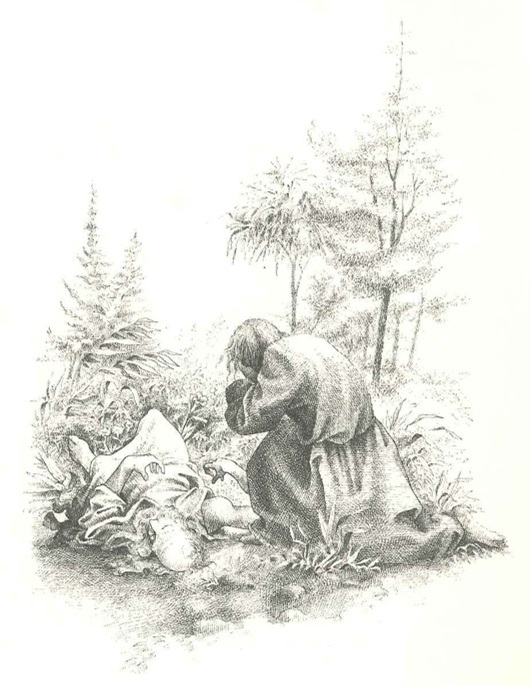
One day there came into the Garden a man in torn clothes badly bruised and cut, who said to the Lover, “In the name of the Beloved I demand your help.”
So the Lover and the Disciple let him in and dressed his wounds and prepared the best of the vegetables from the Garden for him to eat. When his wounds had been dressed and he had eaten and rested the Lover asked him how he had fallen into this plight, to which the man replied, “I was Minister of the Beloved in a city near this place, where I preached His gospel and expounded His doctrine to the people. I pointed out to them how their sins had made them wholly hateful to the Beloved and how therefore they were utterly beyond the range of His love and He would condemn them to eternal torments, whereon some fell into despair and wept bitterly but many were angry. One day the magistrates called me before them and begged me to leave the city and preach elsewhere for they said I had made many people so angry and desperate that they feared there might be a riot and they might not be able to protect me but that I might suffer some injury. I, however, very zealous for the Beloved and believing that the magistrates only feared that their own sins might be proclaimed, preached the more vehemently, denounced the magistrates and made it abundantly clear that the whole wicked city was foredoomed to eternal punishment by the just provision of the Beloved. Whereon a mob, stirred up no doubt by the corrupt and venal magistrates, fell upon me with sticks and stones, nearly killing me and driving me out of the city in the state in which I came to you.”
“My friend,” said the Lover, “this was not a good deed of yours, for besides denying the unfathomable compassion of the Beloved, you have by your obstinacy caused these people to commit a grievous sin, and this cannot be pleasing to the Beloved, that through you who profess to be His minister the people should become worse. Surely you remember that He Himself said, ‘If they persecute you in one city flee to another.’”
Therefore the man was very angry, and cursing the Lover, said, “I see that I have had a very false report of you and I do not believe that you are a servant of the Beloved at all. When I came to you so injured for the Beloved’s sake you set before me only herbs and fruits although the garden is full of birds which you could have killed to make me a worthy meal. I shall proclaim everywhere that you are no true servant of the Beloved but a mere falterer who dares not suffer in the cause of the Beloved. Be sure that you are foreordained to eternal torments who suffer nothing here.”
For the man was so blinded by his own pride that he could not perceive the scars on the hands and feet and the brows of the Lover nor how the cloth beneath the armpits of his tunic was dyed with a red dye. So he went out of the Garden cursing and shouting.
But the Lover looked sad and said, “A man like this does much harm to the cause of the Beloved, for by thus speaking falsely about the Beloved he may bring men to fear Him but none to love Him, and by love alone can any man approach the Beloved.”