


Good morning, digital neighbors! Yesterday I shared this over on Humbuggery, and I thought I would share it here instead of something new this morning. Call me lazy, or efficient. YMMV. It’s drawn from yesterday’s morning prayers and the subsequent post. Happy Wednesday, dear neighbors! This line always remains with me throughout the day after reflecting on it: "Our life is stamped with the beauty of his thought. The inner and the outer man are harmonized in a kind of music. "
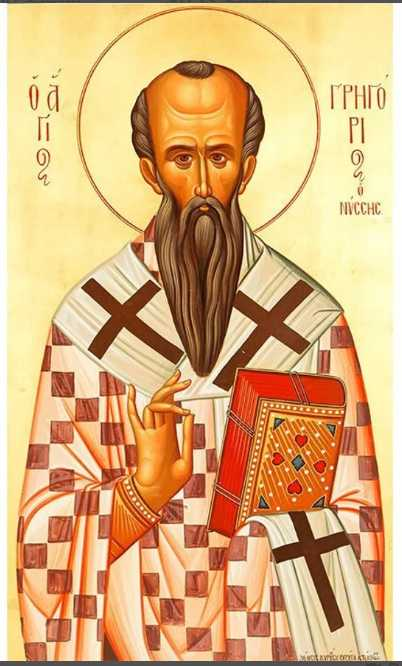
A little excerpt from the Office of Readings today—one of my favorite saints, St. Gregory of Nyssa. But before we drink of his wisdom, here’s a little background on the man himself, provided by Grok.
Born around 335 in Cappadocia (present-day Turkey) into a prominent Christian family, Gregory was one of ten children. His family was deeply religious—his parents (Basil the Elder and Emmelia) and several siblings (including St. Macrina the Younger and St. Peter of Sebaste) are also venerated as saints. He was influenced heavily by his brother Basil and his sister Macrina.
Originally more inclined toward rhetoric and scholarship than church administration, Gregory married (his wife is sometimes identified as Theosebia) and may have taught rhetoric before entering fuller church service. Around 372, Basil appointed him bishop of the small see of Nyssa. He faced significant challenges, including exile due to conflicts with Arian-leaning authorities, but returned after the death of Emperor Valens in 378. He participated actively in the First Council of Constantinople (381), which affirmed the Nicene Creed and helped solidify Trinitarian orthodoxy against Arianism. He died around 394.
I encountered his thought early in seminary and took readily to his style and insight. Of the three great Cappadocians, I’ve always liked him best, followed by Gregory of Nazianzen and then Basil. All three are well worth the time and interest. Their love of the Lord is evident and deeply relatable.
From a treatise on Christian Perfection by Saint Gregory of Nyssa, bishop.
Christ should be manifest in our whole life
The life of the Christian has three distinguishing aspects: deeds, words and thought. Thought comes first, then words, since our words express openly the interior conclusions of the mind. Finally, after thoughts and words, comes action, for our deeds carry out what the mind has conceived. So when one of these results in our acting or speaking or thinking, we must make sure that all our thoughts, words and deeds are controlled by the divine ideal, the revelation of Christ. For then our thoughts, words and deeds will not fall short of the nobility of their implications.
What then must we do, we who have been found worthy of the name of Christ? Each of us must examine his thoughts, words and deeds, to see whether they are directed toward Christ or are turned away from him. This examination is carried out in various ways. Our deeds or our thoughts or our words are not in harmony with Christ if they issue from passion. They then bear the mark of the enemy who smears the pearl of the heart with the slime of passion, dimming and even destroying the luster of the precious stone.
On the other hand, if they are free from and untainted by every passionate inclination, they are directed toward Christ, the author and source of peace. He is like a pure, untainted stream. If you draw from him the thoughts in your mind and the inclinations of your heart, you will show a likeness to Christ, your source and origin, as the gleaming water in a jar resembles the flowing water from which it was obtained.
For the purity of Christ and the purity that is manifest in our hearts are identical. Christ’s purity, however, is the fountainhead; ours has its source in him and flows out of him. Our life is stamped with the beauty of his thought. The inner and the outer man are harmonized in a kind of music. The mind of Christ is the controlling influence that inspires us to moderation and goodness in our behavior. As I see it, Christian perfection consists in this: sharing the titles which express the meaning of Christ’s name, we bring out this meaning in our minds, our prayers and our way of life.


Today marks the three hundred and thirtieth birthday of the Frenchman François-Marie Arouet, better known by his nom de plume, Voltaire (1694-1778).
Born into a bourgeois family during the reign of Louis XIV, the “Sun King” (r. 1643-1715), Voltaire suffered tragedy at a young age when his mother died. Never close with his father or brother, Voltaire exhibited a rebellious attitude toward authority from his youth. His brilliant mind was fostered in the care of the Society of Jesus, who introduced him to the joys of literature and theater. Despite his later criticisms against the Church, Voltaire, throughout his life, fondly recalled his dedicated Jesuit teachers.
Although he spent time as a civil servant in the French embassy to the Hague, Voltaire’s main love was writing—an endeavor where he excelled in various genres, including poetry, which led to his appointment as the royal court poet for King Louis XV. Widely recognized as one of the greatest French writers, and even hyperbolically referred to by ...
Padre - Tom Miller invites you to a Coffee Talk, Speakeasies, Schmoozes, Tea Times, Afterhours and other gatherings.
https://teams.live.com/meet/93792382189049?p=DiBHsYfuECPgDrG7vO
2026 Coffee Talk with the ADD Irregulars
Thursday, January 1, 2026
6:00 AM - 8:00 AM (CST)
Occurs every day starting 1/1 until 12/31/2027
Coffee Talk - Daily beginning at 6:00 AM Central Time Zone - USA
White Pilled Wednesday - A break from the heaviness of news and current events to focus upon things more personal & positive for the first hour of Coffee Talk.
Afternoon Chats - Most Tuesday, Friday & Sundays 2:00 PM Central
Other chats as posted in the community.






XIII
The Proud Minister
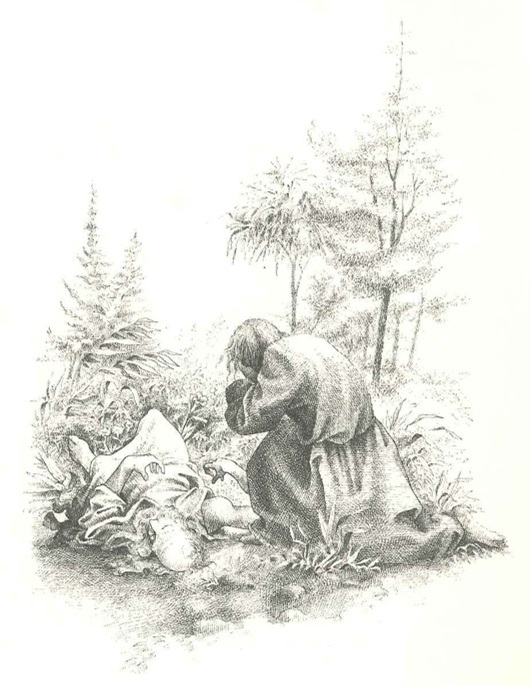
One day there came into the Garden a man in torn clothes badly bruised and cut, who said to the Lover, “In the name of the Beloved I demand your help.”
So the Lover and the Disciple let him in and dressed his wounds and prepared the best of the vegetables from the Garden for him to eat. When his wounds had been dressed and he had eaten and rested the Lover asked him how he had fallen into this plight, to which the man replied, “I was Minister of the Beloved in a city near this place, where I preached His gospel and expounded His doctrine to the people. I pointed out to them how their sins had made them wholly hateful to the Beloved and how therefore they were utterly beyond the range of His love and He would condemn them to eternal torments, whereon some fell into despair and wept bitterly but many were angry. One day the magistrates called me before them and begged me to leave the city and preach elsewhere for they said I had made many people so angry and desperate that they feared there might be a riot and they might not be able to protect me but that I might suffer some injury. I, however, very zealous for the Beloved and believing that the magistrates only feared that their own sins might be proclaimed, preached the more vehemently, denounced the magistrates and made it abundantly clear that the whole wicked city was foredoomed to eternal punishment by the just provision of the Beloved. Whereon a mob, stirred up no doubt by the corrupt and venal magistrates, fell upon me with sticks and stones, nearly killing me and driving me out of the city in the state in which I came to you.”
“My friend,” said the Lover, “this was not a good deed of yours, for besides denying the unfathomable compassion of the Beloved, you have by your obstinacy caused these people to commit a grievous sin, and this cannot be pleasing to the Beloved, that through you who profess to be His minister the people should become worse. Surely you remember that He Himself said, ‘If they persecute you in one city flee to another.’”
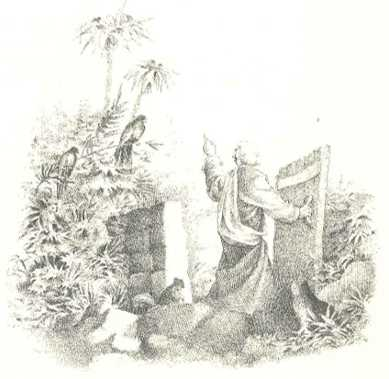
Therefore the man was very angry, and cursing the Lover, said, “I see that I have had a very false report of you and I do not believe that you are a servant of the Beloved at all. When I came to you so injured for the Beloved’s sake you set before me only herbs and fruits although the garden is full of birds which you could have killed to make me a worthy meal. I shall proclaim everywhere that you are no true servant of the Beloved but a mere falterer who dares not suffer in the cause of the Beloved. Be sure that you are foreordained to eternal torments who suffer nothing here.”
For the man was so blinded by his own pride that he could not perceive the scars on the hands and feet and the brows of the Lover nor how the cloth beneath the armpits of his tunic was dyed with a red dye. So he went out of the Garden cursing and shouting.
But the Lover looked sad and said, “A man like this does much harm to the cause of the Beloved, for by thus speaking falsely about the Beloved he may bring men to fear Him but none to love Him, and by love alone can any man approach the Beloved.”