VIII
The Disciple and the Crown of Thorns
One day after the Disciple had been working in the Garden for a long time he came to the Lover and said, “Sir, I want to experience suffering for the Beloved’s sake.”
The Lover answered, “I often hear you complaining that thorns tear your arms and nettles sting your face and the spade galls your hands; what is this if it is not suffering for the Beloved’s sake?”
“These,” the Disciple replied, “are only common accidents that happen to all gardeners. I would feel the suffering that befalls the Lovers of the Beloved.”
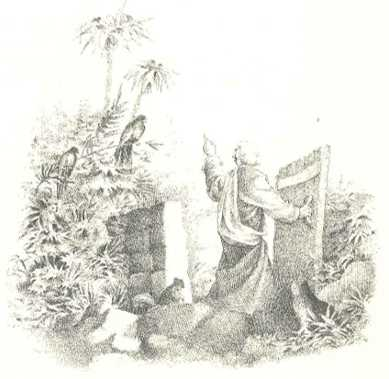
The Lover said nothing but looked sadly at him and led him to a walled part of the Garden where he had never been before. In the middle of the enclosure stood a cross. When the Disciple saw it he was overcome with terror and trembled violently, but the Lover took him by the arm and leading him to the foot of the cross said, “This is the cross of the Beloved and on it all His Lovers must suffer.”
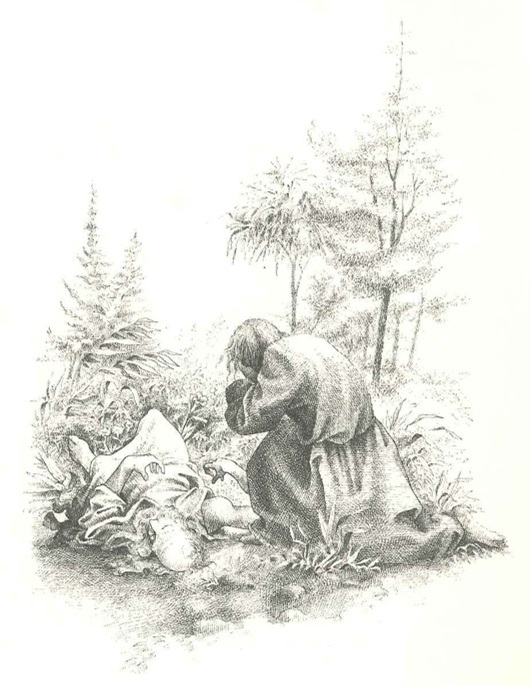
Then an anguish of fear fell on the Disciple and he could not speak and his limbs would barely support him. The Lover took up a circlet of cruel thorns and placed it gently on the Disciple’s head. As soon as the thorns touched his flesh the Disciple felt about his brow an agony of torment as if all the pain in the world had come together in that one place. In his terror and pain he fainted and knew no more. When he revived he was lying on the soft grass of the outer Garden and the Lover sat beside him regarding him with pity. Then for the first time the Disciple saw that there were scars on the Lover’s hands and feet and on his brows and the tunic under his armpits was dyed with a red dye.
“My son,” said the Lover, “how when you could not bear joyously for the Beloved’s sake the little common hurts of His Garden could you hope to bear the torments of the Lovers of the Beloved? Truly the crown was laid so lightly on your brow that not a thorn pierced the skin.”
So the Disciple saw that the Beloved allows to each Lover only such suffering as he is able to bear and joyfully thereafter bore the small hurts of the Garden.