



At Padre's
Politics • Spirituality/Belief • Culture
Your Digitial Neighborhood - A place on connection, community and conversation. Come listen, laugh and join us for random discussions, cultural issues, personal stories. pets, cooking, politics and just about anything else. ALWAYS INVITED - NEVER EXPECTED!
Interested? Want to learn more about the community?
October 14, 2021
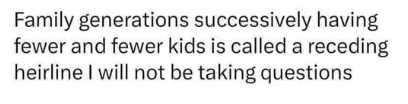
I laughed out loud
post photo preview
Interested? Want to learn more about the community?
What else you may like…
Videos
Podcasts
Posts
Articles
February 13, 2026
GOTW 4 - Hard to part with it
00:00:36
February 11, 2026
MOTW 191 - The 1% vs the 99%
00:00:45
February 08, 2026
GOTW 3 - More e-mails!
00:00:46
It's been a rough year..
November 22, 2024
Voltaire's birthday 11-21-1694 - A brief essay by Steve Weidenkopf

Today marks the three hundred and thirtieth birthday of the Frenchman François-Marie Arouet, better known by his nom de plume, Voltaire (1694-1778).

Born into a bourgeois family during the reign of Louis XIV, the “Sun King” (r. 1643-1715), Voltaire suffered tragedy at a young age when his mother died. Never close with his father or brother, Voltaire exhibited a rebellious attitude toward authority from his youth. His brilliant mind was fostered in the care of the Society of Jesus, who introduced him to the joys of literature and theater. Despite his later criticisms against the Church, Voltaire, throughout his life, fondly recalled his dedicated Jesuit teachers.

Although he spent time as a civil servant in the French embassy to the Hague, Voltaire’s main love was writing—an endeavor where he excelled in various genres, including poetry, which led to his appointment as the royal court poet for King Louis XV. Widely recognized as one of the greatest French writers, and even hyperbolically referred to by ...

Voltaire's birthday 11-21-1694 - A brief essay by Steve Weidenkopf
Meme You Shouldn't Be Ashamed of Sharing of The Week Nominees

Happy National Do a Grouch a Favour Day! I've done my part by rebranding MOTW this week, how will you do yours?

Thanks for sharing!

January 01, 2026
2026 Teams Talk @ Padre's

Padre - Tom Miller invites you to a Coffee Talk, Speakeasies, Schmoozes, Tea Times, Afterhours and other gatherings.

https://teams.live.com/meet/93792382189049?p=DiBHsYfuECPgDrG7vO

2026 Coffee Talk with the ADD Irregulars
Thursday, January 1, 2026
6:00 AM - 8:00 AM (CST)
Occurs every day starting 1/1 until 12/31/2027

Coffee Talk - Daily beginning at 6:00 AM Central Time Zone - USA

White Pilled Wednesday - A break from the heaviness of news and current events to focus upon things more personal & positive for the first hour of Coffee Talk.

Afternoon Chats - Most Tuesday, Friday & Sundays 2:00 PM Central

Other chats as posted in the community. 

post photo preview
post photo preview
Marco Rubio's Munich Triumph - Rod Dreher
mail?url=https%3A%2F%2Fsubstackcdn.com%2Fimage%2Ffetch%2F%24s_%2169GR%21%2Cw_1100%2Cc_limit%2Cf_auto%2Cq_auto%3Agood%2Cfl_progressive%3Asteep%2Fhttps%253A%252F%252Fsubstack-post-media.s3.amazonaws.com%252Fpublic%252Fimages%252F4e41ba02-3526-4a61-9f28-e5a1b5243898_1860x380.png&t=1771245984&ymreqid=d41d8cd9-8f00-b204-1cf4-53000901c900&sig=WdNJsIzowN_V5Y0bfPq1Lg--~D

Marco Rubio's Munich Triumph

And: 'Gott Mit Uns'; Liberal Leaves Atheism; Why Is 'Anglo-Saxon' Bad? Tipi Loschi

Feb 16
 
 
Paid
mail?url=https%3A%2F%2Fsubstackcdn.com%2Fimage%2Ffetch%2F%24s_%21dnYe%21%2Cf_auto%2Cq_auto%3Agood%2Cfl_progressive%3Asteep%2Fhttps%253A%252F%252Fbucketeer-e05bbc84-baa3-437e-9518-adb32be77984.s3.amazonaws.com%252Fpublic%252Fimages%252F762a4764-c24d-4d8a-87f0-ff761d14f527_1802x2355.jpeg&t=1771245984&ymreqid=d41d8cd9-8f00-b204-1cf4-53000901c900&sig=ahzV5SOuVg6OcHo5KW74yg--~D


READ IN APP
 
  
Marco Rubio at the Munich Security Conference (full video here)

Secretary of State Marco Rubio really has emerged as the big talent in this administration. He went to the Munich Security Conference over the weekend and basically laid down the Team Trump line on Europe, but did it in a way that didn’t freak the Euros out. From the transcript:

Under President Trump, the United States of America will once again take on the task of renewal and restoration, driven by a vision of a future as proud, as sovereign, and as vital as our civilization’s past. And while we are prepared, if necessary, to do this alone, it is our preference and it is our hope to do this together with you, our friends here in Europe.

For the United States and Europe, we belong together. America was founded 250 years ago, but the roots began here on this continent long before. The man who settled and built the nation of my birth arrived on our shores carrying the memories and the traditions and the Christian faith of their ancestors as a sacred inheritance, an unbreakable link between the old world and the new.

We are part of one civilization – Western civilization. We are bound to one another by the deepest bonds that nations could share, forged by centuries of shared history, Christian faith, culture, heritage, language, ancestry, and the sacrifices our forefathers made together for the common civilization to which we have fallen heir.

And so this is why we Americans may sometimes come off as a little direct and urgent in our counsel. This is why President Trump demands seriousness and reciprocity from our friends here in Europe. The reason why, my friends, is because we care deeply. We care deeply about your future and ours. And if at times we disagree, our disagreements come from our profound sense of concern about a Europe with which we are connected – not just economically, not just militarily. We are connected spiritually and we are connected culturally. We want Europe to be strong. We believe that Europe must survive, because the two great wars of the last century serve for us as history’s constant reminder that ultimately, our destiny is and will always be intertwined with yours, because we know – (applause) – because we know that the fate of Europe will never be irrelevant to our own.

National security, which this conference is largely about, is not merely series of technical questions – how much we spend on defense or where, how we deploy it, these are important questions. They are. But they are not the fundamental one. The fundamental question we must answer at the outset is what exactly are we defending, because armies do not fight for abstractions. Armies fight for a people; armies fight for a nation. Armies fight for a way of life. And that is what we are defending: a great civilization that has every reason to be proud of its history, confident of its future, and aims to always be the master of its own economic and political destiny.

It was here in Europe where the ideas that planted the seeds of liberty that changed the world were born. It was here in Europe where the world – which gave the world the rule of law, the universities, and the scientific revolution. It was this continent that produced the genius of Mozart and Beethoven, of Dante and Shakespeare, of Michelangelo and Da Vinci, of the Beatles and the Rolling Stones. And this is the place where the vaulted ceilings of the Sistine Chapel and the towering spires of the great cathedral in Cologne, they testify not just to the greatness of our past or to a faith in God that inspired these marvels. They foreshadow the wonders that await us in our future. But only if we are unapologetic in our heritage and proud of this common inheritance can we together begin the work of envisioning and shaping our economic and our political future.

More:

But we must also gain control of our national borders. Controlling who and how many people enter our countries, this is not an expression of xenophobia. It is not hate. It is a fundamental act of national sovereignty. And the failure to do so is not just an abdication of one of our most basic duties owed to our people. It is an urgent threat to the fabric of our societies and the survival of our civilization itself.

And:

And this is why we do not want our allies to be weak, because that makes us weaker. We want allies who can defend themselves so that no adversary will ever be tempted to test our collective strength. This is why we do not want our allies to be shackled by guilt and shame. We want allies who are proud of their culture and of their heritage, who understand that we are heirs to the same great and noble civilization, and who, together with us, are willing and able to defend it.

And this is why we do not want allies to rationalize the broken status quo rather than reckon with what is necessary to fix it, for we in America have no interest in being polite and orderly caretakers of the West’s managed decline. We do not seek to separate, but to revitalize an old friendship and renew the greatest civilization in human history.

Boom! Read the whole thing — especially the part near the end in which Rubio speaks of what America owes to Europe. Exactly right, and delivered in what you might call love, not as an insult. I understand this was well received. I hope so. Everything Rubio said is true and vitally important.

It is hard to overstate how badly the president’s intemperate and insulting remarks have been received in Europe — and, the thing that concerns me the most, is how damaging they have been to the electoral prospects of nationalist-sovereigntist parties on the Continent. A prominent French conservative journalist lamented to me last week that with the French Right — the RN, not the squishy Right — having become the leading party in France, next year’s election will likely be fought over, incredibly, Donald Trump. As stupid as it sounds — as stupid as it actually is! — the emotional power of the figure of Trump over European voters is a real thing. It can’t be wished away. The president’s big mouth stands to do to all these parties — parties whose accession to government would dramatically be in America’s interest — what it did to poor Pierre Poilievre in Canada.

Don’t believe me? Read this essay by David Engels, a strongly nationalist, anti-migration conservative intellectual — the kind of right-wing thinker who initially welcomed Trump. Excerpts:

At first glance, Trump’s second presidency seemed to offer European conservatives the kind of vindication after years of marginalisation.

But:

… the Greenland affair and Trump’s bid to annex European territory were experienced as open aggression and an outright breach of confidence.

That matters because European electorates—especially those sceptical of Brussels—tolerate weakness in their own elites more readily than they tolerate a humiliation of their civilisation. Criticism of European bureaucrats may be more than welcome, but contempt for Europe as such gradually triggers a different reflex, as it wounds a collective pride that still lingers in a society otherwise resigned to decline.

It’s Poilievre 2.0: as sick as electorates might be of liberal governance, they cannot bear to be humiliated. Trump humiliated them. And for what? Naturally the reflex of voters is to lash back — and that’s going to hurt the kinds of political parties that Trump needs to be in power in Europe, if only for America’s national interest. Rubio’s speech went far, it seems, in repairing that breach.

Meanwhile, EU Commission president Ursula von der Leyen, also speaking at Munich, beat the drums of war with Russia. Quote from her speech:

We must make decisions faster. And this may mean relying on the result of a qualified majority rather than unanimity. We do not need to change the Treaty for this. We need to use the one we have. And we have to be creative.

Translation: Viktor Orban’s Hungary is the only one standing in the way of Europe declaring war on Russia. We will find a way around him.

From PoliticoEU:

The EU is hatching an unprecedented plan that could give Ukraine partial membership in the bloc as early as next year, as Brussels tries to shore up the country’s position in Europe and away from Moscow, according to 10 officials and diplomats.

Four years on from Russia’s full-scale invasion, and with Kyiv pushing for EU membership in 2027 to be included in a peace deal with the Kremlin, the early-stage idea would represent a dramatic change to the way the bloc brings new countries into the fold. The plan would see Ukraine getting a seat at the EU table before carrying out the reforms needed for full membership privileges.

April 12 is Election Day in Hungary. If Viktor Orban falls — and you can be sure all the efforts of European governments and intelligence agencies are pushing for that — then it is likely that the last obstacle to Ukraine’s entry into the EU will fall too. Orban’s opponent, Peter Magyar, has only said that if he wins, he will put it up to a national referendum in Hungary. But most Hungarians do not want Ukraine in the EU, not least because they know that means war with Russia. One expects that no matter how Hungarian voters feel, this will be an election that pro-Ukraine forces will “win.”

This is an extraordinarily dangerous moment for Europe. Bizarrely, its entire leadership class, save for Orban and some of his Central European allies, like Slovakia’s Robert Fico, are pushing hard for war with Russia. Why? What are they going to fight with? European militaries are weak. There is a lot of support among European publics for Ukraine in general, but I wonder what European voters will think if they are actually faced with the prospect of real live war on Ukraine’s behalf?

Balazs Orban, the Hungarian PM’s political director, tweeted the other day:

Brussels has made its objective clear: to defeat Russia on Ukrainian territory. Across Europe — with the exception of Hungary — war preparations are underway:

Conscription has been reintroduced in nine countries. In some, it now applies to women. Civil defense manuals are being distributed to households. Military spending has surged. Agreements have been signed about sending troops to Ukraine.

So far, Brussels has spent nearly €200 billion on the war. In December alone, it approved another €90 billion loan — backed by Member State guarantees.
And now:
€800 billion is demanded for “operations”
€700 billion for Ukraine’s army

Yet no one answers the most basic question: how do you defeat a nuclear power without triggering nuclear weapons?

Meanwhile, this report from the WSJ on a failed NATO military exercise is alarming:

Russia and Ukraine have shown the world the future of warfare—and America and its allies aren’t ready for it. That’s the lesson of a major exercise that North Atlantic Treaty Organization members conducted in Estonia last May. What transpired during the exercise, with the details reported here for the first time, exposed serious tactical shortcomings and vulnerabilities in high-intensity drone combat.

The exercise, known as Hedgehog 2025, involved more than 16,000 troops from 12 NATO countries who drilled alongside Ukrainian drone experts, including soldiers borrowed from the front line. It simulated a “contested and congested” battlefield with various kinds of drones, says Lt. Col. Arbo Probal, head of the unmanned systems program for the Estonian Defence Forces. “The aim was really to create friction, the stress for units, and the cognitive overload as soon as possible,” he says. That tests the soldiers’ ability to adapt under fire.

More:

A single team of some 10 Ukrainians, acting as the adversary, counterattacked the NATO forces. In about half a day they mock-destroyed 17 armored vehicles and conducted 30 “strikes” on other targets.

…Multiple sources told the story of one commander, who observed the drill and concluded, “We are f—.”

Look, the Ukraine war, which was brand-new the last time Orban ran for re-election (2022), was a big reason he won. Hungarians have no special love for Russia, which invaded their country infamously in 1956 to suppress an uprising, and which held it captive for over 40 years. But they understand what a war with Russia stands to do to their country, which is a lot closer to the front lines than France and Germany, and they don’t want it. They don’t understand why they should sacrifice their country for Ukraine, which is not even in NATO. And they’re right. Most Americans — probably most of my American readers, even — back Ukraine, but I ask you to consider how you would feel if you had to face Russian missiles and Russian drone swarms devastating your towns and cities. That’s what Europeans, especially those in what we used to call “Eastern Europe”, would face.

If Russia attacked NATO, then we would have no choice but to fight. But to bring Ukraine into the EU under these conditions, while not making it officially part of NATO, would be a distinction without practical difference. And if European militaries were to attack Russia, and Russia responded (as of course it would be compelled to), that means, under the terms of the NATO Treaty, that the US would have to respond militarily as part of its treaty obligations.

Are Americans ready for that? Because this is what’s coming.

‘Gott Mit Uns’: German Churches And World War I

There is nothing good about being flat on your back with mono, but I’m trying to make the best of it by reading, reading, reading. I read a couple of books about the role of religion in Germany during World War I, with an eye towards understanding how losing the war affected the religious sense of the German people in the 1920s. Philip Jenkins’s book The Great And Holy War is about how the Great Powers — all of them — sold the war to their publics as a sacred cause is a great resource. Jenkins points out that no country’s religious authorities did this more than Germany’s.

Historian Jason Crouthamel’s book Trauma, Religion and Spirituality in Germany during the First World War focuses exclusively on Germany. There was in Wilhelmine Germany a very close connection between the Protestant church and the state. But nearly all religious leaders, including Catholic ones, were behind the war effort in full force, characterizing it as a German Christian jihad. This nationalist idealism did not survive the trenches:

As the mass slaughter of industrialized warfare unfolded, and religious language became increasingly divorced from nationalistic conceptions of God as a force for courage, patriotism, and sacrifice, language about God focused on the capriciousness of life and death as well as God’s will and role in this irrational front experience. An interesting tension can be found in the correspondence between the home and combat fronts.

While men and women often struggled to exert agency through their imagination of God as a savior and protector, the sense that one did not actually have any control also pervaded letters and diaries. For many, God was not so much “with us,” as the dominant rhetoric promised. Rather, he seemed to be a remote, incomprehensible, and mysterious arbiter of a colossal, apocalyptic accident. The importance of fatalistic religious language has been analyzed by a number of historians because of its function as a coping mechanism for soldiers who struggled with an increasingly chaotic environment.

However, beyond its role as a coping mechanism, fatalistic thinking also signaled a shift to more personal and increasingly subjective thinking about religion. If God is remote and capricious, perhaps other spiritual-religious tools were needed to protect one from danger? The breakdown of the spirit of 1914 would lay the groundwork for religious experimentation, improvisation, and invention…

In the 1920s, that included a generalized weakening of faith in Christian authorities, the eventual Nazification of some on the Protestant side (because the loss of a war that had been sold as God’s Cause was psychologically unbearable), and an acceleration of pre-war interest in the occult.

In this past issue of this newsletter, I linked to a 1993 Fordham paper (no longer available online) about occultism in pre-Bolshevik and post-Bolshevik Russia points out, occultism rises in times of great national stress. More:

By the 1890s, the impersonality of the burgeoning cities, the perceived threat of mass democracy to culture and higher values, increasing class conflict and ethnic strife, combine d to foster rejection of liberalism, rationalism, materialism, and positivism by an ever growing number of artists and intellectuals . Occult ideas combined with radical political doctrines o f both left and right, with apocalypticism both Christian and secular, and with the anti-rationalist philosophies of Nietzsche, and to a lesser extent, of Bergson, fostered contempt for the “bourgeois values” of peace and prosperity.

These trends sprang forth with even greater vehemence after the Great War, and continued through the 1920s. Indeed, in the eyes of many people, including occultists, the Great War confirmed the bankruptcy of rational civilization. Occultists had a natural affinity for extreme political doctrines. That Naziism had occult roots is generally known, but occult doctrines and beliefs entered into Bolshevism and Stalinism as well, as we shall see. The Nazi mystique of blood and soil was bound up with Blavatsky’s idea that certain “root races,” in which she included Jews and Gypsies, were obsolete. She did not say that they should be exterminated, but some German occultists did. Some French occultists had demonized Jews as well . Just as the French Revolution was labelled a masonic conspiracy, the Bolshevik Revolution was attributed to a “Judeo-Masonic conspiracy.”

Note this:

For most of the 19th century, interest in the occult by the Russian elite was confined to a few circles, but in the 1880s the cultural climate began to change. The fading appeal of the official Orthodox Church, the spiritually unsatisfying atheism and positivism of the intelligentsia, the destabilizing impact of the rapid industrialization of the 1890s, political upheaval, cultural disintegration, and the association of rationalism and materialism with the West, combined to create a climate of personal confusion and religious quest which was receptive to the occult.

You would have thought occultism would have vanished under the reign of militant Bolshevik atheism. Nope, it just morphed:

Occultism was an element in Soviet culture as well. The line between magic and science disappeared in the utopianism of the early Soviet period . Hopes formerly invested in religion and magic were transferred to technology and science.

I believe we are seeing, and will continue to see, the same sort of transformation in post-Christian America — not just literal occultism, but a techno-futuristic form, likely associated with AI.

Over the weekend, I read an advance copy of Diana Pasulka’s forthcoming book, The Others. It won’t be out till summer, so I can’t write about it just yet. I have some disputes with the later chapters, but it is overall, I think, her most important book yet. And it deals in part with this very issue. I was startled and pleased to see the attention she gives to Arthur C. Clarke’s 1950s sci-fi classic Childhood’s End, which Pasulka — like me in this post from a year ago — sees as prophetic. I’ll return to this theme later this year, as we get closer to the release of Pasulka’s book.

How One Liberal Left Atheism

Here’s an interesting confession in the New Yorker by Christopher Beha, about how he left atheism to return to the Catholicism of his childhood. One big reason: he realized that liberalism cannot sustain itself without God. Excerpts:

Most people who subscribe to scientific materialism take it to be so obviously correct that it could not be denied by any rational person who truly understood it. But my reading showed me that this world view has its shortcomings. The most basic is perhaps inherent to any world view at all: it rests on a set of principles which often can’t be proven, even by the standards of proof the world view embraces. The general principle that all real knowledge is derived from sense perception of material facts cannot itself be derived from the perception of facts in the world, and thus can’t really be sanctioned by scientific materialism’s own methods. Indeed, no general principle can be. The very legitimacy of deriving general principles from the particulars of experience can never be established from experience without already having the principle in hand.

More:

After nearly twenty years of searching unsuccessfully for a livable atheist world view, I began, in my mid-thirties, to entertain the possibility that atheism itself might be part of the problem. There were many steps from here to my eventual return to robust belief, but I started with the notion that for me the authentic life might be one of faith—one that recognized the existence of both the external material world and the internal ideational world and sought to reconcile them, and one that accepted an absolute foundation to things and attempted to understand, in some provisional and imperfect way, the nature of this foundation and what it wanted from me.

He says that many on the postliberal Left and postliberal Right have succumbed to the illiberal Nietzschean view that politics is all about power:

Meanwhile, the failure of these traditions to respond adequately to the challenge is bound up with the problem identified by their earliest proponents: they have a very hard time articulating their foundational justification. When liberalism runs smoothly, it does a remarkable job delivering the goods it promises. For most people, this is a sufficient achievement to quiet any worries about its philosophical underpinnings. But when many people within liberal societies do not feel that the system is working, when the practical case for liberalism comes into question, secular liberals don’t have much else to go on.

Read it all. It is consonant with the liberal historian Tom Holland’s view that liberalism needs the Christian God.

Whatever Happened To Anglo-Saxons?

Paul Birch observes that in Britain, professional historians are now trying to erase the Anglo-Saxon founders of the nation from history. “The Anglo-Saxons were not the only makers of England, but they were the pivotal ones,” he says. Excerpt:

The intelligentsia’s discomfort is not about evidence. It is about implications. To acknowledge a foundational Anglo-Saxon ethno-cultural core is to concede that Britain, like every historic nation, emerged from particular peoples and not abstract processes. That continuity exists. That heritage has demographic as well as institutional roots.

But this jars with the governing worldview of the contemporary Anglophone elite, who prefer their respective nations to be framed as administrative constructs: fluid, interchangeable, and morally weightless. In that worldview, majority European ancestry is something to be obfuscated rather than championed. Foundational status implies legitimacy; legitimacy implies inheritance; inheritance implies boundaries. Thus, they have the incentive to rhetorically thin the founders out.

As ever, the American culture wars have further poisoned the well. In the United States, ‘Anglo-Saxon’ became entangled with critiques of ‘WASP power’ and racial hierarchy (the acronym ‘WASP’ stands for white Anglo-Saxon Protestant). Rather than disentangle historical terminology from modern political misuse, British institutions have imported this anxiety wholesale. The solution was not clarification but avoidance. If extremists misuse a term, the term must go.

If activists dislike a label, the label is retired. Historical precision becomes subordinate to reputational risk.

What makes the pattern unmistakable is its asymmetry. No campaign exists to rename the Roman Empire for fear of imperial associations. No one proposes retiring the word ‘Viking’ because of raiding ultra-violence. Indigenous ethnonyms worldwide are defended—quite rightly—as essential to cultural dignity. Only the Anglo-Saxons are deemed too dangerous to name. Sensitivity, it seems, only operates in one direction.

Why is it, he rightly wonders, that the only nations that are not allowed to celebrate their roots are European ones?

Life Lessons From The Tipi Loschi

An American Catholic Substacker named Abigail lived with my dear Italian friends the Tipi Loschi — the Catholic community in San Benedetto del Tronto, featured prominently in The Benedict Option — and writes here about some things she learned about community. Excerpt:

After my first year of college I had the distinct and life altering privilege to spend several years (broken up into several different trips) living and working in a Catholic lay community dedicated to Saint Pier Giorgio Frassati in Italy. I hit the tarmac at Fiumicino a few weeks before I turned twenty, and spoke only enough Italian to get on the right bus and order a coffee. I was living with a host family and working at the school that the community ran - I was overwhelmed, I was in love with and at odds with the lifestyle almost immediately. It was an incredible experience for which I will always be very grateful, and brought into focus for me a sort of community living that I’d never seen before. I would not be able to give a proper synthesis of all the varied goals of this community - they are out there living in a very radical and very ordinary way, an intentional lay community now on its third generation. While many of the families live near each other, most do not live in any sort of common area (though there is a property that everyone tends to and gathers at frequently) and some are spread out farther from the city center than others - they were just very intentional about meeting together, working together, going to Mass together, etc. They have founded a school, a cooperative, a recycling center, a print shop, and many more initiatives that both serve their community and employ their members. It is their goal that life ought not be done alone, that work and prayer and leisure and suffering are meant to be done in tandem with other friends, for the greater glory of God and for the betterment of neighbor, and thus society.

Most everyone in the community knew everyone else, (when I was there this was easily 150+ people) and newcomers became known quantities very rapidly. People’s triumphs and struggles were much more in the open than we are used to as Americans. Health issues, romantic lives, finances, disappointments and dreams were all much more on the table for everyone to see and understand. I had never and have never since experienced a sort of holistic community where the people I prayed were also the people I ate with, worked with, partied with, and argued with. It was glorious and uncomfortable - not without its own downsides, of course, and several times my American privacy sensibilities were more than a little violated. Why are you trying to do this task alone? Why don’t we have Laura help you? Are you volunteering for this only to spend more time with that boy? You shouldn’t be eating dinner alone - go to Chiara’s house, ask her if you can help cook.

That first year in particular was a lesson for me that to be in community means to be vulnerable, and to an American who is used to doing things completely alone and independently, a community at first can feel like a limiting factor. Part of the choice to begin facilitating a village is to commit to doing things with other people even if it not the most expedient or convenient thing in the world, and to swallow your pride and admit in the public sphere that you cannot do everything alone.

I’m telling you, if I were Catholic, or if there were an Orthodox parish in or near San Benedetto del Tronto, I would pick up and relocate there to share the lives of these great and generous Christians. It’s not easy to get to San Benedetto — it’s rather inconveniently located on Italy’s Adriatic Coast — but if you want to see what the good life in Christian community is like, you should pay them a visit.

A Proud Israeli Christian

Shadi Khalloul has some words for Tucker Qatarlson. He quotes Tucker here:

But if the deeper question is, “Where do Christians feel more comfortable in Qatar or Israel?”, I mean, it’s sort of hard to know what people actually think. So maybe the best way to measure that is by where they live. So there are twice as many Christians living in Qatar as there are in Israel. Twice as many. At least twice as many. Did you know that?

And Khalloul responds:

Yes, there are roughly twice as many Christians in Qatar as in Israel — about 400,000 versus 188,000. But let’s get the facts straight. The Christians living in Qatar are almost entirely migrant workers, people who have no legal rights as citizens.

...There are exactly six government-sanctioned churches in Qatar. Six churches serving hundreds of thousands of people. And to make it even worse, they are all right next to each other under the close supervision of the government.

To be clear, it is illegal for Qatari citizens to convert from Islam to Christianity, and Qataris are not allowed to enter Christian churches. In fact, every person entering a church in Qatar must submit an ID.

The migrant workers who do attend often live and work under conditions that have been widely condemned as modern-day slavery.

Contrast that with Israel, a country where Christians are fully recognized citizens, including my community of indigenous Aramean Maronite Christians. We vote, we serve in the military, and we even hold elected office in the Knesset. Israel’s Christians are not confined to a single gated area or monitored by state authorities. We are free to worship openly, participate in society, and contribute to the nation’s cultural and political life.

There are more Baptist churches in Israel (17) than there are total churches in Qatar. In fact, Israel is the only country in the Middle East where the native Christian communities are growing. Carlson took the only possible data points to show anything positive about Christian existence in Qatar and still got it all wrong.

Human Rights Campaign Shakedown In Retreat

In Live Not By Lies, I wrote about how the powerful LGBT lobby Human Rights Campaign enforces woke loyalty over corporations, who bend over backwards (ahem) to stay in its good graces. Tyler O’Neil reports that that has changed. Excerpt:

The Human Rights Campaign has long employed mafia-like tactics to pressure companies to toe the line on gender ideology, but a growing chorus of critics, assisted by President Donald Trump’s second administration, has led companies to reconsider their alliances with the organization.

About three-quarters of all Fortune 500 companies (377) disclosed their business practices to HRC in 2025, so the LGBTQ activist group could rate them on its Corporate Equality Index. This year, however, only 131 companies are working with HRC—a 65% drop.

This represents a massive hit to the transgender industrial complex, but conservatives shouldn’t rest on their laurels. In the very press release where HRC admits its massive losses, it touts its abiding impact: the companies still working with HRC employ over 22 million Americans.

Good news — but the fight is still on. It appears that rather than taking its stunning gay rights victories and going home, the HRC overextended itself by taking up the unpopular transgender cause, and is paying a price. Not yet enough of one!

Read full Article
February 10, 2026
The Woman Time Conversion Chart
From the Crazy Old Man SubStack

The Woman Time Conversion Chart

A survival guide for men who’ve been “five minutes” away from leaving the house since 2019

Feb 9


READ IN APP


Crazy Old Man is reader-supported. To receive new posts and support my work, consider becoming a free or paid subscriber.


6:47 PM.

Dinner reservation is at 7:00.

You’ve been ready since 6:15. Showered. Dressed. Wallet. Keys. Standing by the door like a retriever who heard the word “walk” forty-five minutes ago.

She emerges from the bathroom.

“Five more minutes.”

You nod. You sit down. You turn on the TV.

At 7:23, you will be backing out of the driveway while she applies mascara in the passenger seat using the visor mirror and somehow not dying.

At 7:31, you will be explaining to the hostess that you had a “reservation for 7” with the energy of someone who has stopped believing in the concept of linear time.

Because here’s what women taught me:

Women do not experience time the same way men do.

This isn’t a complaint. This isn’t even criticism.

This is anthropology.

I am merely documenting a phenomenon that every man on Earth has observed but none of us have had the courage to catalog.

Until now.

  • • •

THE OFFICIAL CONVERSION CHART

I have spent decades in the field. I have collected data. I have cross-referenced observations with other married men in hushed conversations at barbecues while our wives were inside “just grabbing their purses.”

(They were not just grabbing their purses. They were never just grabbing their purses.)

Here is what I’ve learned:


“Five minutes” = 35 minutes

This is the baseline conversion. The fundamental constant. The speed of light in the female time-space continuum.

“Five minutes” is not a measurement of time. It’s a category. It means “I have acknowledged your impatience and I am signaling that departure is conceptually on the horizon.”

Five minutes is the distance between “almost ready” and whenever she actually walks through the door. It is a quantum state. It exists in superposition…simultaneously almost over and potentially infinite.

Schrödinger’s Five Minutes.


“Almost done” = Hasn’t started the thing you’re waiting for

This one took me years to crack.

“Almost done” means she has completed several tasks you were unaware were required, but has not yet begun the task you assumed was the only task.

You thought getting ready was: shower, dress, go.

Getting ready is actually: shower, dry hair, style hair, first outfit, reconsider outfit, second outfit, reconsider shoes, makeup base, wait for base to set, actual makeup, jewelry selection, jewelry reconsideration, purse transfer, find phone, find keys, one more mirror check, lip thing, and THEN go.

She is “almost done” with step 4 of 17.

You are not leaving soon.


“Just one more thing” = Three hours minimum

Do NOT let this phrase fool you. “Just one more thing” is not a thing. It is a Russian nesting doll of things.

The “one thing” is Target. But Target contains twelve things. One of those things reminds her of another thing at a different store. That store is “right there” (it is not right there). That store triggers a memory of something she needed to return. The return place is “on the way” (it is not on the way).

“Just one more thing” is how Saturday errands that were supposed to take an hour become a full expedition that ends at 4 PM with you sitting in a parking lot eating Chick-fil-A in defeated silence while she texts her sister about something unrelated to any of the things.


“On my way” = Still on the couch

I have verified this with GPS data.

“On my way” means “I have mentally committed to the concept of leaving.” She has not stood up. She has not located her keys. She has not gone to the bathroom one last time (she will go to the bathroom one last time…this is unavoidable).

“On my way” is the announcement of intent. It is the starting gun that signals the beginning of the pre-departure sequence.

The pre-departure sequence takes eleven to nineteen minutes depending on variables I have not yet isolated.


“Ready when you are” = Needs 20 more minutes but is testing you

This is a trap.

If you say “okay let’s go,” she will say “just let me...” and then three things happen that each take seven minutes.

If you say “take your time,” she will take time. Lots of time. Time you didn’t know existed.

The correct response is: “I’ll be in the car.” Then go sit in the car. Play on your phone. Accept your fate. She will emerge when she emerges. The car is Switzerland.


“Give me a second” = Give her several minutes

“second” is not a unit of time. A “second” is a request for patience of undefined duration.

One second to find her chapstick can take four minutes if the chapstick is not in the first purse she checks. And it is never in the first purse.


“Let me just change real quick” = You should have brought a book

“Real quick” is doing a lot of heavy lifting in this sentence.

She will emerge in the first outfit, ask your opinion, interpret your opinion incorrectly, return to the closet, and emerge in a second outfit that looks identical to you but is apparently “completely different.”

Your job is to notice the difference. You will not notice the difference. This will be a problem.


“I’ll be right there” = Start a new activity, you have time

“Right there” is a location in space, not time. She will BE “right there” eventually. The journey to “right there” has no ETA.

I once started watching a movie after she said “I’ll be right there.”

She emerged for the last twenty minutes.

She asked what she missed.

Everything. She missed everything.


“Running a little late” = The original departure time was a fiction

“Running late” implies there was a schedule. There was never a schedule. There was a suggestion of a schedule. An aspiration. A hope.

“A little late” means recalculate your entire timeline. If you were meeting people at 6, tell them 6:45 but expect 7:15.

The people you’re meeting already know this. If they’re married, they’re running late too. Everyone is running late. The whole system runs on lateness. Restaurants that take reservations have built this into their models.


“I just need to grab my purse” = The purse is a decoy

She’s not grabbing her purse. She’s performing a final sweep of the house that includes checking her hair one more time, adjusting something on her face, possibly changing her earrings, definitely checking her phone, and remembering one thing she forgot to do that will take “just a second.” (See Above…)

The purse will be grabbed. Eventually. After several other things are grabbed, adjusted, and reconsidered.


“Almost ready, just doing my makeup” = You might want to eat something

Makeup is not A task. Makeup is several tasks performed in a specific order with drying time built in between layers.

I don’t understand it. I’ve watched it happen hundreds of times and I still don’t understand it. There are primers and bases and things that need to “set” and other things that can’t be applied until the first things have set.

It’s like watching someone build a house. You can’t put up drywall before the framing is done. You can’t do the... eye thing... before the other eye thing has dried.

I have learned to nod and not ask questions.


  • • •

THE EVOLUTIONARY BIOLOGY DEFENSE

Now, some women reading this are getting ready to send me emails.

“This is sexist.”

“Not all women.”

“My husband takes longer than I do.”

First: I don’t doubt it. Men have our own time distortions.

“I’ll take a look at it this weekend” = never.

“Just gonna run to Home Depot” = three hours.

“Watching the end of this game” = the game, the postgame, and highlights.

We’re not innocent.

But here’s the thing I’ve learned:

Her extra time is not wasted time.

One day I actually watched what she was doing.

She was preparing to be SEEN.

Not by me…I’d see her in sweatpants covered in dog hair and think she was beautiful. But by the world. By other women who would notice her shoes. By her own reflection that she’d catch in the restaurant window.

She was assembling armor. She was constructing a version of herself she felt confident presenting to a world that judges women on appearance in ways men will never fully understand.

While I threw on the same shorts I wore last time and called it good, she was making seventeen decisions about how she wanted to feel for the next four hours.

That takes time.

Maybe the time is the point.


  • • •

THE FIELD NOTES

Some additional observations from my years of research:

The Proximity Paradox: The closer you get to on-time, the more things she remembers she needs to do. At 30 minutes before departure, she’s calm. At 5 minutes before, she suddenly needs to switch purses, find different earrings, and “just send one quick text.”

The Outfit Recursion Loop: If she asks “what do you think?” about an outfit, there is no correct answer. “You look great” = you didn’t really look. Specific compliment = you’re only noticing that one thing. “Maybe try the other one?” = you don’t like this one. Silence = you hate it.

Just say “you look great” and mean it. She’ll change anyway but at least she’ll change feeling supported.

The Departure Fake-Out: She will pick up her purse and walk toward the door. You will stand up, hopeful. She will suddenly remember something and veer off toward the bathroom/closet/kitchen. This will happen between one and four times per departure.

Do not get excited until her hand is on the car door.

The Car Continuation: Getting in the car is not the end. It’s a transition. She will finish her makeup using the visor mirror. She will check her phone. She will ask if you have [item] even though you always have [item]. The car is an extension of the getting-ready space.

The Arrival Recovery: After being 35 minutes late, she will walk into the event like nothing happened. She will receive compliments on her appearance. She will socialize effortlessly. You will stand there, still recovering from the time dilation you just experienced, eating a cube of cheese and wondering if time is real.


  • • •

THE ACCEPTANCE

I used to fight this.

I used to show up at the bathroom door. “We’re gonna be late.” “What’s taking so long?” “You said five minutes twenty minutes ago.”

This accomplished nothing.

The timeline was never going to change. I was just adding stress to a process that was going to take however long it was going to take.

Now?

Now I’ve adapted.

Departure time minus 45 minutes = When I tell her we need to leave

My ready time = Whenever I feel like it, because I’ll be waiting regardless

Book in the car = Standard equipment

Emotional state = Acceptance, bordering on Zen

She’s going to take the time she’s going to take. The restaurant will hold the table. The movie has twenty minutes of previews anyway. The party doesn’t really start until 30 minutes after it “starts.”

The whole system is built on flexible time.

I was the only one who didn’t get the memo.


P.S. My buddy Mark told his wife they had to be somewhere at 5:30 when they actually had to be there at 6:15.

She figured it out within two events and now adds 45 minutes to whatever time he gives her.

They’re locked in a temporal arms race.

Neither of them will win.

But they’ve been married 31 years, so maybe that IS winning.

Read full Article
February 09, 2026
Race Power Politics For Me, But not for Thee
mail?url=https%3A%2F%2Fsubstackcdn.com%2Fimage%2Ffetch%2F%24s_%2169GR%21%2Cw_1100%2Cc_limit%2Cf_auto%2Cq_auto%3Agood%2Cfl_progressive%3Asteep%2Fhttps%253A%252F%252Fsubstack-post-media.s3.amazonaws.com%252Fpublic%252Fimages%252F4e41ba02-3526-4a61-9f28-e5a1b5243898_1860x380.png&t=1770633708&ymreqid=d41d8cd9-8f00-b204-1cc0-820009011c00&sig=o3YP_E98.JqHcHcWPuv6sg--~D

Race Power Politics For Me, But Not For Thee

And: Literal Ben Op; Power & Culture; Santorum Redux; Shavian Magic; 'Mein Cheeks'

Feb 9
 
 
Paid
mail?url=https%3A%2F%2Fsubstackcdn.com%2Fimage%2Ffetch%2F%24s_%21dnYe%21%2Cf_auto%2Cq_auto%3Agood%2Cfl_progressive%3Asteep%2Fhttps%253A%252F%252Fbucketeer-e05bbc84-baa3-437e-9518-adb32be77984.s3.amazonaws.com%252Fpublic%252Fimages%252F762a4764-c24d-4d8a-87f0-ff761d14f527_1802x2355.jpeg&t=1770633708&ymreqid=d41d8cd9-8f00-b204-1cc0-820009011c00&sig=_B_FuA_3Svlf2XT3BITxeQ--~D


READ IN APP
 
  
Texas Democratic legislative leader Gene Wu advocates a non-white alliance ‘to take over this country.’ And we wonder why young white males are radicalizing…

Here is a prime example of the Weimarization of America — to be specific, what is driving an already unstable polity closer to the brink. Click on this link to hear what the Chinese-American leader of the Democrats in the Texas (!) state legislature says. Quote: “Non-whites share the same oppressor, and we are the majority now. We can take over this country.”

You all well know that I fear and loathe the racialized radicalism of white males on the Right, but damn it, the Left got there first, and continues to push it. You cannot create a politics based on non-white racial identity, and expect whites not to respond in kind, if only for self-protection. The path to illiberal-left identity politics embraced by Democrats and the Left more broadly has led to this.

Meghan McCain points out that people on the Left who miss her normie Republican father are forgetting how they demonized him, and later mainstream Republican politicians, a process that led to, well, take it away, Wilfred Reilly (who is black):


Share

The Literal Benedict Option


That’s a tweet from a leading pagan thinker — and history supports his conclusion. Monasticism exploded in the late fourth century, throughout the fifth century, as the Western Roman Empire was in its death throes. They were escaping a doomed world without purpose. I shared this information with a priest last night, who reported that the abbot of a traditional Orthodox monastery told him that since Covid, they have had so many young men flocking to their monastery, hoping to join, that they can scarcely accommodate them. Sign of the times.

Power And Culture

Did you watch the Super Bowl? I didn’t. Could not possibly care less. But TPUSA tried to counterprogram the Bad Bunny halftime show. Didn’t work. Thus:


He’s not wrong about the culture, but I gotta ask: how will political power be deployed to advance the culture that Engel prefers? Hard to imagine a democratic way of doing this. Engel knows this, and doesn’t care. He’s into racial identity politics … but on what grounds would Gene Wu fault him without being a racist hypocrite?

Today’s ‘Rick Santorum Vindication’ News

The C. Jay Engelses come from somewhere. Back in the Olden Times, in 2003, when your correspondent was but a thirtysomething, then-US Sen. Rick Santorum gave an interview in which he commented on the sodomy law case then before the Supreme Court. Excerpts from the transcript:

[Santorum]: I have no problem with homosexuality. I have a problem with homosexual acts. As I would with acts of other, what I would consider to be, acts outside of traditional heterosexual relationships. And that includes a variety of different acts, not just homosexual. I have nothing, absolutely nothing against anyone who’s homosexual. If that’s their orientation, then I accept that. And I have no problem with someone who has other orientations. The question is, do you act upon those orientations? So it’s not the person, it’s the person’s actions. And you have to separate the person from their actions.

And then:

[Santorum:] In every society, the definition of marriage has not ever to my knowledge included homosexuality. That’s not to pick on homosexuality. It’s not, you know, man on child, man on dog, or whatever the case may be. It is one thing. And when you destroy that you have a dramatic impact on the quality—

[Reporter:]I’m sorry, I didn’t think I was going to talk about “man on dog” with a United States Senator. It’s sort of freaking me out.

[Santorum]: And that’s sort of where we are in today’s world, unfortunately.

By 2015, ex-Sen. Santorum had been tamed, saying he very much regrets his dog-on-man remark, and, of Bruce Jenner, “If he says he’s a woman, then he’s a woman.”

Well, if you have a strong stomach, here’s a story from Wales about Darren Meah-Moore, a well-known (as in, was once on RuPaul’s Drag Race) local drag queen was found dead, in full drag, after a night of sexual debauchery that ended with him having sex with a number of men in a local park. One of the men was a gay bloke out walking his dog late at night, and who took advantage of the opportunity to pleasure himself with Meah-Moore … until the dog joined in, and the dog-walker lost interest. Meah-Moore instructed his insta-lover to leave the tumescent dog alone. The coroner found sexual, um, residue from both man and beast inside Meah-Moore’s body.

From the story:

He performed CPR until paramedics took over but Meah-Moore was pronounced dead at the scene. The inquest heard tributes from Meah-Moore's father and husband [emphasis mine — RD] who described him as "caring" and "right at the heart of Cardiff's gay community".

Charming. A gay community leader. Now, there can be no doubt that Santorum’s 2003 remarks were ill-advised, to put it charitably. We have had gay marriage for some time now, thanks to the 2015 Obergefell decision, which drew on the 2003 Lawrence decision decriminalizing sodomy. I am unaware that we have seen an upsurge in man-on-dog action as a result. Nor am I aware that the public has become more accepting of bestiality as a result. So Santorum was wrong, in a meaningful sense.

Nevertheless, it’s worth considering Santorum’s point in light of Meah-Moore’s disgraceful end. In the Lawrence decision, the always-perspicacious Justice Antonin Scalia, in his dissent (scroll down) from the pro-sodomy majority, pointed out that if the State has no right to set laws barring certain forms of sexual conduct, then we have a sexual free-for-all. In Lawrence, the court held that the state has no right to forbid consensual sodomy — but, said Scalia, the rationale it used would mean that no law forbidding any consensual sexual activity could stand. From his dissent:

The Texas statute undeniably seeks to further the belief of its citizens that certain forms of sexual behavior are “immoral and unacceptable,” Bowers, supra, at 196—the same interest furthered by criminal laws against fornication, bigamy, adultery, adult incest, bestiality, and obscenity. Bowers held that this was a legitimate state interest. The Court today reaches the opposite conclusion. The Texas statute, it says, “furthers no legitimate state interest which can justify its intrusion into the personal and private life of the individual,” ante, at 578 (emphasis added). The Court embraces instead Justice Stevens’ declaration in his Bowers dissent, that “ ‘the fact that the governing majority in a State has traditionally viewed a particular practice as immoral is not a sufficient reason for upholding a law prohibiting the practice,’ ” ante, at 577. This effectively decrees the end of all morals legislation. If, as the Court asserts, the promotion of majoritarian sexual morality is not even a legitimate state interest, none of the above-mentioned laws can survive rational-basis review.

Scalia clarified that for him, this is not about homosexuality per se, but about the right of a democratic people to enact their own moral standards into law. He pointed out that the fact that Texas was at the time one of the few states to still have anti-sodomy laws on its books was a sign of how successful gay activists and their allies had been at persuading people, democratically, to overturn them. Said Scalia:

But persuading one’s fellow citizens is one thing, and imposing one’s views in absence of democratic majority will is something else. I would no more require a State to criminalize homosexual acts—or, for that matter, display any moral disapprobation of them—than I would forbid it to do so.

He went on:

One of the benefits of leaving regulation of this matter to the people rather than to the courts is that the people, unlike judges, need not carry things to their logical conclusion.

Translation: if this kind of thing is left up to legislatures, then they can decriminalize sodomy without having to decriminalize other sexual acts that deviate from the heterosexual norm. (This, by the way, is why I opposed the Texas sodomy law even back in 2003, despite considering sodomy to be gravely sinful; yet I agreed with Scalia’s dissent for precisely the reasons he gave.)

Based on the reasoning in Lawrence, I don’t understand on what logical basis the courts would be able to uphold morals laws in any matter involving “consent.” In the case of Meah-Moore and Fido, the fact that Fido was the active party in that coupling is prima facie evidence that Fido consented to the evil act. Had Meah-Moore enjoyed his final canoodle with Fido in an American park, it would no doubt have broken the law (I presume anti-bestiality laws are still on the books), but on what logical grounds is bestiality considered illegal? Consent? Seems pretty thin, especially in a case in which the human is the passive partner.

Which, I think, is the point Santorum inelegantly tried to make.

I remember back in those Olden Times, we were assured that legalizing same-sex marriage would tame the passions of gay men in the same way marriage tames the passions of straight men: by channeling them into a binding commitment to a single partner. I wonder what Meah-Moore’s widower thinks about that.

There’s something about this ugly case that reminds me of the plot of Arthur C. Clarke’s 1950s sci-fi novel Childhood’s End, in which the aliens who come to rule the earth do not reveal themselves until many decades had passed, and humanity had had engineered out of its collective imagination the traditional image of demons with horns, hooves, and tails. Because that’s exactly how the alien rulers look! That is to say, by the time the rulers reveal themselves, people have forgotten — or, to be precise, been made to forget, what demons look like.

Drag queens and transvestites have been with us for ages, but only in the last thirty years or so were they normalized, and seen not as a form of clown (at best) or degenerate at worst. Now we have people taking their children to Drag Queen Story Hour, and little boys who dress as women celebrated on national TV. Fortunately, we are still a society that recoils in horror at what Meah-Moore got up to in the park that night. For now. But ask yourself: why is what he did illegal?

You might say, “He did it in public.” OK, but what if it had happened in his own home? The US Supreme Court declared in Lawrence that if people decide to engage in sodomy in their own dwellings, it is no business of the state. And I agree with that result (the lawsuit had been brought by a Texas gay couple who had been charged with sodomy after police entered their home and caught them in flagrante). But as Scalia said, the legal reasoning the Supreme Court used to get to that result in principle kicks out the supports for any morals legislation.

Again, “consent” is a tissue-thin barrier to any number of inhuman acts. As disgusting as you no doubt find what Meah-Moore did, would you consider that it ought to be legal, at least in private, on the grounds that it was a private, consensual act? If not, why not? If the animal had been the passive partner, you could have said it was a case of animal abuse. But the dog was the active partner, who willingly participated.

To use the Court’s language, what is the “legitimate state interest” that justifies intrusion of the state into the private life of Darren Meah-Moore, if he chose to make his body available for the sexual gratification of a dog, especially in private?

I know it’s a revolting thing to consider, but here we are. What are the legal grounds to continue to forbid polygamy among consenting adults? What about forbidding incest between two consenting adults who are sterile (meaning that they cannot produce children)? In the UK, first cousin marriage remains legal, even though the Pakistani community there, which still practices it, has an unusually high percentage of mental and physical defectives produced by incest (e.g., Pakistani Britons account for only 3 percent of the population, but produce 30 percent of children born with serious genetic defects). You could justify banning consanguinous sex on the grounds that incest produces disabled offspring, but again, what if the partners are sterile?

So much of the moral order depends on the collective memory of Christianity, which provided grounding in authoritative transcendence as the basis for law. And that is disappearing. Don’t be surprised when illiberal right-wingers like Engel arise to say there’s no saving this corrupt democratic order, because liberalism has rotted the moral judgment of the people. I’m not endorsing that view; I’m just saying its comprehensible in Weimar America. And it will increasingly be persuasive.

Once more: the legalization of sodomy, and then of same-sex marriage, did not produce a mania for bestiality (though the idea that extending marriage to same-sex couples would curb homosexual male rutting has been disproven; most gay male marriages allow for extramarital sex). Still, the moral question remains: why is bestiality illegal, given that “yuck!” is not considered a sufficient legal argument?

Martin Shaw’s Travels

In more upbuilding news, I got this from a reader who went to see Martin Shaw in Pittsburgh the other night:

Martin was here!

I learned of the event after it was already sold out. With some luck and more than a touch of Grace I managed to get a ticket anyway.

A friend asked me this morning how things went. This is what I said:

“It was like when you stand on a beach and hear the water coming in wave after wave and you notice a stillness as the water recedes, and then how in the rhythm of the crashing waves there’s also a stillness. And, how before you know it you are still inside and everything else fades into the background. Everything except the awe, wonder, and the love the deepest part of you recognized when your toes touched the sand.”

Thank you for introducing me/us to Martin’s work.

Martin is on a book tour in the US behind Liturgies Of The Wild: Myths That Make Us.

Here he is in a teaser for a new video course, “Tales Of Christian Initiation,” telling the story of Ruth and Boaz. Please watch to get an idea of his charisma.

I’m telling you, if you have the chance to see and hear this man live, take it! And while you’re at it, subscribe to “The House Of Beasts & Vines,” Martin’s Substack. Finally, here’s a link to the Martin Shaw website, which features prominently a quote from none other than Iain McGilchrist, who describes Martin as “our greatest living storyteller.” I believe it.

Martin will appear at the Orthodox Christian Arts Festival this Friday night. It will be held in an Orthodox church in Carrollton, TX (DFW area). Go! You won’t regret it.

Clavicular’s Really Bad Arizona Weekend

It seems that the celebrated Zoomer weirdo who goes by the name Clavicular, and who taps on his cheekbones with a hammer to “looksmaxx” himself, found himself in an uncomfortable situation over the weekend:


What on earth does that mean? This tweet breaks down the slang for you, my fellow Olds. Meanwhile, enjoy Charlie Cooke’s Wodehousian take on the matter:

“Jeeves,” I said, “you look . . . pensive.”
“I confess to a slight concern, sir.”
That, from Jeeves, is rather like hearing that the Bank of England has “a slight concern” about the stability of the pound. It makes you sit up.
“Concern, Jeeves?”
“Concern, sir. I ran into Lady Flashcome this morning, who informed me that that, last night at the Drones, Viscount Clavicular was mid jestergooning, when a group of Foids came and spiked his Cortisol levels.”
“Well, I’m bound!” I said, nodding the old bean. “So that’s what it is, is it? Most interesting.”
I paused.
“Jeeves?”
“Yes, sir.”
“I confess I didn’t quite follow that.”
“Understandable, sir. The essential question, as I understand it, is whether ignoring the foids while munting and mogging moids is more useful than SMV chadfishing in the club.”
“Come again, Jeeves,” I said, for though I had caught the words as they came out, the meaning had slipped past me like one of those greased eels making a dash for the open sea.
“In plain terms, sir, the speaker is asking whether it is more advantageous, in a social setting, to disregard women entirely while attempting to dominate or impress other men through vulgarity and competitive posturing, rather than attempting to attract women by means of artificially inflating one’s perceived desirability—particularly through the presentation of a false identity suggesting superior physical attractiveness and social value.”
I stared.
“In other words,” Jeeves continued smoothly, “it is a comparison between two strategies for attaining social status: one based upon humiliating rivals and cultivating masculine hierarchy, and the other based upon deceiving prospective romantic partners by misrepresenting one’s own attractiveness.”
He coughed politely.
“Neither approach, sir, would generally be considered conducive to the development of sincere human relationships.”

Worse, Clav got brutally frame-mogged by an Arizona State frat boy. And if that weren’t enough, the hope of a generation was arrested for trying to get into a bar with a fake ID, and ended up with two felony chargesO tempora! O mores!

Assuming he is literate, I only hope this young man can take advantage of his jailhouse tenure to do as another young visionary a century earlier did while incarcerated, and produce a world-changing manifesto:


Leave a comment

Read full Article
See More
Available on mobile and TV devices
google store google store app store app store
google store google store app tv store app tv store amazon store amazon store roku store roku store
Powered by Locals