

Understanding Woke Tactics Pt. 4: What is Deconstruction ?
Wokal Distance Jul 11
It is time to talk about “Deconstruction.”
If you have been paying attention to discussions about wokeness and postmodernism (What Wes Yang calls “the successor ideology) over the last 5 years, you've likely seen this word. The term “Deconstruction” goes back to Jacques Derrida’s book “Of Grammatology” and is one of the most important concepts in all of postmodernism. If you want to understand wokeness and how it operates, you MUST understand deconstruction. It is one of the key ways that postmodern woke activists use to attack our society.
It can be a bit tough to nail down just what exactly deconstruction is. For his part Derrida insisted that deconstruction was not a method, technique or style of any kind, and Derrida is also notorious for being difficult to read and being incredibly complex in his argumentation and as such it is not easy to find a simple definition or explanation of deconstruction in his work. To make matters worse, the philosophy of out of which deconstruction falls is incredibly complex to explain, and this can make it almost impossible for the average person to get. Further, deconstruction has developed and changed since Derrida first coined the term more than 40 years ago, and this complicates the matter even more.
So, in order to help us to get a grasp of what is going on with deconstruction, I am going to describe deconstruction in terms of what it does, and how it does it. This is not a comprehensive overview of deconstruction and all the philosophical assumptions that go into Derrida’s development of deconstruction. Rather, I am attempting to give you a glimpse of what deconstruction is today by telling you what it does and the uses to which it is put, and why.
Let’s begin.
The first thing that we need to understand is that deconstruction does not seek to show that things are true or false, good or bad, or better or worse. Deconstruction does not operate at the level of describing how the world is or at the level of truth telling. Deconstruction operates at the level of MEANING.
The primary purpose to which deconstruction is put is to blur, attack, subvert, undercut and otherwise take apart the ideas, beliefs, words, texts, thoughts, concepts, claims, assertions, ideologies, art and discourses that make up our society by going after them at the level of MEANING. In other words, anything that can be understood to mean something can have that meaning challenged, subverted, blurred, unsettled, uprooted, or otherwise taken apart by deconstruction.
If a set of ideas, concepts, values, morals, norms and philosophies form the blueprint for a society, then you can tear down that society by destroying it's blueprint. The way that deconstruction seeks to attack the blueprint of our society is to attack that blueprint by going after the meaning of the ideas, concepts, values, morals, norms and philosophies that form our societies blueprint.
This is the game that the woke are in. They do not like our liberal democracy, and they want to tear it down by destroying it’s blueprint. They want to destroy the blueprint of our society that we use to hold our society together with the goal of ripping apart our society as it is. This is why "deconstruct" often appears alongside "dismantle" and "disrupt."
So how does deconstruction work?
Deconstruction operates by attacking at the level of MEANING. What gets deconstructed are words, ideas, ideologies, concepts, discourses, art, texts, symbols, etc. Whatever can be used to MEAN something or communicate gets deconstructed.
Like all societies, in our society there is a certain set of ideas, concepts, values, morals, norms, and philosophies which we have elevated to a higher status. There are things that we have lifted up and said “these things are better than other things.”Every society has a blueprint made of ideas that society has thought is right, good, and better than other ideas and it is those elevated ideas that make up the blueprint for the society. The ideas which are elevated become POWERFUL in that they are able to convince people, move people, inspire people, influence people, and move people toward cooperation and action as they participate in society. Deconstruction is used to attack such ideas because if you destroy the MEANING of ideas you can suck the power out of those ideas. You can take the wind out of the sails of those ideas. Deconstruction is a way to knock those ideas off the pedestal that they were placed on so that they lose their power to inspire, motivate, move and influence. And, here’s the thing: if ideas lose their power whatever is held together by those ideas (in this case our society) will begin to come apart.
There are a few things deconstruction does as it operates in our current milieu. This includes, (but is not limited to):
1. Blurring the lines and boundaries which define a concept or idea.
2. Subvert the meaning of an idea by seeking to invert it or undercut it’s legitimacy.
3. Attempting to show that concepts, ideas, assertions, and claims to truth are socially constructed are always influenced and corrupted by the interests, desires, and biases of the people and culture that developed them.
4. Arguing that claims to truth are really claims to power. That whoever decides what is true for society gets a lot of power, and that power seeking influences the process of deciding what is true.
5. Endlessly reinterpreting, re-framing, decontextualizing, and re-contextualizing anything that has meaning and claiming that there is no single right, correct, true way to interpret anything that has meaning.
6. Parodying ideas and mocking them so that they appear silly, goofy, misconstrued, ill-concieved, and unserious.
What all of this has in common is that on this view there are no assertions, ideas, concepts, values, morals, norms, interpretations, or philosophies that can lay claim to being absolute, objective, and universally true. Nothing has the status of being absolutely good, right, correct, legitimate, or valid. If the deconstructor is successful in taking down the ideas that we have elevated and provide the north star for our society, they can create doubt and uncertainty as to whether or not the ideas, concepts, values, morals, and norms that form the blueprint of our society are right, correct, true, or worth following.
The goal of the deconstructors is to (in their view) liberate themselves from the tyranny of all the terrible ideas that built our society and which oppress them and hold them down. They think part of the way to liberate themselves is to deconstruct those ideas. This is, of course, a terrible idea. Destroying the blueprint of a society makes it difficult to construct a coherent society, and makes it impossible for society to choose a direction.
Let’s finish up by tying together these threads and showing why, despite it’s practitioners claims, deconstruction is a destructive and ultimately nihilistic enterprise.
In Mere Christianity CS. Lewis discusses morality by comparing it to a convoy of ships. He says that in order for a voyage to be successful ships need to be able to avoid from running into each other, and if the ships are able to keep from sinking, and the ships need to know where it is that they are going. ¹
Sucking the power out of the ideas, concepts, values, morals and norms of a society and leaving a society with no elevated ideas, concepts, values, morals and norms to organize around is the societal equivalent of shredding the sails of a ship, destroying it’s rudder, and leaving it adrift and directionless on an open sea. With no ability to pick a particular direction, and no way to navigate the difficulties of the open seas the ships will simply drift and will be unable to reach any particular direction, to say nothing of being able to avoid crashing into one another.
Deconstruction has no limiting principle and eventually deconstruction will deconstruct any blueprint a society develops. This is something that even some activists who use deconstruction admit. For example the Trans activist Riki Wilchins writes (emphasis mine):
”A frequent complaint of Foucault critics is that he seems to dance just out of reach, demolishing each attempt at Truth while coyly refusing to offer his own. Where, they ask, is his version of what is true? What does he propose as the alternative?
This, of course, is exactly what he cannot provide. Foucault understands statements of universal truth to be a form of politics—an intellectual fascism, a way of taking the universal voice in order to seize power while at the same time immunizing itself from criticism. Following Foucault often appears to be a one-way ticket: deconstructing practically everything while constructing almost nothing.” ²
Wilchins goes on to say about the deconstruction of gender that(emphasis mine):
”In the end, the question that hangs over Butler’s brilliant, unruly philosophical campaign is the one with which she herself introduces her first book: What shape of politics emerges when identity no longer constrains our politics?
At present, postmodernism is unable to tell us why we should care about the shape we have, or why we should desire a different one. It’s more than a little like Scarlet O’Hara, promising breathlessly that “tomorrow… is another day,” without knowing that tomorrow will be better, or even explaining why it should be.”³
The methods of deconstruction can be applied to anything that has meaning and thus they are a universal solvent that dissolves all meaning while creating none. Unable to construct anything that itself cannot be deconstructed, deconstruction and the postmodern philosophy out of which it flows is unable to provide any objective meaning. To use Lewis’ ship analogy, deconstruction leaves us all adrift on an open sea. In choosing to adopt deconstruction as a method and accept the postmodern philosophy that goes along with it the woke have placed themselves in the situation of having no idea where they are going to end up but being determined to get there as quickly as possible.
It is there fore imperative that we be able to spot deconstruction when we see it, recognize how it operates, and be able to push back against it. To that end, I will be doing a follow up post on how to recognize deconstructive tactics and how to respond.
Thank you for reading Sincerely,
Wokal_distance.
1
C.S. Lewis, Mere Chirstianity, HarperCollins ebook, P. 71-72
2
Wilchins, Riki. Queer Theory, Gender Theory: An Instant Primer (pp. 97-98). Riverdale Avenue Books. Kindle Edition.
3
Wilchins, Riki. Queer Theory, Gender Theory: An Instant Primer (p. 151). Riverdale Avenue Books. Kindle Edition.


Today marks the three hundred and thirtieth birthday of the Frenchman François-Marie Arouet, better known by his nom de plume, Voltaire (1694-1778).
Born into a bourgeois family during the reign of Louis XIV, the “Sun King” (r. 1643-1715), Voltaire suffered tragedy at a young age when his mother died. Never close with his father or brother, Voltaire exhibited a rebellious attitude toward authority from his youth. His brilliant mind was fostered in the care of the Society of Jesus, who introduced him to the joys of literature and theater. Despite his later criticisms against the Church, Voltaire, throughout his life, fondly recalled his dedicated Jesuit teachers.
Although he spent time as a civil servant in the French embassy to the Hague, Voltaire’s main love was writing—an endeavor where he excelled in various genres, including poetry, which led to his appointment as the royal court poet for King Louis XV. Widely recognized as one of the greatest French writers, and even hyperbolically referred to by ...
Padre - Tom Miller invites you to a Coffee Talk, Speakeasies, Schmoozes, Tea Times, Afterhours and other gatherings.
https://teams.live.com/meet/93792382189049?p=DiBHsYfuECPgDrG7vO
2026 Coffee Talk with the ADD Irregulars
Thursday, January 1, 2026
6:00 AM - 8:00 AM (CST)
Occurs every day starting 1/1 until 12/31/2027
Coffee Talk - Daily beginning at 6:00 AM Central Time Zone - USA
Afternoon Chats - Most Tuesday, Friday & Sundays 2:00 PM Central
Always invited, never expected.
Other chats as posted in the community.





XIII
The Proud Minister
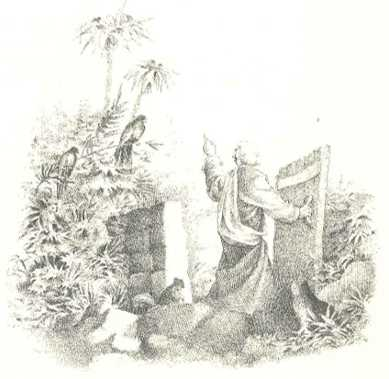
One day there came into the Garden a man in torn clothes badly bruised and cut, who said to the Lover, “In the name of the Beloved I demand your help.”
So the Lover and the Disciple let him in and dressed his wounds and prepared the best of the vegetables from the Garden for him to eat. When his wounds had been dressed and he had eaten and rested the Lover asked him how he had fallen into this plight, to which the man replied, “I was Minister of the Beloved in a city near this place, where I preached His gospel and expounded His doctrine to the people. I pointed out to them how their sins had made them wholly hateful to the Beloved and how therefore they were utterly beyond the range of His love and He would condemn them to eternal torments, whereon some fell into despair and wept bitterly but many were angry. One day the magistrates called me before them and begged me to leave the city and preach elsewhere for they said I had made many people so angry and desperate that they feared there might be a riot and they might not be able to protect me but that I might suffer some injury. I, however, very zealous for the Beloved and believing that the magistrates only feared that their own sins might be proclaimed, preached the more vehemently, denounced the magistrates and made it abundantly clear that the whole wicked city was foredoomed to eternal punishment by the just provision of the Beloved. Whereon a mob, stirred up no doubt by the corrupt and venal magistrates, fell upon me with sticks and stones, nearly killing me and driving me out of the city in the state in which I came to you.”
“My friend,” said the Lover, “this was not a good deed of yours, for besides denying the unfathomable compassion of the Beloved, you have by your obstinacy caused these people to commit a grievous sin, and this cannot be pleasing to the Beloved, that through you who profess to be His minister the people should become worse. Surely you remember that He Himself said, ‘If they persecute you in one city flee to another.’”
Therefore the man was very angry, and cursing the Lover, said, “I see that I have had a very false report of you and I do not believe that you are a servant of the Beloved at all. When I came to you so injured for the Beloved’s sake you set before me only herbs and fruits although the garden is full of birds which you could have killed to make me a worthy meal. I shall proclaim everywhere that you are no true servant of the Beloved but a mere falterer who dares not suffer in the cause of the Beloved. Be sure that you are foreordained to eternal torments who suffer nothing here.”
For the man was so blinded by his own pride that he could not perceive the scars on the hands and feet and the brows of the Lover nor how the cloth beneath the armpits of his tunic was dyed with a red dye. So he went out of the Garden cursing and shouting.
But the Lover looked sad and said, “A man like this does much harm to the cause of the Beloved, for by thus speaking falsely about the Beloved he may bring men to fear Him but none to love Him, and by love alone can any man approach the Beloved.”