

Good Morning Digital Neighbors! Happy Monday Friends & Refugees, Phamily & Dawn Patrol, Fascinating People, Bigots and Triggeratti, Seekers of Sanity & Civility and all of you ADD Irregulars and Wanderers of the WSN! As many in the Rubin Report and Phetasy communities know I have a fondness for words. There is something magical about them. To know that I can read something from thousands of years ago and it can still communicate meaning to me, it can still connect me to another person I will never meet on this side reality is nothing short of spectacular to me. WORDS - they have a power and reality all on the own. I am in love with the LOGOS - conceptional and Incarnational.
It is something of a curse for me, I am horrible at proofreading and my grammatical errors are plentiful and part of the late morning re-reading of my posts and trying to reconfigure what it was I wanted to communicate in the early hours of my day. There are mornings when I wonder what "Early Tom" was trying to say in a sentence or paragraph. While I do enjoy writing, I loathe grammar even when there would be no writing without it.
I want to thank Zoom @zoomerqc for suggesting a book for me to explore. It has been a wonderful recommendation for a novice logophile. Consolations The Solace, Nourishment and Underlying Meaning of Everyday Words by David Whyte. It has been a thoughtful book to begin to explore. I will share some quotes and commentary of my own this week. A brief look into the introduction was really helpful to me.
In Consolations, David Whyte repatriates us in the land of language by giving words back to themselves and, in this generous act, giving us back to ourselves - we, sensemaking creatures who navigate this old maze of a world through the mightiest figuring faculty we have: language itself. . . . On the enchanted loom of his poetic imagination, Whyte mends these most threadbare words into splendid tapestries of thought and feeling, lush with reclaimed meaning. What emerges is that supreme gift of being: a deeper sense of belonging - of words, to words, and to ourselves.
The following are some quotes lifted from the book on given words along with a little commentary of my own.
ALONE
It is a word that can be felt at the same time as an invitation to depth and as an imminent threat, as in ‘all alone’, with its returned echo of abandonment. ‘Alone’ is a word that rings with a strange finality, especially when contained in that haunting aggregate, ‘left all alone’, as if the state once experienced begins to define and engender its own inescapable world. The first step in spending time alone is to admit how afraid of it we are.
Being alone is a difficult discipline: a beautiful and difficult sense of being solitary is always the ground from which we step into a contemplative intimacy with the unknown, but the first portal of aloneness is often experienced as a gateway to alienation, grief and abandonment. To find ourselves alone or to be left alone is an ever-present, fearful and abiding human potentiality of which we are often unconsciously, and deeply, afraid.
For a solitary life to flourish, even if it is only for a few precious hours, aloneness asks us to make a friend of silence, and just as importantly to inhabit that silence in our own particular way, to find our very own way into our own particular, and even virtuoso, way of being alone.
One of the best ways to gauge personal and communal health is how well we can handle being alone. Is it something desired or dreaded? While I enjoy and love company, and appreciate the gift of my neighbors, digital and physical, I do enjoy time alone and periods of silence. Retreats are great times for prolonged silence and aloneness. They serve as a spiritual and personal reset for me. In the ancient world there was a desire for being alone by many of the mystics, philosophers and devoted as a space and place of contemplation and encounter with the deeper, more mysterious currents of life that are missed in our busyness and frenetic engagement.
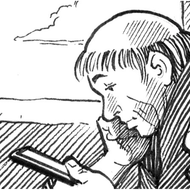
How much is that the opposite of current life and our dread of silence and aloneness? We punish people with solitary confinement. Contrasted with the Ancients who would have treasured such a gift, we know how unmoored we have become from ourselves and from reality. The ever present pull of the "smart" phone, the importance of "feeling in the know", to be engaged, desired and sought after are all signs of some creeping illness which infects most if not all of us.
No pedestals for living is a phrase I often repeat to my parish family. That phrase is a humble reminder to remember that even the people we admire and esteem have their own issues, struggles and often failures. We should not embrace cynicism even when we have such great cause to surrender to it. Patience and playful skepticism has always been enough for me to handle the inconsistencies of humanity. I strive to love the real, not the perfect. I know the creeping illness that infects many, has left its mark on me. Being alone, befriending silence and embracing stillness is all part of my recovery program. Happy Monday friends and thanks for indulging me this morning.
Old Country Barn in Autumn by Jeff Severson



Today marks the three hundred and thirtieth birthday of the Frenchman François-Marie Arouet, better known by his nom de plume, Voltaire (1694-1778).
Born into a bourgeois family during the reign of Louis XIV, the “Sun King” (r. 1643-1715), Voltaire suffered tragedy at a young age when his mother died. Never close with his father or brother, Voltaire exhibited a rebellious attitude toward authority from his youth. His brilliant mind was fostered in the care of the Society of Jesus, who introduced him to the joys of literature and theater. Despite his later criticisms against the Church, Voltaire, throughout his life, fondly recalled his dedicated Jesuit teachers.
Although he spent time as a civil servant in the French embassy to the Hague, Voltaire’s main love was writing—an endeavor where he excelled in various genres, including poetry, which led to his appointment as the royal court poet for King Louis XV. Widely recognized as one of the greatest French writers, and even hyperbolically referred to by ...
Padre - Tom Miller invites you to a Coffee Talk, Speakeasies, Schmoozes, Tea Times, Afterhours and other gatherings.
https://teams.live.com/meet/93792382189049?p=DiBHsYfuECPgDrG7vO
2026 Coffee Talk with the ADD Irregulars
Thursday, January 1, 2026
6:00 AM - 8:00 AM (CST)
Occurs every day starting 1/1 until 12/31/2027
Coffee Talk - Daily beginning at 6:00 AM Central Time Zone - USA
Afternoon Chats - Most Tuesday, Friday & Sundays 2:00 PM Central
Always invited, never expected.
Other chats as posted in the community.




XIII
The Proud Minister
One day there came into the Garden a man in torn clothes badly bruised and cut, who said to the Lover, “In the name of the Beloved I demand your help.”
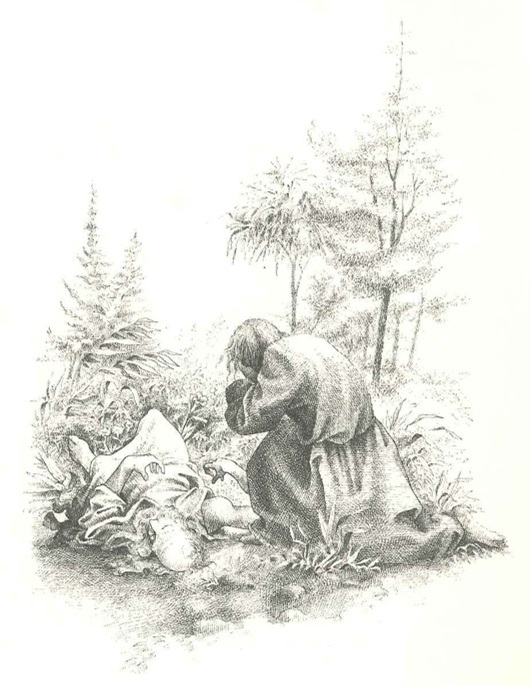
So the Lover and the Disciple let him in and dressed his wounds and prepared the best of the vegetables from the Garden for him to eat. When his wounds had been dressed and he had eaten and rested the Lover asked him how he had fallen into this plight, to which the man replied, “I was Minister of the Beloved in a city near this place, where I preached His gospel and expounded His doctrine to the people. I pointed out to them how their sins had made them wholly hateful to the Beloved and how therefore they were utterly beyond the range of His love and He would condemn them to eternal torments, whereon some fell into despair and wept bitterly but many were angry. One day the magistrates called me before them and begged me to leave the city and preach elsewhere for they said I had made many people so angry and desperate that they feared there might be a riot and they might not be able to protect me but that I might suffer some injury. I, however, very zealous for the Beloved and believing that the magistrates only feared that their own sins might be proclaimed, preached the more vehemently, denounced the magistrates and made it abundantly clear that the whole wicked city was foredoomed to eternal punishment by the just provision of the Beloved. Whereon a mob, stirred up no doubt by the corrupt and venal magistrates, fell upon me with sticks and stones, nearly killing me and driving me out of the city in the state in which I came to you.”
“My friend,” said the Lover, “this was not a good deed of yours, for besides denying the unfathomable compassion of the Beloved, you have by your obstinacy caused these people to commit a grievous sin, and this cannot be pleasing to the Beloved, that through you who profess to be His minister the people should become worse. Surely you remember that He Himself said, ‘If they persecute you in one city flee to another.’”
Therefore the man was very angry, and cursing the Lover, said, “I see that I have had a very false report of you and I do not believe that you are a servant of the Beloved at all. When I came to you so injured for the Beloved’s sake you set before me only herbs and fruits although the garden is full of birds which you could have killed to make me a worthy meal. I shall proclaim everywhere that you are no true servant of the Beloved but a mere falterer who dares not suffer in the cause of the Beloved. Be sure that you are foreordained to eternal torments who suffer nothing here.”
For the man was so blinded by his own pride that he could not perceive the scars on the hands and feet and the brows of the Lover nor how the cloth beneath the armpits of his tunic was dyed with a red dye. So he went out of the Garden cursing and shouting.
But the Lover looked sad and said, “A man like this does much harm to the cause of the Beloved, for by thus speaking falsely about the Beloved he may bring men to fear Him but none to love Him, and by love alone can any man approach the Beloved.”