




At Padre's
Politics • Spirituality/Belief • Culture
Your Digitial Neighborhood - A place on connection, community and conversation. Come listen, laugh and join us for random discussions, cultural issues, personal stories. pets, cooking, politics and just about anything else. ALWAYS INVITED - NEVER EXPECTED!
Interested? Want to learn more about the community?
December 31, 2022

Happy New Year's Eve Digital Neighbors! Merry Christmas (Day 7) for all you 12 Dayers! Good Morning all you Friends & Refugees, Early Birds & Later Dayers, Conversants & Lurkers over at the Report, all of the Phamily & Dawn Patrol over at Phetasy WOMEN Warriors and Dumpster Fire Aficionados, the Fascinating People, Triggeratti & Merry Bigots of the Nometry, all you Seekers of Sanity & Civility that are the pulse over at Tulsi. And of course, our own ADD Irregulars and Contributors of the Weird Shit Niche' that is often the pulse of our conversations at Padre's. Merry Christmas & Happy New Year to all of you.

A reflection and perhaps some commentary for those of you I know, appreciate and love and those who as yet to become a friend or active neighbor. David Whyte was one of the best purchases of 2022. Who knows what will come into my wheelhouse for 2023, I am hopeful even with the worrisome movements in our world. On to David.

BEGINNING well or beginning poorly, what is important is simply to begin, but the ability to make a good beginning is also an art form. Like picking up a new and unfamiliar musical instrument, the first necessary step involves taking the time to get a simple clear note, usually the simple clear note of forgiveness that comes in allowing yourself the right, at this stage, not to know anything at all. Beginning anything well involves a clearing away of the confusing, the cluttered and the complicated to find the beautiful, often hidden lineaments of the essential and the necessary.

Beginning is difficult, and our insulating rituals and the virtuoso subtleties of our methods of delay are always a fine, ever-present measure of our reluctance in taking that first close-in, courageous step to reclaiming the happiness of actually having started. Perhaps, because taking a new step always begins from the central, foundational core of the body, a body we have neglected, beginning well means seating ourselves in the body again, catching up with ourselves and the person we have become since we last tried to begin. This radical physical embodiment leads to an equally radical internal simplification, where, suddenly, very large parts of us, parts of us we have kept gainfully employed for years, parts of us still rehearsing the old complicated story, are suddenly out of a job.

There occurs, in effect, a form of internal corporate downsizing, where the parts of us too afraid to participate or having nothing now to offer, are let go, with all of the accompanying death-like trauma, and where the very last fight occurs, a rear-guard disbelief that this new, less complicated self, and this very simple step, is all that is needed for the new possibilities ahead.

It is always hard to believe that the courageous step is so close to us, that it is closer than we ever could imagine, that in fact we already know what it is, and that the step is simpler, more radical than we had thought: just picking up the pen or the wood chisel, just picking up the instrument or the phone, which is why we so often prefer the story to be more elaborate, our identities to be safely clouded by fear, why we want the horizon to remain always in the distance, the promise never fully and simply made, the essay longer than it needs to be and the answer safely in the realm of impossibility.

Whyte, David. Consolations - Revised edition: The Solace, Nourishment and Underlying Meaning of Everyday Words.

A lot to chew on there from David. I am sure many think of what will begin anew in the next few days. What changes do I know I need to make, but I am hesitant to make, reluctant to attempt or too lazy to try because I can tolerate the norm rather than strive for the better. Resignation is a wretched reality, and it feels so close to acceptance that some cannot distinguish between the two. Not perfect, but better. Not magical, but more fulfilling and sustainable. It is possible to change. This following section stood out to me

This radical physical embodiment leads to an equally radical internal simplification, where, suddenly, very large parts of us, parts of us we have kept gainfully employed for years, parts of us still rehearsing the old complicated story, are suddenly out of a job.

Parts of us still rehearsing - that interior voice that is less than supportive, that interior voice that reminds you of your failures, that freely points out your wounds, that seems to remind you that your life is either prison or a padded cell from which you cannot escape. That voice can be muted, sometimes even evicted. I am a fan of muting, but remembering what that voice used to say. I don't ever want to give my past a pass as it were, it is part of my story, it is part of the making of my present chapter, but I want to look at it different. I can see it in a new light. Everyone can see it in a new light, some more easily than others, past chapters and other complications can exist, it is never an easy climb, but it the one essential to a more content future and a more complete you.

It is always hard to believe that the courageous step is so close to us Closer than we imagine, it doesn't take New Year to change your life, but there is something powerful in the symbolism of the New Year and its promise. Even if on day 2 you fall, go offroad, or otherwise fail, you do not not have to give ear to that voice you gainfully employed for years. You arise and try again. So much success and satisfaction in life comes from not quitting. The pain of struggle is much more satisfying than resignations of the past. There is NEVER a "is this all there is" moment in life unless you let that voice occupy is old space. I won't live long enough to awaken completely to what the future has to reveal to me. I hope to find a few golden threads, live by them, share them with the people I love and serve, and do my best to prepare to complete bootcamp for that lies beyond the veil after life. Well, thanks for listening to me this long. A few quotes that I carry into the New Year. Many prayers and blessing to all of you.

We are not the sum of our weaknesses and failures, we are the sum of the Father's love for us and our real capacity to become the image of His Son Jesus. ― Pope John Paul II

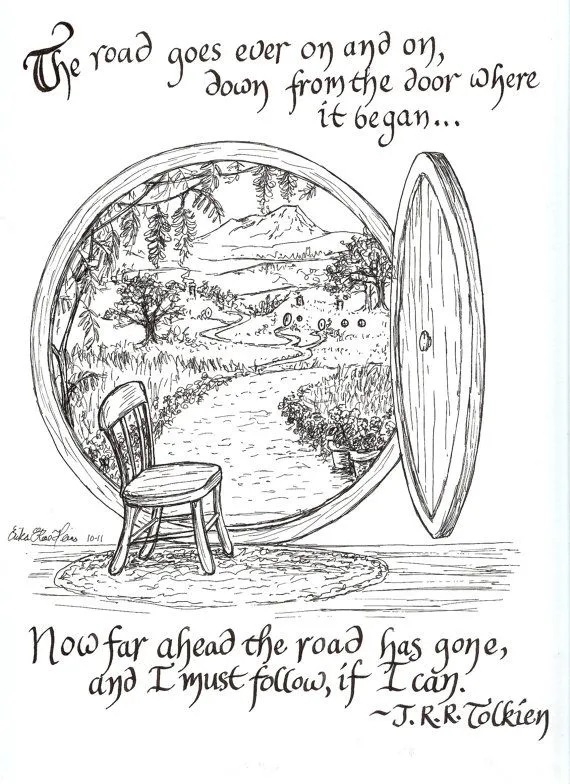
It's a dangerous business, Frodo, going out your door. You step onto the road, and if you don't keep your feet, there's no knowing where you might be swept off to. ― J.R.R. Tolkien, The Lord of the Rings

And finally one for my fellow Catholics - active and free-roaming, the engaged and the forgetful.

Out of the darkness of my life, so much frustrated, I put before you the one great thing to love on earth: the Blessed Sacrament. . . . There you will find romance, glory, honour, fidelity, and the true way of all your loves on earth, and more than that: Death: by the divine paradox, that which ends life, and demands the surrender of all, and yet by the taste—or foretaste—of which alone can what you seek in your earthly relationships (love, faithfulness, joy) be maintained, or take on that complexion of reality, of eternal endurance, which every man’s heart desires. J. R. R. Tolkien - Letter 43 to his son Michael

post photo preview
Interested? Want to learn more about the community?
What else you may like…
Videos
Podcasts
Posts
Articles
November 25, 2026
It's that time of year again! Enjoy!
00:00:43
November 24, 2026
Enjoy!
00:04:35
November 21, 2026
You speaka da English?

Wrong and funny - I laughed at this way too much.

00:00:33
It's been a rough year..
November 22, 2024
Voltaire's birthday 11-21-1694 - A brief essay by Steve Weidenkopf

Today marks the three hundred and thirtieth birthday of the Frenchman François-Marie Arouet, better known by his nom de plume, Voltaire (1694-1778).

Born into a bourgeois family during the reign of Louis XIV, the “Sun King” (r. 1643-1715), Voltaire suffered tragedy at a young age when his mother died. Never close with his father or brother, Voltaire exhibited a rebellious attitude toward authority from his youth. His brilliant mind was fostered in the care of the Society of Jesus, who introduced him to the joys of literature and theater. Despite his later criticisms against the Church, Voltaire, throughout his life, fondly recalled his dedicated Jesuit teachers.

Although he spent time as a civil servant in the French embassy to the Hague, Voltaire’s main love was writing—an endeavor where he excelled in various genres, including poetry, which led to his appointment as the royal court poet for King Louis XV. Widely recognized as one of the greatest French writers, and even hyperbolically referred to by ...

Voltaire's birthday 11-21-1694 - A brief essay by Steve Weidenkopf
January 01, 2026
2026 Teams Talk @ Padre's

Padre - Tom Miller invites you to a Coffee Talk, Speakeasies, Schmoozes, Tea Times, Afterhours and other gatherings.

https://teams.live.com/meet/93792382189049?p=DiBHsYfuECPgDrG7vO

2026 Coffee Talk with the ADD Irregulars
Thursday, January 1, 2026
6:00 AM - 8:00 AM (CST)
Occurs every day starting 1/1 until 12/31/2027

Coffee Talk - Daily beginning at 6:00 AM Central Time Zone - USA

Afternoon Chats - Most Tuesday, Friday & Sundays 2:00 PM Central

Always invited, never expected.

Other chats as posted in the community. 

post photo preview
post photo preview
Well worth the watch
Some thoughts on Mercy and Justice
Posted on Substack - shared here.

Good afternoon, kind readers! Well, I don’t know when you will read this, but this is when it’s penned. My reflection is in response to a post over on Padre’s Locals page, where one of the members posted a quote from Leonardo da Vinci. They posted it as “Not to punish evil is equivalent to authorizing it.” A closer translation is sharper:

“He who does not punish evil commands it to be done.” – Leonardo da Vinci
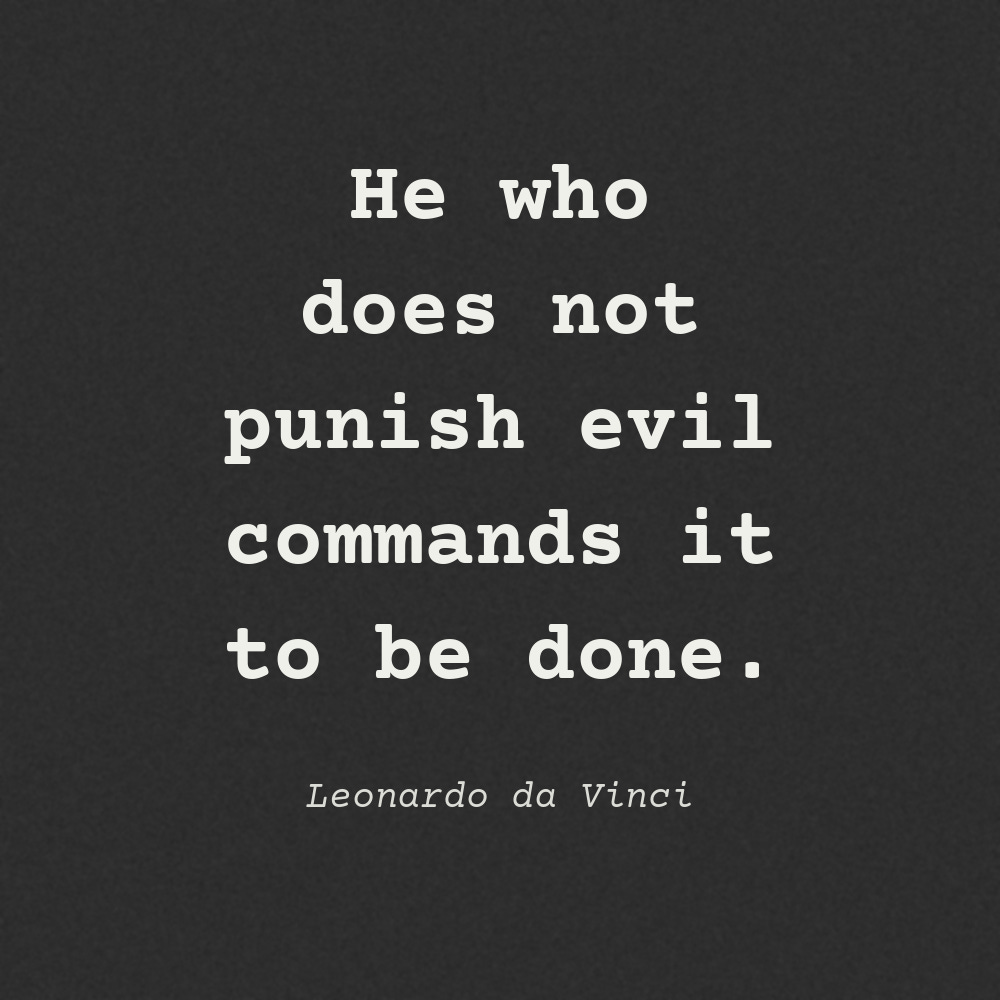
 

I thought it an interesting quote and did some background checking on it because it prompted me to want to write about mercy, forgiveness, and justice. Too many Christians and far too many modern people think that once you forgive someone, everything is magically better. “I am sorry.” “You’re sorry.” “We are all sorry.” Or, as the King says at the Swamp Castle wedding in Monty Python and the Holy Grail, “This is supposed to be a happy occasion. Let’s not bicker and argue about who killed who.”

Contrition is not a magical, make-it-all-better experience; it is the beginning of taking accountability, the beginning of making amends where possible. Many people miss both of those aspects of the dynamics of contrition, mercy, and reconciliation. The whole angle of justice is left out when amends are not made. When and where possible, amends are always the step following accountability.

St. John Paul II wrote about this in his encyclical Dives in Misericordia (no. 14). Evil does not get a pass just because it can be forgiven. Justice requires that the doer of evil be held accountable for his or her trespasses. There is often a requirement of reparation, compensation, and satisfaction to be made when possible. Society has an obligation to protect itself from evil. When it fails to do so, society fails at justice. In the West we are facing a crisis in justice. Some of it is out of misapplied mercy, but much more of it is from hatred of our history and our own identity.

The enemies of civilization and order want chaos and instability. They want fear and terror so that they can propose a new order. Can you guess who will be in charge? Many on the Left side of politics hate our Western heritage and think nothing of doing all they can to undermine it. I am not saying the Right is perfect by any stretch, but the Left controls almost all cultural institutions, such as the media, education (lower and higher), entertainment, and much of technology. The Left dominates the political careerists in D.C. Sorry for that side trip into politics; this is mainly about faith and culture, but politics is affected by the prospering or decay of faith and culture. Since WWII, faith has been in decline in the West, and culture has been eroding away for the last 60 or so years.

The Church in her pilgrimage through time has always held to a belief in temporal punishment due to sin. When we have done our neighbor a wrong, there is restitution to be made. While mercy can forgive the eternal punishment, one still has to face consequences, in this life or the next, for the evil one did. The consequences of sin and evil are not all magically erased by words of contrition. The words open the door to grace and forgiveness, but the work of reconciliation takes time, effort, and atonement.

All Christians and Jews believe they are headed to a place of judgment before God. Jews believe they will be judged by the goodness of their lives and how that corresponds with the law of God. Christians will be judged as well by their deeds and how they showed the fruit of Christian discipleship, or its lack. All Christians believe they are saved by Christ; there is no salvation apart from Him. Catholics and other Christians believe that our actions, cooperating with grace, sanctify us and help us “put on Christ” as His mature disciples. Jesus does the heavy lifting without which nothing could save us, but by the power of His grace we can grow in goodness and holiness and so make a small return to God in how we served Him and loved both God and neighbor.
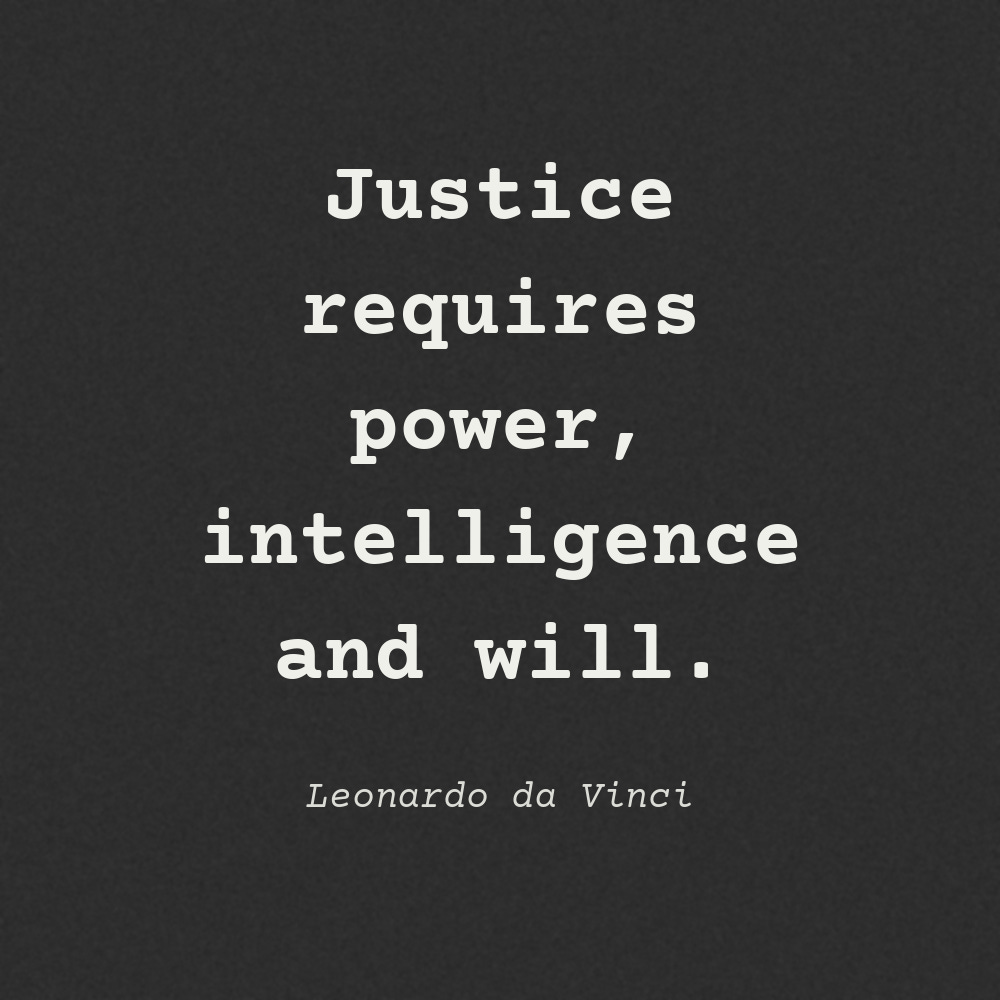
 

Civil justice is a different matter, but it rests on the same principle of accountability. Some evils cannot be remedied easily in this life, which is why the Church for centuries allowed the death penalty: the offender had forfeited the right to live among us. In 2018 the Catechism was revised to call the death penalty “inadmissible” (CCC 2267), but the Church still holds that society has a right (and obligation) to protect itself from evil, both within and without. Individuals have the right and freedom to protect themselves, their loved ones, and their property. The military protects us from evils outside of society, and law enforcement and the legal system are supposed to protect us from the evil within society. I tend to sit on the fence about the death penalty. When the evil is inescapable and beyond doubt, I don’t know that a society has an obligation to provide for the criminally evil.

Of course, one of the dangers of the death penalty in the past was the execution of the innocent. People have been arrested, incarcerated, and executed based on hateful bias and the corrupt judgment of the legal system. All human beings have biases, some grounded, others based on bigotry and baseless assumptions. Not all biases are bad; those grounded in reality and informed by faith have the potential to foster virtue and a better society. Virtue takes awareness and consistent effort to grow; vice does not. Left to our own devices, we can slide into vice very easily. If you think wrong, chances are you will act wrong, and when too many of us act wrongly, all of us will suffer. You would think that is so basic it ought to be self-evident, but it is not, because of fundamental disagreements about what is vice and what is virtue. The Left and Islam do not support Judeo-Christian values based on the Ten Commandments and the Bible.

Christianity and Judaism don’t sugarcoat the reality of human sinfulness and its subsequent evil. We may have been created good at the beginning, but we are born with a broken nature that is inclined to sin. In the absence of God, humanity became wholly corrupt from the time of Cain until only Noah and his family were left as righteous. Left to its own devices, humanity slides into all kinds of evil and depravity. Ancient history is full of countless atrocities and brutalities of one nation against another. It takes generations to climb out of and away from that animalistic brutality that lies in our broken nature, and it takes no time to revert to it when we become unmoored from our foundation of faith.

A good place to further your thoughts on this subject is If There Is No God: The Battle Over Who Defines Good and Evil, taken from a 1992 weekend of Dennis Prager talking with young people at a conference. The book’s dialogue format is a bit clunky, but once you get used to it, Dennis has his usual persuasive arguments and kindly refutations of those not thinking through the consequences of their statements. While I sit on the fence about the death penalty, I completely understand his argument for it and mostly subscribe to it. I walk with the Church, not apart from it. But asking questions and wrestling with doubts are all part of growth in moral and spiritual maturity. My only caveat is that you cannot give an innocent man his life back; how do you rectify that injustice? Of course, many innocent lives are taken by murder every day, and little is done about it beyond excusing accountability and coddling the murderer. Either our culture gets massive reform, or we will suffer more societal decay that slides us closer and closer to barbarism and brutality.

Remember Iryna Zarutska.

 

As a final note, Dennis is not arguing from a proof of God or making some philosophical claim that God exists. He states that if God does not exist, specifically the God of Sinai and the One whom Christians believe Jesus called Father, morality boils down to opinion and feelings. Here are four points taken from his book that are essential to grounding in reality and not floating about in feelings:

  • Values must override feelings. His test case asks whether you’d save your drowning dog or a drowning stranger. You may love the dog more, but a human being made in God’s image comes first.

  • Doing good matters more than feeling good. A man who gives $50 out of duty does more than a man who weeps and gives $1.

  • People aren’t basically good. Goodness has to be taught and practiced, and the Holocaust shows how readily ordinary people do evil.

  • Society can't be the source of values. If it were, the Nazis' values would have been "good" in Nazi Germany.
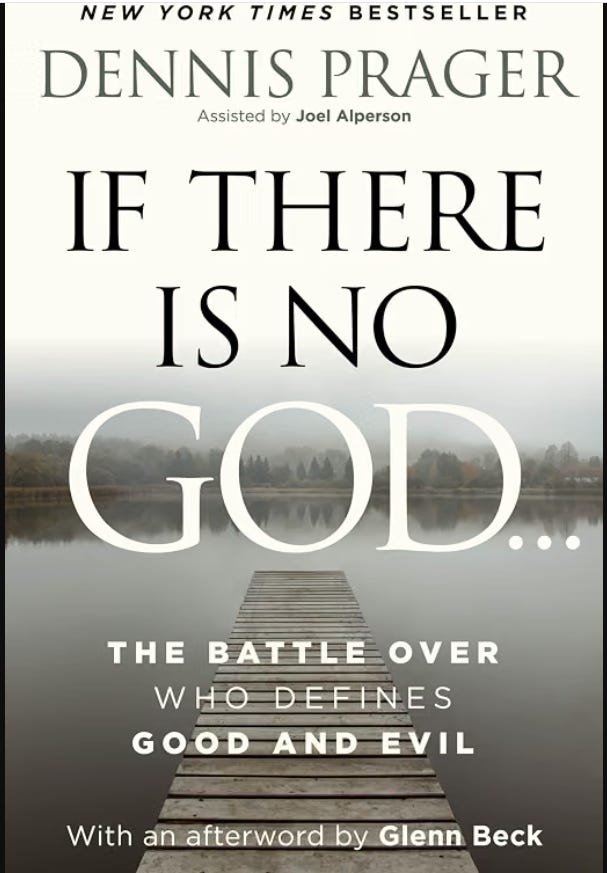
 

If you are inclined to wade into this subject more, check out this video as an introduction and then read the book.

Mercy does not free us from the pursuit of justice. While mercy can free us of the guilt of our wrongdoing and the ultimate consequences from God, it does not free us from accountability in this life and the need to make restitution where possible.

God’s desire to free us from our guilt comes with His desire to have us become better sons and daughters. God wants our conversion, not compulsion. There is a religion all about submission in its very name. It is not Judeo-Christian. Sorry. that is a sidebar. No one is a bigger advocate of free will than God, but free will is not to be exercised with the emotional guidance of a four-year-old. We are called to integrate emotions and thoughts into a decision or decisions that are subject to a will that seeks the enlightenment of God and His commands.

Bonus Video



Read full Article
post photo preview
The Garden of the Beloved - Read by lady Clare
The Passion of the Disciple - 15th and Final chapter
Read full Article
post photo preview
The Garden of the Beloved - read by Lady Clare
Chapter 14 - The Death of the Lover
Read full Article
See More
Available on mobile and TV devices
google store google store app store app store
google store google store app tv store app tv store amazon store amazon store roku store roku store
Powered by Locals