

Good Morning Digitial Neighbors! Happy Saturday ADD Irregulars, WSN Curators, Friends & Refugees, Early Birds & Later Dayers, PHAM, Misfits and Dawn Patrol and all the rest of you restless roamers on Locals. With the approach of Memorial Day I thought it would be fitting to share David Whyte's musing on it as well as my less insightful commentary.
MEMORY is not just a then, recalled in a now; the past is never just the past: memory is a pulse passing through all created life, a waveform, a then continually becoming other thens, all the while creating a continual but almost untouchable now. But the present fashionable obsession with living only in the now misunderstands the multilayered inheritance of existence, where all epochs live and breathe in parallels.
Whether it be the epochal moment initiated by the appearance of the first hydrogen atoms in the universe, or a first glimpse of adulthood perceived in adolescence, or the raw physical remembrance of holding our first child in our arms, memory passes through an individual human life like a building musical waveform, constantly maturing, increasingly virtuosic, often volatile, sometimes overpowering. Every human life holds the power of this immense inherited pulse, holds and then supercharges it, according to the way we inhabit our identities in the untouchable now. Memory is an invitation to the source of our life, to a fuller participation in the now, to a future about to happen, but ultimately to a frontier identity that holds them all at once. Memory makes the now fully inhabitable.
The genius of human memory is firstly its very creation through experience, and then the way it is laid down in the mind according to the identity we inhabited when we first decided to remember, then its outward radiating effect, and then all its possible future outcomes, occurring all at the same time and able to change alongside the person who is remembering. We actually inhabit memory as a living threshold, as a place of choice and volition and imagination, a crossroads where our future diverges according to how we interpret, or perhaps more accurately how we live, the story we have inherited. We can be overwhelmed, traumatised, made smaller by the tide that brought us here, we can even be drowned and disappeared by memory; or we can spin a cocoon of insulation to protect ourselves and bob along passively in the wake of what we think has occurred, but we also have other, more engaging possibilities; memory, in a sense, is the very essence of the conversation we hold as individual human beings. A full inhabitation of memory makes human beings conscious, a living connection between what has been, what is and what is about to be. Robbed of our memory by Alzheimer’s or by a stroke, we lose our identities. Memory is the living link to personal freedom.
Through the gift of an inheritance truly inhabited, we come to understand that memory creates and influences what is about to happen, and has little to do with what we quaintly, and often unimaginatively, call the past. We might recall the ancient Greek world where Memory was always understood to be the mother of the muses, meaning that all of her nine imaginative daughters, all of the nine forms of human creative endeavour recognised by the ancient Greek imagination, and longed for by individuals and societies to this day, were born from the womb and the body of memory.
David. Whyte Consolations - Revised edition: The Solace, Nourishment and Underlying Meaning of Everyday Words (p. 83). Many Rivers Press. Kindle Edition.
all the while creating a continual but almost untouchable now
The past can be murky waters to explore for many. Issues of cruelty, abuse, betrayal, neglect, failures of self and seemingly unforgiveable and forgettable choices can dominate the landscape of the past. Even without the complications of imposed guilt or shame, one can find the past difficult to reconcile and become part of the more integrated now. Healing of memories and reconciling with the past has become such a part of my life in helping others. Healing of memories does not occur by ignoring the past nor does it seem to happen when one just gives oneself a generic "sorry for it all" pass. The healing is in the details, the scraping out of the wounds of one's emotional and personal scar tissues. There is power in the naming and claiming if one is to surrender it to healing. Healing does not mean one gets a pass on the personal wrongdoing they may have pursued, but rather to find a place of courage and confidence to face the path of making amends.
Every human life holds the power of this immense inherited pulse, holds and then supercharges it, according to the way we inhabit our identities in the untouchable now.
The untouchable now - the unexamined life and self worth exploring in silence, music, literature and the arts. Silence is a great place of self encounter and without some amount of silence in our lives and a silencing of our chattering minds we will never approach self-narrative understanding. We will be strangers in our own story and makers of our own misery. Music, literature and the arts help unlock deeper encounters with the mysterious self. They can open unknown doors and and unearth hidden parts of self that lead us to another circ le of self-knowledge. We want to know our stories and what shaped them to make us the person we are now. It is never 100%, I doubt it is rarely above 80% self-knowledge or narrative possession for many of us striving to make some sense out of our lives, but there is meaning and joy in that striving. There is pain and sorrow too, but examined pains and sorrows can open up the spaces to healing and joy.
Memory makes the now fully inhabitable. Know thyself! But do it without becoming a narcissistic obsessive jerkwad! Silence and the arts provide a springboard to try and attempt awareness of our story without becoming so enamored of it that we get lost on the path and fall in love with our fractured self and never approach healing or wholeness. It is so easy to fall in love with our fractured self and give introspection and narrative exploration a pass as we avoid and run for ourselves, sometimes for a lifetime. A life of superficiality is boring and only satiated by the consumption of what is next. I have fallen for it too many times. Even when you strive to be a spiritual person, there is always the danger of the navel gazing that leads nowhere and transforms nothing.
We actually inhabit memory as a living threshold, as a place of choice and volition and imagination, a crossroads where our future diverges according to how we interpret, or perhaps more accurately how we live, the story we have inherited.
I have to say, I am immensely indebted to David Whyte for giving word to what I have often pondered and tumbled in my attempt to appreciate and make sense of it. I cannot thanks @zoomerqc enough for the introduction. I am an addict of STORY - The STORY, my story, others stories and the many fictious ones I encounter in books, games and other media. I love RPGs and world building because of stories, characters and their interaction.
A full inhabitation of memory makes human beings conscious, a living connection between what has been, what is and what is about to be.
I hope I get to that full habitation before checkout time. I am in route, but I am far from arriving or 100% possession. I am not sure that is even achievable or healthy to strive to achieve. Ascending the mountain is perhaps more meaningful than arriving at a final peak. The final peak is the end of the story but the beginning to true perspective. Strive and climb!
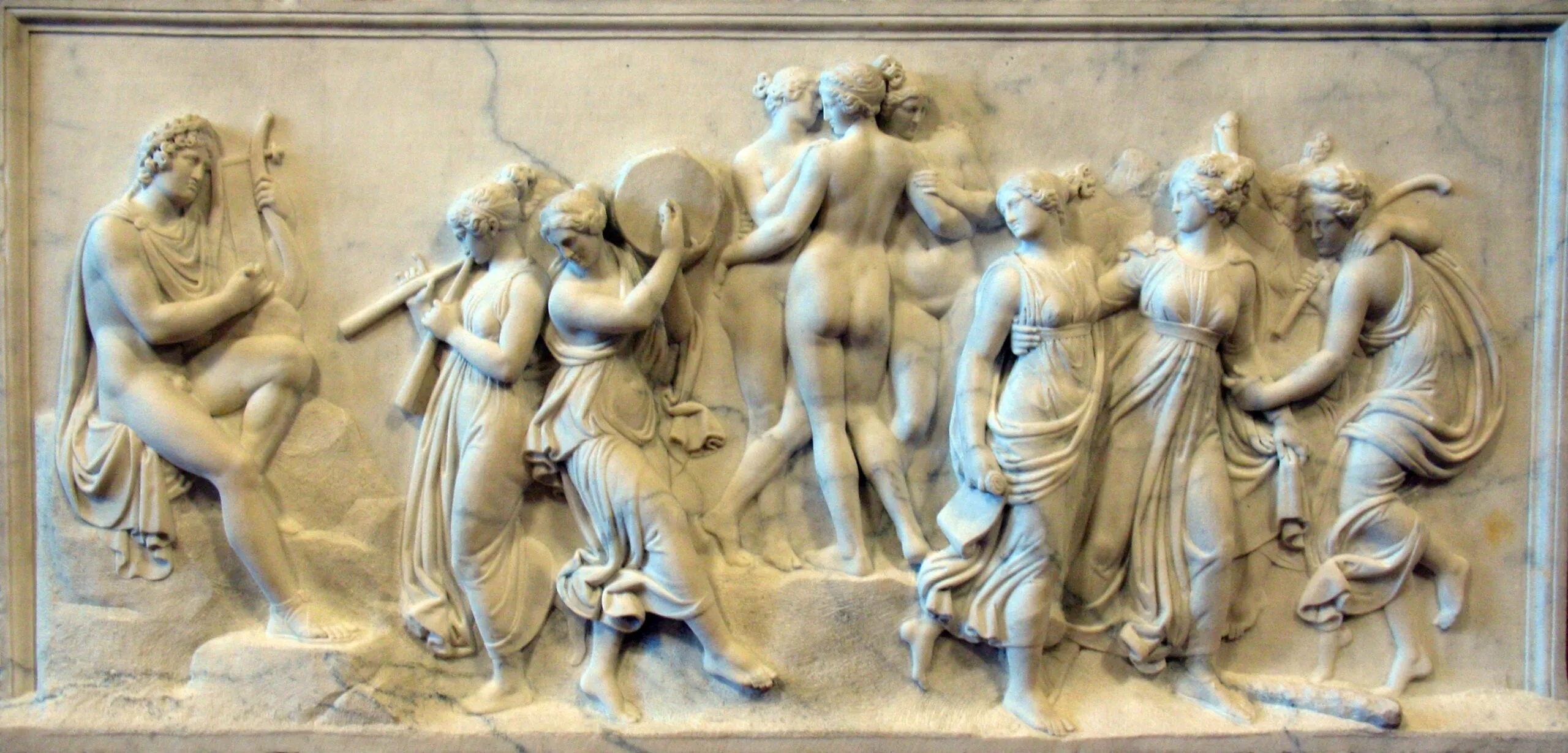
We might recall the ancient Greek world where Memory was always understood to be the mother of the muses
Obviously David fed some of my earlier ruminations about silence, literature and the arts connecting us with memory, unlocking memory, illustrating story and inviting us to know ourselves in a less obsessive manner. Wholeness without selfishness, self knowledge without conceit are signs of a good connection and integration with memory. To know our story, warts and all, is a good place to be, to know ourselves is a good way to be, to know that the becoming of our future self is a healthy interplay of past & present can provide hope and patience for the future. Peace


Today marks the three hundred and thirtieth birthday of the Frenchman François-Marie Arouet, better known by his nom de plume, Voltaire (1694-1778).
Born into a bourgeois family during the reign of Louis XIV, the “Sun King” (r. 1643-1715), Voltaire suffered tragedy at a young age when his mother died. Never close with his father or brother, Voltaire exhibited a rebellious attitude toward authority from his youth. His brilliant mind was fostered in the care of the Society of Jesus, who introduced him to the joys of literature and theater. Despite his later criticisms against the Church, Voltaire, throughout his life, fondly recalled his dedicated Jesuit teachers.
Although he spent time as a civil servant in the French embassy to the Hague, Voltaire’s main love was writing—an endeavor where he excelled in various genres, including poetry, which led to his appointment as the royal court poet for King Louis XV. Widely recognized as one of the greatest French writers, and even hyperbolically referred to by ...
Padre - Tom Miller invites you to a Coffee Talk, Speakeasies, Schmoozes, Tea Times, Afterhours and other gatherings.
https://teams.live.com/meet/93792382189049?p=DiBHsYfuECPgDrG7vO
2026 Coffee Talk with the ADD Irregulars
Thursday, January 1, 2026
6:00 AM - 8:00 AM (CST)
Occurs every day starting 1/1 until 12/31/2027
Coffee Talk - Daily beginning at 6:00 AM Central Time Zone - USA
White Pilled Wednesday - A break from the heaviness of news and current events to focus upon things more personal & positive for the first hour of Coffee Talk.
Afternoon Chats - Most Tuesday, Friday & Sundays 2:00 PM Central
Other chats as posted in the community.




XIII
The Proud Minister
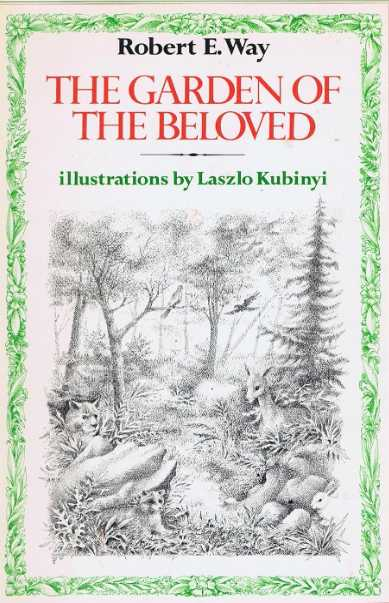
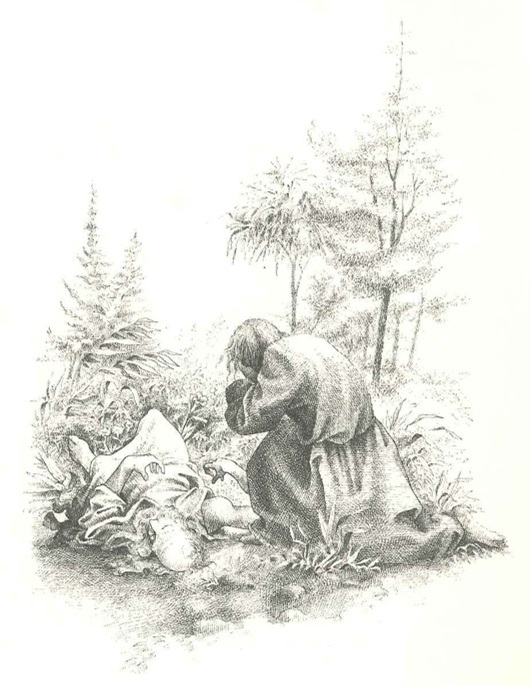
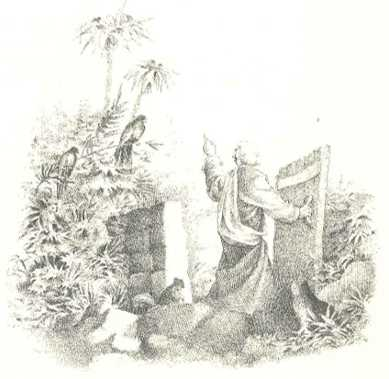
One day there came into the Garden a man in torn clothes badly bruised and cut, who said to the Lover, “In the name of the Beloved I demand your help.”
So the Lover and the Disciple let him in and dressed his wounds and prepared the best of the vegetables from the Garden for him to eat. When his wounds had been dressed and he had eaten and rested the Lover asked him how he had fallen into this plight, to which the man replied, “I was Minister of the Beloved in a city near this place, where I preached His gospel and expounded His doctrine to the people. I pointed out to them how their sins had made them wholly hateful to the Beloved and how therefore they were utterly beyond the range of His love and He would condemn them to eternal torments, whereon some fell into despair and wept bitterly but many were angry. One day the magistrates called me before them and begged me to leave the city and preach elsewhere for they said I had made many people so angry and desperate that they feared there might be a riot and they might not be able to protect me but that I might suffer some injury. I, however, very zealous for the Beloved and believing that the magistrates only feared that their own sins might be proclaimed, preached the more vehemently, denounced the magistrates and made it abundantly clear that the whole wicked city was foredoomed to eternal punishment by the just provision of the Beloved. Whereon a mob, stirred up no doubt by the corrupt and venal magistrates, fell upon me with sticks and stones, nearly killing me and driving me out of the city in the state in which I came to you.”
“My friend,” said the Lover, “this was not a good deed of yours, for besides denying the unfathomable compassion of the Beloved, you have by your obstinacy caused these people to commit a grievous sin, and this cannot be pleasing to the Beloved, that through you who profess to be His minister the people should become worse. Surely you remember that He Himself said, ‘If they persecute you in one city flee to another.’”
Therefore the man was very angry, and cursing the Lover, said, “I see that I have had a very false report of you and I do not believe that you are a servant of the Beloved at all. When I came to you so injured for the Beloved’s sake you set before me only herbs and fruits although the garden is full of birds which you could have killed to make me a worthy meal. I shall proclaim everywhere that you are no true servant of the Beloved but a mere falterer who dares not suffer in the cause of the Beloved. Be sure that you are foreordained to eternal torments who suffer nothing here.”
For the man was so blinded by his own pride that he could not perceive the scars on the hands and feet and the brows of the Lover nor how the cloth beneath the armpits of his tunic was dyed with a red dye. So he went out of the Garden cursing and shouting.
But the Lover looked sad and said, “A man like this does much harm to the cause of the Beloved, for by thus speaking falsely about the Beloved he may bring men to fear Him but none to love Him, and by love alone can any man approach the Beloved.”