At Padre's
Politics • Spirituality/Belief • Culture
More Thee, less me - Blood & Breath
A Lenten Reflection Series for Supporters
March 29, 2024
post photo preview

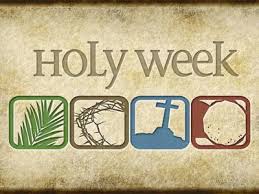
Blessed Holy Week, Digital Neighbors!

Some wisdom from one of my favorite saints with some thoughts afterwards.

From the Catecheses by Saint John Chrysostom, bishop

The power of Christ’s blood

If we wish to understand the power of Christ’s blood, we should go back to the ancient account of its prefiguration in Egypt. Sacrifice a lamb without blemish, commanded Moses, and sprinkle its blood on your doors. If we were to ask him what he meant, and how the blood of an irrational beast could possibly save men endowed with reason, his answer would be that the saving power lies not in the blood itself, but in the fact that it is a sign of the Lord’s blood. In those days, when the destroying angel saw the blood on the doors he did not dare to enter, so how much less will the devil approach now when he sees, not that figurative blood on the doors, but the true blood on the lips of believers, the doors of the temple of Christ.

If you desire further proof of the power of this blood, remember where it came from, how it ran down from the cross, flowing from the Master’s side. The gospel records that when Christ was dead, but still hung on the cross, a soldier came and pierced his side with a lance and immediately there poured out water and blood. Now the water was a symbol of baptism and the blood, of the holy eucharist. The soldier pierced the Lord’s side, he breached the wall of the sacred temple, and I have found the treasure and made it my own. So also with the lamb: the Jews sacrificed the victim and I have been saved by it.

There flowed from his side water and blood. Beloved, do not pass over this mystery without thought; it has yet another hidden meaning, which I will explain to you. I said that water and blood symbolized baptism and the holy eucharist. From these two sacraments the Church is born: from baptism, the cleansing water that gives rebirth and renewal through the Holy Spirit, and from the holy eucharist. Since the symbols of baptism and the eucharist flowed from his side, it was from his side that Christ fashioned the Church, as he had fashioned Eve from the side of Adam. Moses gives a hint of this when he tells the story of the first man and makes him exclaim: Bone from my bones and flesh from my flesh! As God then took a rib from Adam’s side to fashion a woman, so Christ has given us blood and water from his side to fashion the Church. God took the rib when Adam was in a deep sleep, and in the same way Christ gave us the blood and the water after his own death.

Do you understand, then, how Christ has united his bride to himself and what food he gives us all to eat? By one and the same food we are both brought into being and nourished. As a woman nourishes her child with her own blood and milk, so does Christ unceasingly nourish with his own blood those to whom he himself has given life.

community logo
Join the At Padre's Community
To read more articles like this, sign up and join my community today
5
What else you may like…
Videos
Podcasts
Posts
Articles
How I felt after the pool joke

@eclecticRPT @Highland_Tiger @AudreyAudrey

00:00:44
MOTW 212 - YOGA!!!
00:00:31
July 04, 2026
Do you, or does someone you know, suffer from TDS?
00:01:30
It's been a rough year..
November 22, 2024
Voltaire's birthday 11-21-1694 - A brief essay by Steve Weidenkopf

Today marks the three hundred and thirtieth birthday of the Frenchman François-Marie Arouet, better known by his nom de plume, Voltaire (1694-1778).

Born into a bourgeois family during the reign of Louis XIV, the “Sun King” (r. 1643-1715), Voltaire suffered tragedy at a young age when his mother died. Never close with his father or brother, Voltaire exhibited a rebellious attitude toward authority from his youth. His brilliant mind was fostered in the care of the Society of Jesus, who introduced him to the joys of literature and theater. Despite his later criticisms against the Church, Voltaire, throughout his life, fondly recalled his dedicated Jesuit teachers.

Although he spent time as a civil servant in the French embassy to the Hague, Voltaire’s main love was writing—an endeavor where he excelled in various genres, including poetry, which led to his appointment as the royal court poet for King Louis XV. Widely recognized as one of the greatest French writers, and even hyperbolically referred to by ...

Voltaire's birthday 11-21-1694 - A brief essay by Steve Weidenkopf
January 01, 2026
2026 Teams Talk @ Padre's

Padre - Tom Miller invites you to a Coffee Talk, Speakeasies, Schmoozes, Tea Times, Afterhours and other gatherings.

https://teams.live.com/meet/93792382189049?p=DiBHsYfuECPgDrG7vO

2026 Coffee Talk with the ADD Irregulars
Thursday, January 1, 2026
6:00 AM - 8:00 AM (CST)
Occurs every day starting 1/1 until 12/31/2027

Coffee Talk - Daily beginning at 6:00 AM Central Time Zone - USA

White Pilled Wednesday - A break from the heaviness of news and current events to focus upon things more personal & positive for the first hour of Coffee Talk.

Afternoon Chats - Most Tuesday, Friday & Sundays 2:00 PM Central

Other chats as posted in the community. 

post photo preview

Blessed Sabbath and Happy Saturday to all of you digital neighbors scattered across the internet. In Cath-O-landia we are celebrating the Solemn Feast of the Assumption of the Blessed Virgin Mary. Since about the 5th century the devotion has been recognized in various communities within the Church. By the time of St. Albert the Great, Thomas Aquinas, and Bonaventure it was a widespread devotion and belief among the faithful.

In short, at the moment of her death, the Blessed Virgin Mary was assumed body and soul into Heaven. Our Orthodox brothers and sisters speak of the Dormition (the “falling asleep”) of the BVM, whose soul was received into Heaven at death and whose body was translated there and reunited with her soul. I am not sure how many, if any, outside of Catholicism and Orthodoxy celebrate it, since it is not explicitly in the Bible. Some see it as “Mary worship,” and sadly there are disciples who mistakenly or errantly place too much emphasis on the BVM and lose sight of the fact that ...

post photo preview
post photo preview
post photo preview
The Garden of the Beloved - read by Lady Clare
Chapter 12 - The overladen packhorse
Read full Article
post photo preview
Garden of the Beloved - read by Lady Clare
Chapter 11 The Moths
Read full Article
Garden of the Beloved - read by Lady Clare - Chapter 10
The Beautiful


The Beautiful


Said the Disciple to the Lover, “Sir, before I left the world I heard certain men who were held in high esteem and thought to know the will of the Beloved say that those who loved the Beautiful did not love the Beloved but loved idols, yet in the Garden of the Beloved we are ever striving to create beauty for the pleasure of the Beloved.  Were they then speaking the truth?”

The Lover answered, “Those who said this had never glimpsed the form of the Beloved nor ever truly sought Him, for all beauty is but the reflection of the beauty of the Beloved, although seen very dimly as in a dark and faulty mirror, even as all goodness is a dim reflection of the goodness of the Beloved.  So it is that those who love beauty and goodness recognize dimly in them the form of the Beloved and though often in ignorance those who are seeking the Beautiful and the Good are seeking after the Beloved.”

Read full Article
See More
Available on mobile and TV devices
google store google store app store app store
google store google store app tv store app tv store amazon store amazon store roku store roku store
Powered by Locals