J.D. Vance’s Bold Step to Reclaim Robert E. Lee’s Legacy
J.D. Vance invited the ire of countless woke historical revisionists when he pushed back against the suggestion that, when Pete Hegseth removed retired General Mark Milley’s portrait from the Pentagon, this was somehow a sign that the Trump administration will be iconoclastic and authoritarian:
Vance’s response perfectly captures what most Americans probably felt in reading Glasser’s nonsense:
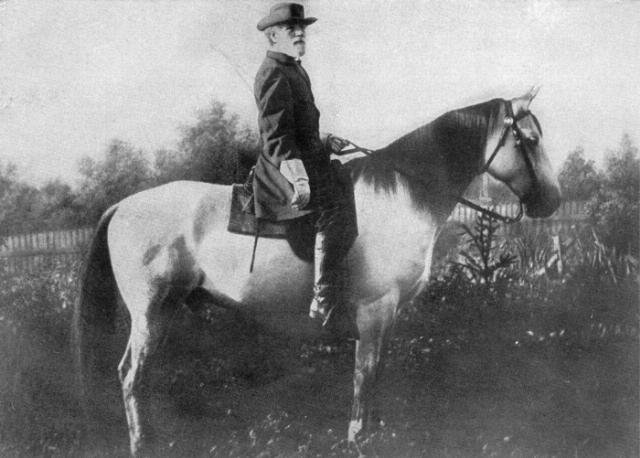
Vance’s including Robert E. Lee in this short list of American heroes whose reputations have been wrongfully tarnished could not have been an accident. It is a brave statement for Vance to make and a brilliant cultural flank against those who have been uninterruptedly murdering historical truth throughout the post-Obama era.
Violent mobs and woke social initiatives have led to the defacement or removal of these great Americans’ monuments for many years now. They were to be newly cast as racists and villains, and you were also to be smeared if you didn’t buy into the lies.
You were a racist, for example, if you questioned the claims made in The 1619 Project. This farce-masquerading-as-journalism argued that the United States engaged in its war of independence because American colonials wanted to keep slaves.
Then, in 2020, Democrats began tearing down the statues of generals such as Thomas “Stonewall” Jackson and Robert E. Lee, men tarred by the taint of the Confederacy, but also began defacing statues of George Washington and Thomas Jefferson. Their reasoning was that the American colonials and the Confederate rebels were both just slaveholders who were fighting to keep their slaves, making them all reasonable targets for the revisionists.
Of course, even honest leftists have admitted that the 1619 Project is among the purest garbage ever put to print. The historical record clearly shows that there’s no credible evidence suggesting that the colonials wanted independence to keep slaves. But if that sort of nuance is important, it should also be important that the historical record clearly shows that the Southern states didn’t simply engage in its failed war for independence because they wanted to keep slaves, either.
The War Between the States was the result of a cold war that had lasted over three decades by the time the war began. Yes, slavery was a driver of this conflict between North and South since at least the Missouri Compromise of 1820, but so were myriad other economic considerations due to trade and taxation (mostly, protectionist tariffs that benefited Northern states at painful cost to Southern states).
Perhaps most important were representation issues due to disproportionate population growth shifting huge amounts of federal power to the North over time, which left states south of the Mason-Dixon line feeling very much like our Founders in 1776—that they were being taxed heavily without representation enough to have their own interests served in government.
That the Civil War was the most tragic moment in American history is a simple historical fact. The modern left asserts, however, that there was a clear villain, and that one side of the war is to be disparaged to the point of humiliation or irrelevancy. This is a disgusting modern conceit.
After all, the combatants did not feel that way. After the Confederate surrender at Appomattox, there were no hangings. Rather, Confederates “were saluted… they were not humiliated or beaten; they were embraced.”
Robert E. Lee’s legacy as an American hero has much to do with his role in the peaceful reunification of the country. He spent his later years urging all Americans to “unite in honest efforts to obliterate the effects of war and restore the blessings of peace.”
When Southerners threatened to boycott the drafting of new state constitutions, Lee announced that it is the “duty of the [southern] people to accept the situation fully” and that everyone should “prepare his friends, white and colored, to vote and vote rightly.”
As far as his post-war legacy on race relations goes, he continually “set an example in treating black freedmen as equals.” In one documented incident at St. Paul’s Episcopal Church in Richmond, a black man rose to take communion, shocking the congregation. Lee “strode up the aisle and knelt beside the black man to take communion. Others then rose and followed his lead.”
Lee, like many Virginians, did not believe that secession was the appropriate path in 1861. But he did believe, as many Southerners did, that participating in the union of states that the Constitution established was voluntary. As Lee wrote in January of 1861:
A Union that can only be maintained by swords and bayonets has no charm for me. If the Union is dissolved and the government disrupted, I shall return to my native state and share the miseries of my people, and save in defense will draw my sword against none.
But when the Union demanded tens of thousands of Virginian soldiers to be conscripted to the federal cause, the legislature of Virginia also decided to secede rather than send its sons to forcibly subjugate the seceding states.
Lee encountered an unimaginable conflict—and I don’t think his most ardent detractors ever consider what they would have done in his position.
He was reticent to resign from the U.S. Army, telling General Winfield Scott that it was a service to which “I have devoted the best years of my life and all the ability I possess.” But in the end, he was even more reticent to take up arms against, in his words, “my birthplace, my home, my children. Save in defense of my native state, I hope I may never be called upon to draw my sword.”
Here’s a curious thought, though: If Lee had chosen not to defend his home state against what he perceived to be federal aggression against it, and had he instead chosen to place his allegiance with the federal government over his allegiance to his birthplace, home, children, and native state by accepting the role of commander of the U.S. forces in the spring of 1861, “the war probably would have come to an end more quickly, and slavery would most likely have survived it.”
He could have “been the eighth president from Virginia,” says the Virginia Museum of History and Culture, and he would have been a national hero. Many have argued throughout history, whether despite his choice or because of it, that he is a hero all the same.
Robert E. Lee is among the greatest American heroes to have ever lived in our nation’s proud history. He was inspired by neither a traitorous spirit nor racist intent. During a more sensible time, General and President Dwight D. Eisenhower summed up the historical estimation of Lee. Lee was, he says, “one of the supremely gifted men produced by our Nation... selfless almost to a fault... noble as a leader and as a man, and unsullied as I read the pages of our history. From deep conviction I simply say this: a nation of men of Lee’s caliber would be unconquerable in spirit and soul.”
It’s high time that we Americans remember that, and return to honoring Marse Robert in the manner he deserves.