

February 7, 2025
USAID Down, Now Let’s Get Rid of DRL
By John M. Grondelski
With President Trump going after the “foreign assistance” doled out by the United States Agency for International Development (USAID), announcing a review of its mission preparatory to its reform and/or elimination, I’d like to propose another State Department candidate for extinction: the Bureau of Democracy, Human Rights, and Labor (DRL).
DRL was founded in 1977, part of Jimmy Carter’s “human rights” agenda in foreign policy. Carter stumbled on the idea of making promotion of “human rights” a central and practically independent element of American foreign policy. DRL has pushed that perspective for five decades.
The question is, what are “human rights”?
The answer is, it depends.
Unlike the American constitutional system, in which a Bill of Rights is codified and its general parameters clear, the content of the “international human rights” world is whatever politicians and activists at any given moment want to push. Most international “human rights law” is the product of real or imagined “consensus” forged by “experts.” The European Court of Human Rights, for example, subscribes to a version of “living constitutionalism,” claiming that our understanding of human rights “evolves.” Whatever is perfectly legitimate today may be utterly forbidden tomorrow.
Take abortion. There’s no treaty anywhere signed by countries that says “abortion is a human right.” No. It’s been a 30-year “evolution.” Hillary Clinton went to Beijing in 1995 and announced at a Conference on Women that “women’s rights are human rights.” To white liberal American women, “women’s rights” includes abortion. So if you are promoting “women’s rights,” you have to be promoting abortion. And when you talk about improving “women’s health,” that obviously means governments must legalize abortion and promote “sex education” that advances it. And if you question whether it’s as “obvious” as its proponents claim it is, well, “you’re against human rights!”
And nobody wants to be against “human rights.” Whatever that means.
Well, I am. For three reasons:
First, much of what passes as “human rights” is not explicitly spelled out. It’s “consensus” based on what interested parties want to promote. I am willing to defend human rights that have been explicitly codified, textually articulated, and consciously ratified in binding agreements. A lot of what passes for “human rights” — especially in Democrat administrations — meets none of those tests. Principles mostly made up as you go along are neither principles nor good practice.
Second, I do not know why Western countries feel the need to bind themselves by international “human rights” agreements. The dictators of the world have flowery human rights declarations that are meaningless dead letters. The old Soviet Constitution guaranteed a multitude of “human rights,” none of which existed in practice. I trust the United States and our fellow Western democracies to abide by human and civil rights guarantees in their own national constitutions. I do not know what the added layer of “international agreements” achieves. Those that protect human rights do so without them; those that don’t won’t with them.
Third is the farce of “international review.” Almost every country in the world performs a dog-and-pony act before the U.N. Human Rights Council every five years called a “Universal Periodic Review.” It’s supposed to provide for global input in how countries honor human rights.
Italy and Iran are on the current cycle. Does anybody think Italy’s human rights record is blemished? Does anybody doubt Iran’s is? Yet it’s unlikely anything will really change after both Rome and Tehran engage in this act of Maoist self-criticism before the likes of China, Cuba, Sudan, Qatar, and Vietnam, all current Human Rights Council members.
Globalists claim we should be happy to defend ourselves and receive criticism from whomever and wherever. Frankly, self-respecting Western countries should be insulted to have to justify their human rights records before that motley crew.
And, sooner or later, all this agitation for “human rights” funnels through the State Department’s Bureau of Democracy, Human Rights, and Labor.
Not only that, but DRL then writes annual congressionally mandated reports on every country in the world as to how it observes “human rights.” In the Biden administration, that came to include “reproductive rights” and gender ideology. Issues that are hotly debated even within the United States are pushed by the United States on other countries, our own form of ideological colonialism.
Should the United States take account of basic human rights? Yes. But a separate, self-standing DRL means that a particular version of “human rights” gets pushed over and against the total constellation of American interests in relations with another country. Within the foreign policymaking process, DRL will hold up approval of policy recommendations, prolong decision-making, and dilute American responses to advance its particular reading of how another country should observe “human rights.”
There’s nothing that DRL does that cannot be done by officers embedded in specific State Department geographic bureaus that are the primary stakeholders in managing American relations with individual countries. The continuation of DRL means simply that certain readings of “human rights” perdure, in and out of different administrations. DRL becomes a hive, where a liberal “human rights” agenda can get embedded and magnified, at least capable of gumming up the foreign policy of an administration that does not share those priorities.
Doubt it? State Department officers serve in specializations called “cones”: political, economic, consular, management, public diplomacy. In the last Congress, ex-senator Ben Cardin (D-Md.) pushed to create a sixth “human rights” cone and demand that such officers be put into every bureau and every embassy just to oversee the “human rights agenda.” That would have established a permanent sinecure for leftist “human rights” activism. Cardin did not succeed, but the problem persists as long as a separate DRL exists to push that agenda.
It’s time to put DRL out of business.


Today marks the three hundred and thirtieth birthday of the Frenchman François-Marie Arouet, better known by his nom de plume, Voltaire (1694-1778).
Born into a bourgeois family during the reign of Louis XIV, the “Sun King” (r. 1643-1715), Voltaire suffered tragedy at a young age when his mother died. Never close with his father or brother, Voltaire exhibited a rebellious attitude toward authority from his youth. His brilliant mind was fostered in the care of the Society of Jesus, who introduced him to the joys of literature and theater. Despite his later criticisms against the Church, Voltaire, throughout his life, fondly recalled his dedicated Jesuit teachers.
Although he spent time as a civil servant in the French embassy to the Hague, Voltaire’s main love was writing—an endeavor where he excelled in various genres, including poetry, which led to his appointment as the royal court poet for King Louis XV. Widely recognized as one of the greatest French writers, and even hyperbolically referred to by ...
Padre - Tom Miller invites you to a Coffee Talk, Speakeasies, Schmoozes, Tea Times, Afterhours and other gatherings.
https://teams.live.com/meet/93792382189049?p=DiBHsYfuECPgDrG7vO
2026 Coffee Talk with the ADD Irregulars
Thursday, January 1, 2026
6:00 AM - 8:00 AM (CST)
Occurs every day starting 1/1 until 12/31/2027
Coffee Talk - Daily beginning at 6:00 AM Central Time Zone - USA
White Pilled Wednesday - A break from the heaviness of news and current events to focus upon things more personal & positive for the first hour of Coffee Talk.
Afternoon Chats - Most Tuesday, Friday & Sundays 2:00 PM Central
Other chats as posted in the community.







XIII
The Proud Minister
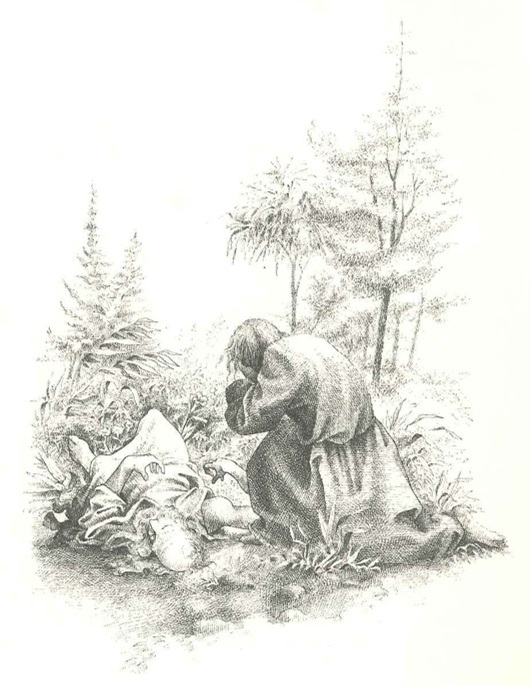
One day there came into the Garden a man in torn clothes badly bruised and cut, who said to the Lover, “In the name of the Beloved I demand your help.”
So the Lover and the Disciple let him in and dressed his wounds and prepared the best of the vegetables from the Garden for him to eat. When his wounds had been dressed and he had eaten and rested the Lover asked him how he had fallen into this plight, to which the man replied, “I was Minister of the Beloved in a city near this place, where I preached His gospel and expounded His doctrine to the people. I pointed out to them how their sins had made them wholly hateful to the Beloved and how therefore they were utterly beyond the range of His love and He would condemn them to eternal torments, whereon some fell into despair and wept bitterly but many were angry. One day the magistrates called me before them and begged me to leave the city and preach elsewhere for they said I had made many people so angry and desperate that they feared there might be a riot and they might not be able to protect me but that I might suffer some injury. I, however, very zealous for the Beloved and believing that the magistrates only feared that their own sins might be proclaimed, preached the more vehemently, denounced the magistrates and made it abundantly clear that the whole wicked city was foredoomed to eternal punishment by the just provision of the Beloved. Whereon a mob, stirred up no doubt by the corrupt and venal magistrates, fell upon me with sticks and stones, nearly killing me and driving me out of the city in the state in which I came to you.”
“My friend,” said the Lover, “this was not a good deed of yours, for besides denying the unfathomable compassion of the Beloved, you have by your obstinacy caused these people to commit a grievous sin, and this cannot be pleasing to the Beloved, that through you who profess to be His minister the people should become worse. Surely you remember that He Himself said, ‘If they persecute you in one city flee to another.’”
Therefore the man was very angry, and cursing the Lover, said, “I see that I have had a very false report of you and I do not believe that you are a servant of the Beloved at all. When I came to you so injured for the Beloved’s sake you set before me only herbs and fruits although the garden is full of birds which you could have killed to make me a worthy meal. I shall proclaim everywhere that you are no true servant of the Beloved but a mere falterer who dares not suffer in the cause of the Beloved. Be sure that you are foreordained to eternal torments who suffer nothing here.”
For the man was so blinded by his own pride that he could not perceive the scars on the hands and feet and the brows of the Lover nor how the cloth beneath the armpits of his tunic was dyed with a red dye. So he went out of the Garden cursing and shouting.
But the Lover looked sad and said, “A man like this does much harm to the cause of the Beloved, for by thus speaking falsely about the Beloved he may bring men to fear Him but none to love Him, and by love alone can any man approach the Beloved.”