

February 24, 2025
Montana Cowboys, Adam Smith, and Trump
By J.B. Shurk
In writer Taylor Sheridan’s Western series, 1923, there is a great scene in the third episode (which I will paraphrase) when the show’s Montana cattle-ranching family rides into town and finds a man selling futuristic wares on the street. What’s that crazy thing? Well, ma’am, it’s a washing machine. And that? A refrigerator for keeping food cold. Oh, my. How do they work? They run on electricity through power lines straight into your home. They are modern conveniences that do your chores for you.
Amid the general euphoria among those seeing such strange inventions for the first time, one of the brash, young cowboys asks discerningly, “So you sell electricity, and then you rent all the things that need electricity?” The salesman reluctantly agrees but insists the new appliances will provide time for fun and leisure. “But that ain’t more leisurely,” the young cowboy replies, “because we gotta work more to pay for all this stuff.” The salesman quickly points out that every home in New York City will soon have all these technologies and more. The cowboy shakes his head in disgust and provides a fine lesson on economic freedom: “No, here’s the thing, we buy all this stuff, we’re not working for ourselves anymore. We’re working for you.”
I wish every American (especially the youngest generations) would watch that scene a hundred times and think clearly about its implications. What does it say about our way of life when most of us pay so many different kinds of recurring bills just to stay in our own homes? Property taxes, municipal fees, state taxes, federal taxes, water, electric, natural gas — all just to get started. Want to communicate with the outside world or enjoy some basic entertainment? Those services will require more subscription fees that will certainly rise in price without end. It is almost impossible to own any home free from the threat of future encumbrances. Even a remote dweller in a forgotten cabin in the distant woods still owes the taxman — and failure to pay means some government agent will eventually knock on his hard-to-find door and seize that cabin in the government’s name. One’s private home is never really one’s own.
If that early-twentieth-century ranching family took a look at how our society functions today, would it conclude that we are “modern”? Or would it decide that we are the ones who have traveled back in time to an age of serfdom and indentured servitude?
Residents of New York City pay thousands of dollars each month in rent and utilities, and most never own anything. Those who do own an apartment or condo pay fortunes for places smaller than the living rooms of some of the smallest homes in the Midwest. Those same New Yorkers who “own homes” still shell out condo and maintenance fees in perpetuity. The price of “big city” electricity rises rather precipitously, and transit fees always go up. By the time some “modern” NYC worker signs up for a basic monthly serving of “Netflix and chill,” most of what a person earns each month ends up in somebody else’s pocket. In New York City and so many metropolitan areas like it, too many residents live paycheck-to-paycheck — even the “wealthy” ones.
A large number of Americans have been conditioned to accept this way of life as perfectly normal. For a person who believes city-life makes sense, globalism probably makes sense, too. When the World Economic Forum’s aspiring tyrant, Klaus Schwab, promises that most of the planet will eventually “own nothing and be happy,” a lot of city people nod their heads in agreement. They already own nothing. But are they really happy?
The return of President Trump is causing tremendous consternation for all kinds of people. He represents a particularly serious threat, though, to Schwab-aligned globalists and their dreams of a “Utopian” future where “elites” own everything and “commoners” rent for life. Trump could have run an entire political campaign on this issue alone. He was busy speaking about the dangers of a wide-open border, “green new deal”-induced inflation, and the stupidity of forever-wars. But a single overarching objective addresses all these problems: returning America to the path of an ownership society.
Dreams of ownership enticed our ancestors to leave the Old World and build a new country. They did not want to work other people’s lands. They did not want to be taxed by feudal lords for the rest of their lives. They wanted to own the fruits of their labor. They wanted to own their own farms. They wanted complete control over their economic fortunes — beholden to no-one. Needless to say, most of their descendants have forgotten why freedom is impossible without private property. Renting everything from a handful of oligarchs and governments, as Sheridan’s cowboy points out, means that we end up working entirely for them and never for ourselves.
President Trump has surprised a lot of people during his first month back in office by concentrating heavily on (1) eliminating wasteful (and fraudulent) government spending, (2) cutting unnecessary (and therefore harmful) regulations, and (3) pushing for an overhaul of our current system of taxation. What he’s trying to accomplish is much bigger than most people could have guessed. He is not only implementing reciprocal tariffs as a way to bring long-lost manufacturing and industry jobs back home but also setting the stage to greatly reduce individual tax burdens. He is committed to relieving Americans of income taxes that disincentivize hard work and dampen entrepreneurial spirits. Taxing a person’s labor is both immoral and detrimental to a nation’s aggregate wealth.
Inflation is also a tax. When central banks print currency, they devalue our paychecks and our savings without ever passing legislation for higher taxes. That stolen wealth artificially inflates the sticker price of stocks and other assets. Companies traded on Wall Street see their currency-denominated valuations rise even though their companies have created no new real value (quite fraudulently, failing companies are “juiced” to look “successful”). This kind of fake economic “growth” creates market bubbles and inevitable crashes. Who benefits? Those who take their inflated market “winnings” out before the crash — by and large, the same oligarchs who turned on the central bank money-printing spigots in the first place. They steal from the poor to further enrich the obscenely wealthy.
What’s the point? The Trump administration sees the next four years as the last chance to save the dollar. Americans should not have to invest in a manipulated stock market just to have something for retirement. A dollar tucked under the mattress today should buy a person just as much in fifty years’ time. Otherwise, a worker still doesn’t own the fruits of his labor. He remains a serf tethered to the Federal Reserve’s fake-money fields. Real economic growth requires sound money.
A society that values private property is a society that values freedom. In a lecture delivered more than twenty years before the publication of The Wealth of Nations, Adam Smith described what separates great and powerful nations from weak and despotic ones:
“Little else is requisite to carry a state to the highest degree of opulence from the lowest barbarism, but peace, easy taxes, and a tolerable administration of justice; all the rest being brought about by the natural course of things. All governments which thwart this natural course, which force things into another channel, or which endeavour to arrest the progress of society at a particular point, are unnatural, and to support themselves are obliged to be oppressive and tyrannical.”
Smith’s concise prescription for national greatness is President Trump’s MAGA playbook in a nutshell. As the Montana cowboys would say, this is how we get back to working for ourselves.


Today marks the three hundred and thirtieth birthday of the Frenchman François-Marie Arouet, better known by his nom de plume, Voltaire (1694-1778).
Born into a bourgeois family during the reign of Louis XIV, the “Sun King” (r. 1643-1715), Voltaire suffered tragedy at a young age when his mother died. Never close with his father or brother, Voltaire exhibited a rebellious attitude toward authority from his youth. His brilliant mind was fostered in the care of the Society of Jesus, who introduced him to the joys of literature and theater. Despite his later criticisms against the Church, Voltaire, throughout his life, fondly recalled his dedicated Jesuit teachers.
Although he spent time as a civil servant in the French embassy to the Hague, Voltaire’s main love was writing—an endeavor where he excelled in various genres, including poetry, which led to his appointment as the royal court poet for King Louis XV. Widely recognized as one of the greatest French writers, and even hyperbolically referred to by ...
Padre - Tom Miller invites you to a Coffee Talk, Speakeasies, Schmoozes, Tea Times, Afterhours and other gatherings.
https://teams.live.com/meet/93792382189049?p=DiBHsYfuECPgDrG7vO
2026 Coffee Talk with the ADD Irregulars
Thursday, January 1, 2026
6:00 AM - 8:00 AM (CST)
Occurs every day starting 1/1 until 12/31/2027
Coffee Talk - Daily beginning at 6:00 AM Central Time Zone - USA
White Pilled Wednesday - A break from the heaviness of news and current events to focus upon things more personal & positive for the first hour of Coffee Talk.
Afternoon Chats - Most Tuesday, Friday & Sundays 2:00 PM Central
Other chats as posted in the community.


Good morning, digital neighbors! Blessed Sabbath and Saturday to all you fine souls milling about on Substack and Locals in the various communities I visit and enjoy, especially my home crew at Padre's. I hope all of you had a wonderful week while I was away at the Lake of the Ozarks. The weather was great, perhaps even a bit too warm, but the mornings and evenings were outstanding autumn weather with that crisp tone. Buckle up: TL:DR is on the way.!
The late-summer drought continues. I doubt it will be a colorful autumn for any trees; they mostly look either green or that yellowish tinge of distress. I suspect this will be a "brown and down" kind of autumn with barely any vibrancy. Time will tell. At least Unsplash will provide some wonderful autumn photography. That is where most of my photos come from, with the photographer credited.
The main presentation of the week was Dr. Scott Hahn's six lectures on the Road to Emmaus as a paradigm for understanding the Sacred Scriptures and the Eucharistic ...
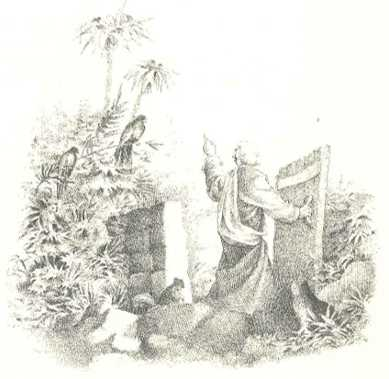
XIII
The Proud Minister
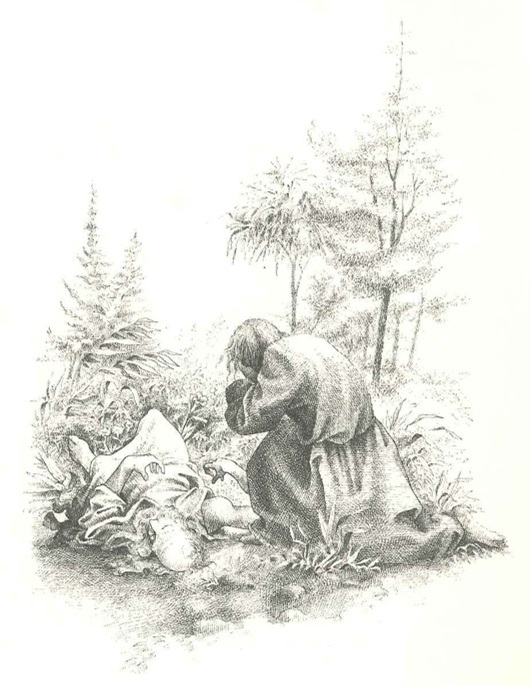
One day there came into the Garden a man in torn clothes badly bruised and cut, who said to the Lover, “In the name of the Beloved I demand your help.”
So the Lover and the Disciple let him in and dressed his wounds and prepared the best of the vegetables from the Garden for him to eat. When his wounds had been dressed and he had eaten and rested the Lover asked him how he had fallen into this plight, to which the man replied, “I was Minister of the Beloved in a city near this place, where I preached His gospel and expounded His doctrine to the people. I pointed out to them how their sins had made them wholly hateful to the Beloved and how therefore they were utterly beyond the range of His love and He would condemn them to eternal torments, whereon some fell into despair and wept bitterly but many were angry. One day the magistrates called me before them and begged me to leave the city and preach elsewhere for they said I had made many people so angry and desperate that they feared there might be a riot and they might not be able to protect me but that I might suffer some injury. I, however, very zealous for the Beloved and believing that the magistrates only feared that their own sins might be proclaimed, preached the more vehemently, denounced the magistrates and made it abundantly clear that the whole wicked city was foredoomed to eternal punishment by the just provision of the Beloved. Whereon a mob, stirred up no doubt by the corrupt and venal magistrates, fell upon me with sticks and stones, nearly killing me and driving me out of the city in the state in which I came to you.”
“My friend,” said the Lover, “this was not a good deed of yours, for besides denying the unfathomable compassion of the Beloved, you have by your obstinacy caused these people to commit a grievous sin, and this cannot be pleasing to the Beloved, that through you who profess to be His minister the people should become worse. Surely you remember that He Himself said, ‘If they persecute you in one city flee to another.’”
Therefore the man was very angry, and cursing the Lover, said, “I see that I have had a very false report of you and I do not believe that you are a servant of the Beloved at all. When I came to you so injured for the Beloved’s sake you set before me only herbs and fruits although the garden is full of birds which you could have killed to make me a worthy meal. I shall proclaim everywhere that you are no true servant of the Beloved but a mere falterer who dares not suffer in the cause of the Beloved. Be sure that you are foreordained to eternal torments who suffer nothing here.”
For the man was so blinded by his own pride that he could not perceive the scars on the hands and feet and the brows of the Lover nor how the cloth beneath the armpits of his tunic was dyed with a red dye. So he went out of the Garden cursing and shouting.
But the Lover looked sad and said, “A man like this does much harm to the cause of the Beloved, for by thus speaking falsely about the Beloved he may bring men to fear Him but none to love Him, and by love alone can any man approach the Beloved.”