

The way I see it, dogs had this big meeting, oh, maybe 20,000 years ago. A huge meeting — an international convention with delegates from everywhere. And that’s when they decided that humans were the up-and-coming species and dogs were going to throw their lot in with them. The decision was obviously not unanimous. The wolves and dingoes walked out in protest.
Cats had an even more negative reaction. When they heard the news, they called their own meeting — in Paris, of course — to denounce canine subservience to the human hyperpower. (Their manifesto — La Condition Feline — can still be found in provincial bookstores.)
Cats, it must be said, have not done badly. Using guile and seduction, they managed to get humans to feed them, thus preserving their superciliousness without going hungry. A neat trick. Dogs, being guileless, signed and delivered. It was the beginning of a beautiful friendship.
I must admit that I’ve been slow to warm to dogs. I grew up in a non-pet-friendly home. Dogs do not figure prominently in Jewish-immigrant households. My father was not very high on pets. He wasn’t hostile. He just saw them as superfluous, an encumbrance. When the Cossacks are chasing you around Europe, you need to travel light. (This, by the way, is why Europe produced far more Jewish violinists than pianists. Try packing a piano.)
My parents did allow a hint of zoological indulgence. I had a pet turtle. My brother had a parakeet. Both came to unfortunate ends. My turtle fell behind a radiator and was not discovered until too late. And the parakeet, God bless him, flew out a window once, never to be seen again. After such displays of stewardship, we dared not ask for a dog.
My introduction to the wonder of dogs came from my wife Robyn. She’s Australian. And Australia, as lovingly recounted in Bill Bryson’s In a Sunburned Country, has the craziest, wildest, deadliest, meanest animals on the planet. In a place where every spider and squid can take you down faster than a sucker-punched boxer, you cherish niceness in the animal kingdom. And they don’t come nicer than dogs.
Robyn started us off slowly. She got us a border collie, Hugo, when our son was about 6. She knew that would appeal to me because the border collie is the smartest species on the planet. Hugo could 1) play outfield in our backyard baseball games, 2) do flawless front-door sentry duty, and 3) play psychic weatherman, announcing with a wail every coming thunderstorm.
When our son Daniel turned 10, he wanted a dog of his own. I was against it, using arguments borrowed from seminars on nuclear nonproliferation. It was hopeless. One giant “Please, Dad,” and I caved completely. Robyn went out to Winchester, Va., found a litter of black Labs and brought home Chester.
Chester is what psychiatrists mean when they talk about unconditional love. Unbridled is more like it. Come into our house, and he was so happy to see you, he would knock you over. (Deliverymen learned to leave things at the front door.)
In some respects — Ph.D. potential, for example — I don’t make any great claims for Chester. When I would arrive home, I fully expected to find Hugo reading the newspaper. Not Chester. Chester would try to make his way through a narrow sliding door, find himself stuck halfway and then look at me with total and quite genuine puzzlement. I don’t think he ever got to understand that the rear part of him was actually attached to the front.
But it was Chester, who dispensed affection as unreflectively as he breathed, who got me thinking about this long-ago pact between humans and dogs. Cat lovers and the pet averse will just roll their eyes at such dogophilia. I can’t help it. Chester was always at your foot or your hand, waiting to be petted and stroked, played with and talked to. His beautiful blocky head, his wonderful overgrown puppy’s body, his baritone bark filled every corner of house and heart.
Then last month, at the tender age of 8, he died quite suddenly. The long, slobbering, slothful decline we had been looking forward to was not to be. When told the news, a young friend who was a regular victim of Chester’s lunging love-bombs said mournfully, “He was the sweetest creature I ever saw. He’s the only dog I ever saw kiss a cat.”
Some will protest that in a world with so much human suffering, it is something between eccentric and obscene to mourn a dog. I think not. After all, it is perfectly normal, indeed, deeply human to be moved when nature presents us with a vision of great beauty. Should we not be moved when it produces a vision — a creature — of the purest sweetness?


Today marks the three hundred and thirtieth birthday of the Frenchman François-Marie Arouet, better known by his nom de plume, Voltaire (1694-1778).
Born into a bourgeois family during the reign of Louis XIV, the “Sun King” (r. 1643-1715), Voltaire suffered tragedy at a young age when his mother died. Never close with his father or brother, Voltaire exhibited a rebellious attitude toward authority from his youth. His brilliant mind was fostered in the care of the Society of Jesus, who introduced him to the joys of literature and theater. Despite his later criticisms against the Church, Voltaire, throughout his life, fondly recalled his dedicated Jesuit teachers.
Although he spent time as a civil servant in the French embassy to the Hague, Voltaire’s main love was writing—an endeavor where he excelled in various genres, including poetry, which led to his appointment as the royal court poet for King Louis XV. Widely recognized as one of the greatest French writers, and even hyperbolically referred to by ...
Padre - Tom Miller invites you to a Coffee Talk, Speakeasies, Schmoozes, Tea Times, Afterhours and other gatherings.
https://teams.live.com/meet/93792382189049?p=DiBHsYfuECPgDrG7vO
2026 Coffee Talk with the ADD Irregulars
Thursday, January 1, 2026
6:00 AM - 8:00 AM (CST)
Occurs every day starting 1/1 until 12/31/2027
Coffee Talk - Daily beginning at 6:00 AM Central Time Zone - USA
Afternoon Chats - Most Tuesday, Friday & Sundays 2:00 PM Central
Always invited, never expected.
Other chats as posted in the community.






XIII
The Proud Minister
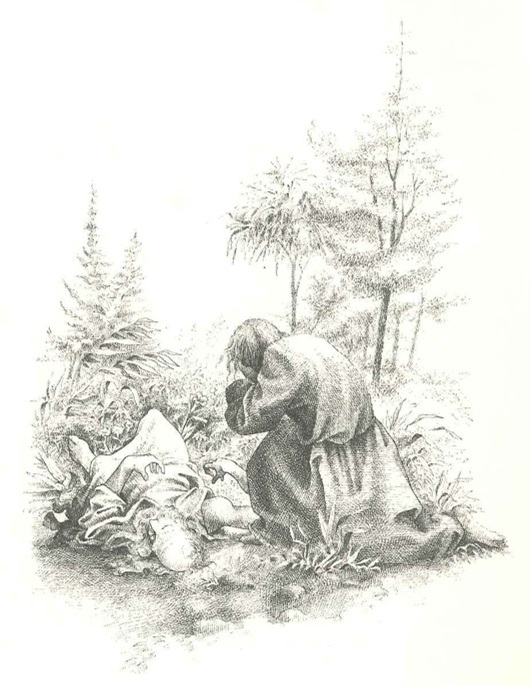
One day there came into the Garden a man in torn clothes badly bruised and cut, who said to the Lover, “In the name of the Beloved I demand your help.”
So the Lover and the Disciple let him in and dressed his wounds and prepared the best of the vegetables from the Garden for him to eat. When his wounds had been dressed and he had eaten and rested the Lover asked him how he had fallen into this plight, to which the man replied, “I was Minister of the Beloved in a city near this place, where I preached His gospel and expounded His doctrine to the people. I pointed out to them how their sins had made them wholly hateful to the Beloved and how therefore they were utterly beyond the range of His love and He would condemn them to eternal torments, whereon some fell into despair and wept bitterly but many were angry. One day the magistrates called me before them and begged me to leave the city and preach elsewhere for they said I had made many people so angry and desperate that they feared there might be a riot and they might not be able to protect me but that I might suffer some injury. I, however, very zealous for the Beloved and believing that the magistrates only feared that their own sins might be proclaimed, preached the more vehemently, denounced the magistrates and made it abundantly clear that the whole wicked city was foredoomed to eternal punishment by the just provision of the Beloved. Whereon a mob, stirred up no doubt by the corrupt and venal magistrates, fell upon me with sticks and stones, nearly killing me and driving me out of the city in the state in which I came to you.”
“My friend,” said the Lover, “this was not a good deed of yours, for besides denying the unfathomable compassion of the Beloved, you have by your obstinacy caused these people to commit a grievous sin, and this cannot be pleasing to the Beloved, that through you who profess to be His minister the people should become worse. Surely you remember that He Himself said, ‘If they persecute you in one city flee to another.’”
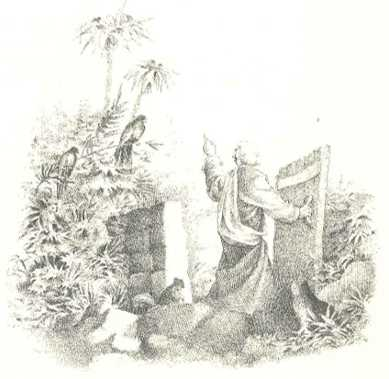
Therefore the man was very angry, and cursing the Lover, said, “I see that I have had a very false report of you and I do not believe that you are a servant of the Beloved at all. When I came to you so injured for the Beloved’s sake you set before me only herbs and fruits although the garden is full of birds which you could have killed to make me a worthy meal. I shall proclaim everywhere that you are no true servant of the Beloved but a mere falterer who dares not suffer in the cause of the Beloved. Be sure that you are foreordained to eternal torments who suffer nothing here.”
For the man was so blinded by his own pride that he could not perceive the scars on the hands and feet and the brows of the Lover nor how the cloth beneath the armpits of his tunic was dyed with a red dye. So he went out of the Garden cursing and shouting.
But the Lover looked sad and said, “A man like this does much harm to the cause of the Beloved, for by thus speaking falsely about the Beloved he may bring men to fear Him but none to love Him, and by love alone can any man approach the Beloved.”