


Good morning, digital neighbors! Blessed Sabbath to all the Keepers of the Covenant of Israel, children of Abraham, Isaac, and Jacob. Happy Saturday to all the rest of us adopted children of God. The Book of Psalms holds a special place in the spirituality of Judaism and Christianity. It is our shared book of prayer for those seeking God. While most psalms are attributed to David, there are many authors, and it is a collective book of prayer that contains some of the most human and honest statements in Scripture. Even for those who never bother with Scripture, they probably know Psalm 23 and the imagery of God as the Good Shepherd.
What I love most about the psalms is that they are not sugar-coated in their honesty and humility toward God. They cover the full range of human responses to God and His humble movement in our daily lives. Psalms express joy, sorrow, praise, contrition, longing, and questioning with God. The God of Israel, the Father of glory, can handle whatever humanity throws at Him. The only thing He cannot handle is being ignored—and yet He still gives us plenty of freedom to do just that. So much of the Hebrew Scriptures is an honest confession of “we ignored God and suffered for it.” And yet the Jews still abide, not because of their inherent goodness or even their stubbornness, but because of God’s. While Scripture testifies that He chastises, it testifies all the more that He desires repentance and a true change of life. God believes in our potential goodness more than we do. He constantly knocks at the door of our heart, sends humble signs throughout the day hoping to elicit a response, to prompt curiosity, to awaken the sleeper, to call back the straying.
Well, enough Saturday morning preaching for the interwebs. I leave you with Psalm 107, a little lesser-known, but just as cherished as so many of them. “Whoever is wise will take note of these things, and ponder the merciful deeds of the Lord.” Have a great day, dear neighbors. Know of my prayers for you.
Give thanks to the Lord for he is good, his mercy endures forever! Let that be the prayer of the Lord’s redeemed, those redeemed from the hand of the foe, those gathered from foreign lands, from east and west, from north and south. Some had lost their way in a barren desert; found no path toward a city to live in. They were hungry and thirsty; their life was ebbing away. In their distress they cried to the Lord, who rescued them in their peril, guided them by a direct path so they reached a city to live in. Let them thank the Lord for his mercy, such wondrous deeds for the children of Adam. For he satisfied the thirsty, filled the hungry with good things.
Some lived in darkness and gloom, imprisoned in misery and chains. Because they rebelled against God’s word, and scorned the counsel of the Most High, he humbled their hearts through hardship; they stumbled with no one to help. In their distress they cried to the Lord, who saved them in their peril; he brought them forth from darkness and the shadow of death and broke their chains asunder. Let them thank the Lord for his mercy, such wondrous deeds for the children of Adam. For he broke down the gates of bronze and snapped the bars of iron.
Some fell sick from their wicked ways, afflicted because of their sins. They loathed all manner of food; they were at the gates of death. In their distress they cried to the Lord, who saved them in their peril, sent forth his word to heal them, and snatched them from the grave. Let them thank the Lord for his mercy, such wondrous deeds for the children of Adam. Let them offer a sacrifice in thanks, recount his works with shouts of joy.
Some went off to sea in ships, plied their trade on the deep waters. They saw the works of the Lord, the wonders of God in the deep. He commanded and roused a storm wind; it tossed the waves on high. They rose up to the heavens, sank to the depths; their hearts trembled at the danger. They reeled, staggered like drunkards; their skill was of no avail. In their distress they cried to the Lord, who brought them out of their peril; he hushed the storm to silence, the waves of the sea were stilled. They rejoiced that the sea grew calm, that God brought them to the harbor they longed for. Let them thank the Lord for his mercy, such wondrous deeds for the children of Adam. Let them extol him in the assembly of the people, and praise him in the council of the elders.
God changed rivers into desert, springs of water into thirsty ground, fruitful land into a salty waste, because of the wickedness of its people. He changed the desert into pools of water, arid land into springs of water, and settled the hungry there; they built a city to live in. They sowed fields and planted vineyards, brought in an abundant harvest. God blessed them, and they increased greatly, and their livestock did not decrease. But he poured out contempt on princes, made them wander trackless wastes, where they were diminished and brought low through misery and cruel oppression. While he released the poor man from affliction, and increased their families like flocks. The upright saw this and rejoiced; all wickedness shut its mouth. Whoever is wise will take note of these things, and ponder the merciful deeds of the Lord.
Sunrise - Jonny Clow - Unsplash



Today marks the three hundred and thirtieth birthday of the Frenchman François-Marie Arouet, better known by his nom de plume, Voltaire (1694-1778).
Born into a bourgeois family during the reign of Louis XIV, the “Sun King” (r. 1643-1715), Voltaire suffered tragedy at a young age when his mother died. Never close with his father or brother, Voltaire exhibited a rebellious attitude toward authority from his youth. His brilliant mind was fostered in the care of the Society of Jesus, who introduced him to the joys of literature and theater. Despite his later criticisms against the Church, Voltaire, throughout his life, fondly recalled his dedicated Jesuit teachers.
Although he spent time as a civil servant in the French embassy to the Hague, Voltaire’s main love was writing—an endeavor where he excelled in various genres, including poetry, which led to his appointment as the royal court poet for King Louis XV. Widely recognized as one of the greatest French writers, and even hyperbolically referred to by ...
Padre - Tom Miller invites you to a Coffee Talk, Speakeasies, Schmoozes, Tea Times, Afterhours and other gatherings.
https://teams.live.com/meet/93792382189049?p=DiBHsYfuECPgDrG7vO
2026 Coffee Talk with the ADD Irregulars
Thursday, January 1, 2026
6:00 AM - 8:00 AM (CST)
Occurs every day starting 1/1 until 12/31/2027
Coffee Talk - Daily beginning at 6:00 AM Central Time Zone - USA
Afternoon Chats - Most Tuesday, Friday & Sundays 2:00 PM Central
Always invited, never expected.
Other chats as posted in the community.





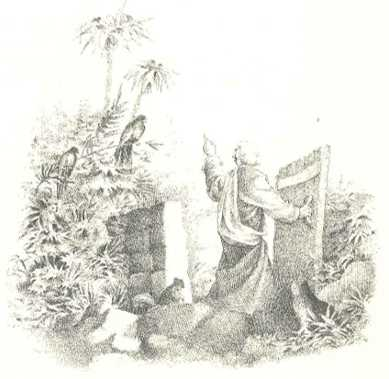
XIII
The Proud Minister
One day there came into the Garden a man in torn clothes badly bruised and cut, who said to the Lover, “In the name of the Beloved I demand your help.”
So the Lover and the Disciple let him in and dressed his wounds and prepared the best of the vegetables from the Garden for him to eat. When his wounds had been dressed and he had eaten and rested the Lover asked him how he had fallen into this plight, to which the man replied, “I was Minister of the Beloved in a city near this place, where I preached His gospel and expounded His doctrine to the people. I pointed out to them how their sins had made them wholly hateful to the Beloved and how therefore they were utterly beyond the range of His love and He would condemn them to eternal torments, whereon some fell into despair and wept bitterly but many were angry. One day the magistrates called me before them and begged me to leave the city and preach elsewhere for they said I had made many people so angry and desperate that they feared there might be a riot and they might not be able to protect me but that I might suffer some injury. I, however, very zealous for the Beloved and believing that the magistrates only feared that their own sins might be proclaimed, preached the more vehemently, denounced the magistrates and made it abundantly clear that the whole wicked city was foredoomed to eternal punishment by the just provision of the Beloved. Whereon a mob, stirred up no doubt by the corrupt and venal magistrates, fell upon me with sticks and stones, nearly killing me and driving me out of the city in the state in which I came to you.”
“My friend,” said the Lover, “this was not a good deed of yours, for besides denying the unfathomable compassion of the Beloved, you have by your obstinacy caused these people to commit a grievous sin, and this cannot be pleasing to the Beloved, that through you who profess to be His minister the people should become worse. Surely you remember that He Himself said, ‘If they persecute you in one city flee to another.’”
Therefore the man was very angry, and cursing the Lover, said, “I see that I have had a very false report of you and I do not believe that you are a servant of the Beloved at all. When I came to you so injured for the Beloved’s sake you set before me only herbs and fruits although the garden is full of birds which you could have killed to make me a worthy meal. I shall proclaim everywhere that you are no true servant of the Beloved but a mere falterer who dares not suffer in the cause of the Beloved. Be sure that you are foreordained to eternal torments who suffer nothing here.”
For the man was so blinded by his own pride that he could not perceive the scars on the hands and feet and the brows of the Lover nor how the cloth beneath the armpits of his tunic was dyed with a red dye. So he went out of the Garden cursing and shouting.
But the Lover looked sad and said, “A man like this does much harm to the cause of the Beloved, for by thus speaking falsely about the Beloved he may bring men to fear Him but none to love Him, and by love alone can any man approach the Beloved.”