


Good morning, digital neighbors! Happy Monday to all you Friends & Refugees, Early Birds & Later Dayers, Conversants & Lurkers, PHAM & Misfits, Free Thinkers & Questioners, ADD Irregulars & WSN Curators, Curmudgeons & Curmudgeonettas, and all the rest of ya's! Every now and again I need to dust off those terms of endearment for you fine souls at the Rubin Report, Phetasy, the Outspoken, and Padre's.
I thought I would venture into Abounding Grace: An Anthology of Wisdom, edited with commentary by M. Scott Peck. I first encountered Dr. Peck in the '80s, when our principal at Elsberry High School referenced his book The Road Less Traveled while addressing the student body. I didn't read the book until many years later, but it stuck in my head, and I read many of his books in the '90s. People of the Lie was the most disturbing, a confirmation of evil (not that any of us need that these days) in his treatment of individuals and families.
Abounding Grace is his collection of quotes and sayings. I thought that over the next few weeks we would extract some ore from his collection: maybe some gold, perhaps some lead, YMMV. Either way, I appreciate that a good quote can convey more meaning and impact in a few words than a sermon, speech, or oration of any length.
"Every man should study conciseness in speaking; it is a sign of ignorance not to know that long speeches, though they may please the speaker, are the torture of the hearer." – Owen Feltham
Peck's anthology begins with a chapter on happiness and all its permutations. While we long for happiness, if we focus only on being happy, I doubt we will ever experience it. Much as joy comes from gratitude, happiness is more a result of seeking meaning and growth than of chasing happiness in and of itself. A life filled with meaning will yield happiness more often than not; a life filled with distraction, overindulgence, and tedious obsession with self will find happiness elusive. Well, lest I prove Owen Feltham correct, off to some quotes. Have a wonderful Monday, dear neighbors! This first bit is on acceptance as a prerequisite for happiness to find its way to us.
"When we have accepted the worst, we have nothing more to lose. And that automatically means we have everything to gain." – Dale Carnegie
"If a man does not keep pace with his companions, perhaps it is because he hears a different drummer. Let him step to the music which he hears, however measured or far away." – Henry David Thoreau
"It just ain't possible to explain some things. It's interesting to wonder on them and do some speculation, but the main thing is you have to accept it—take it for what it is, and get on with your getting." – Jim Dodge from his novel Fup.
New Hampshire Fall - Arnaud Mariat - Unsplash



Today marks the three hundred and thirtieth birthday of the Frenchman François-Marie Arouet, better known by his nom de plume, Voltaire (1694-1778).
Born into a bourgeois family during the reign of Louis XIV, the “Sun King” (r. 1643-1715), Voltaire suffered tragedy at a young age when his mother died. Never close with his father or brother, Voltaire exhibited a rebellious attitude toward authority from his youth. His brilliant mind was fostered in the care of the Society of Jesus, who introduced him to the joys of literature and theater. Despite his later criticisms against the Church, Voltaire, throughout his life, fondly recalled his dedicated Jesuit teachers.
Although he spent time as a civil servant in the French embassy to the Hague, Voltaire’s main love was writing—an endeavor where he excelled in various genres, including poetry, which led to his appointment as the royal court poet for King Louis XV. Widely recognized as one of the greatest French writers, and even hyperbolically referred to by ...
Padre - Tom Miller invites you to a Coffee Talk, Speakeasies, Schmoozes, Tea Times, Afterhours and other gatherings.
https://teams.live.com/meet/93792382189049?p=DiBHsYfuECPgDrG7vO
2026 Coffee Talk with the ADD Irregulars
Thursday, January 1, 2026
6:00 AM - 8:00 AM (CST)
Occurs every day starting 1/1 until 12/31/2027
Coffee Talk - Daily beginning at 6:00 AM Central Time Zone - USA
White Pilled Wednesday - A break from the heaviness of news and current events to focus upon things more personal & positive for the first hour of Coffee Talk.
Afternoon Chats - Most Tuesday, Friday & Sundays 2:00 PM Central
Other chats as posted in the community.


Good morning, digital neighbors! Blessed Sabbath to all my neighbors in Judaism and happy Saturday to all the rest of us! How about a few quotes on autumn for this fine autumn morning and a trip down memory lane for some of us? Have a great day, my friends!
"Listen! the wind is rising, and the air is wild with leaves, / We have had our summer evenings, now for October eves!" – Humbert Wolfe, "Autumn (Resignation)" (1926)
"Again the wind / flakes gold-leaf from the trees and the painting darkens— / as if a thousand penitents kissed an icon / till it thinned back to bare wood, / without diminishment." – Jane Hirshfield, "Autumn" (The Paris Review, 1988)
"Autumn is the mellower season, and what we lose in flowers we more than gain in fruits." – Samuel Butler, The Way of All Flesh (1903)
When I think of autumn and childhood, I always think of this old Disney cartoon. I probably watch it every autumn in the days leading up to Halloween. Enjoy!
...

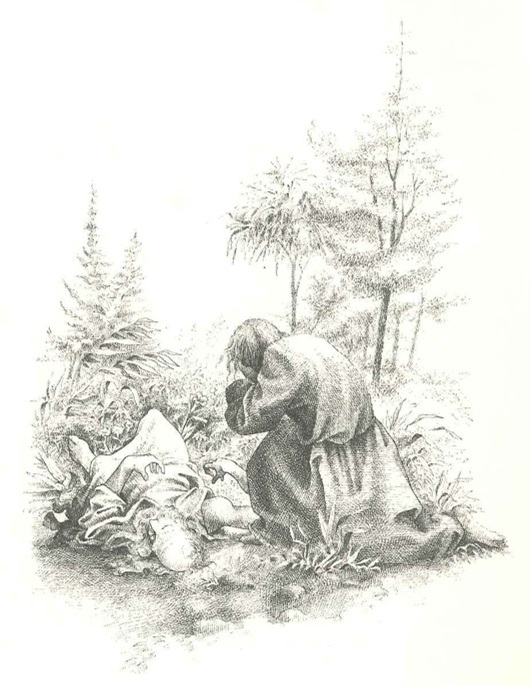

XIII
The Proud Minister
One day there came into the Garden a man in torn clothes badly bruised and cut, who said to the Lover, “In the name of the Beloved I demand your help.”
So the Lover and the Disciple let him in and dressed his wounds and prepared the best of the vegetables from the Garden for him to eat. When his wounds had been dressed and he had eaten and rested the Lover asked him how he had fallen into this plight, to which the man replied, “I was Minister of the Beloved in a city near this place, where I preached His gospel and expounded His doctrine to the people. I pointed out to them how their sins had made them wholly hateful to the Beloved and how therefore they were utterly beyond the range of His love and He would condemn them to eternal torments, whereon some fell into despair and wept bitterly but many were angry. One day the magistrates called me before them and begged me to leave the city and preach elsewhere for they said I had made many people so angry and desperate that they feared there might be a riot and they might not be able to protect me but that I might suffer some injury. I, however, very zealous for the Beloved and believing that the magistrates only feared that their own sins might be proclaimed, preached the more vehemently, denounced the magistrates and made it abundantly clear that the whole wicked city was foredoomed to eternal punishment by the just provision of the Beloved. Whereon a mob, stirred up no doubt by the corrupt and venal magistrates, fell upon me with sticks and stones, nearly killing me and driving me out of the city in the state in which I came to you.”
“My friend,” said the Lover, “this was not a good deed of yours, for besides denying the unfathomable compassion of the Beloved, you have by your obstinacy caused these people to commit a grievous sin, and this cannot be pleasing to the Beloved, that through you who profess to be His minister the people should become worse. Surely you remember that He Himself said, ‘If they persecute you in one city flee to another.’”
Therefore the man was very angry, and cursing the Lover, said, “I see that I have had a very false report of you and I do not believe that you are a servant of the Beloved at all. When I came to you so injured for the Beloved’s sake you set before me only herbs and fruits although the garden is full of birds which you could have killed to make me a worthy meal. I shall proclaim everywhere that you are no true servant of the Beloved but a mere falterer who dares not suffer in the cause of the Beloved. Be sure that you are foreordained to eternal torments who suffer nothing here.”
For the man was so blinded by his own pride that he could not perceive the scars on the hands and feet and the brows of the Lover nor how the cloth beneath the armpits of his tunic was dyed with a red dye. So he went out of the Garden cursing and shouting.
But the Lover looked sad and said, “A man like this does much harm to the cause of the Beloved, for by thus speaking falsely about the Beloved he may bring men to fear Him but none to love Him, and by love alone can any man approach the Beloved.”